Wondering which chateau to visit in Loire? This guide will help you discover the very best castles the region has to offer, diving deep into their rich histories and unique features.
Situated in the heart of France, the Loire Valley is a treasure trove of history, architecture, and natural beauty. This UNESCO World Heritage site is renowned for its stunning chateaux, which stand as testaments to the region’s rich past and cultural significance. From fairy-tale castles to grand royal residences, the chateaux in the Loire Valley offer visitors a glimpse into the opulent lives of French nobility and the architectural marvels of centuries past. In this comprehensive guide, we’ll take you on a journey through time, exploring the most captivating chateaux and providing insider tips to make your Loire Valley adventure unforgettable.
The Loire Valley: A Historical Paradise
The Loire Valley, often referred to as the “Garden of France,” stretches over 280 kilometers along the Loire River in central France. This picturesque region has been shaped by centuries of history, from the Middle Ages to the Renaissance and beyond. The valley’s strategic location made it a favorite retreat for French royalty and nobility, who built magnificent chateaux as symbols of their power and wealth.
The chateaux in the Loire Valley represent various architectural styles, including Medieval, Gothic, Renaissance, and Classical. Each castle tells a unique story, from defensive fortresses that withstood sieges to lavish palaces designed for pleasure and entertainment. The region’s mild climate and fertile soil also contributed to the development of beautiful gardens, many of which remain meticulously maintained to this day.
UNESCO recognized the cultural importance of the Loire Valley in 2000, inscribing the central part of the Loire River valley on its World Heritage List. This designation encompasses over 164 historic monuments, including dozens of chateaux, making it the largest UNESCO-listed site in France.
Which Chateau to Visit in Loire: Our Top Picks
If you’re short on time and wondering which chateau to visit in Loire, here are our top recommendations:
- Château de Chambord – For sheer grandeur and architectural marvel
- Château de Chenonceau – For its unique design spanning the Cher River and beautiful gardens
- Château d’Amboise – For its royal history and Leonardo da Vinci connection
- Château de Villandry – For garden enthusiasts and landscape architecture lovers
- Château de Cheverny – For its perfectly preserved interiors and Tintin connection
These chateaux offer a diverse range of experiences, from awe-inspiring architecture to fascinating historical tales and stunning gardens. Each provides a unique glimpse into the rich tapestry of Loire Valley history.
The Best Chateaux in the Loire Valley
While there are over 300 chateaux in the Loire Valley, some stand out for their historical significance, architectural beauty, or unique features. Here’s our curated list of the best chateaux that should be on every traveler’s itinerary:
1. Château de Chambord: The Crown Jewel

Château de Chambord is the largest and perhaps most recognizable chateau in the Loire Valley. Built in the 16th century as a hunting lodge for King Francis I, this Renaissance masterpiece boasts 440 rooms, 80 staircases, and 365 fireplaces. Its most famous feature is the innovative double-helix staircase, allegedly designed by Leonardo da Vinci.
Historical Deep Dive:
Construction of Château de Chambord began in 1519 under the reign of Francis I, who wanted to be close to his mistress, Claude Rohan. The chateau was never fully completed, and Francis I only spent about 50 days there in total. Despite this, it remains a testament to the king’s grand ambitions and the architectural innovations of the French Renaissance.
During the French Revolution, the chateau was looted and much of its furnishings were sold. Napoleon later gave it to Marshal Berthier, and it subsequently passed through several owners before being acquired by the French state in 1930.
Why it’s a must-visit:
- Impressive scale and grandeur
- Unique architectural features, including the double-helix staircase
- Intricate roofline with numerous chimneys and towers
- Vast surrounding forest and gardens
- Opportunities for boat rides and bike rentals on the grounds
Top tip:
Climb to the roof terrace for breathtaking views of the chateau’s elaborate roofscape and surrounding estate.
Local Tip: For a unique perspective, rent a rowboat and explore the castle’s moat. The best time for photography is during the “golden hour” just before sunset when the chateau’s façade is bathed in warm light.
2. Château de Chenonceau: The Ladies' Château

Often called the “Ladies’ Château,” Château de Chenonceau is known for its unique architecture and the influential women who shaped its history. The chateau spans the Cher River on a series of graceful arches, creating a stunning reflection in the water below.
Historical Deep Dive:
Chenonceau’s history is deeply intertwined with the powerful women who owned and expanded it. Built in 1514-1522 on the foundations of an old mill, it was initially owned by Thomas Bohier and his wife Catherine Briçonnet. In 1535, King Francis I seized the chateau for unpaid debts.
Henri II later gifted it to his mistress, Diane de Poitiers, who added the arched bridge spanning the Cher. After Henri’s death, his widow Catherine de’ Medici forced Diane to exchange it for Château Chaumont. Catherine then added the two-story gallery on Diane’s bridge.
During World War I, it served as a military hospital, and in World War II, it was a means of escaping from Nazi-occupied France to the free zone on the other side of the Cher River.
Why it’s a must-visit:
- Unique design spanning the Cher River
- Beautiful gardens designed by Diane de Poitiers and Catherine de’ Medici
- Rich history involving powerful women of the French court
- Stunning art collection and well-preserved interiors
- Opportunity for boat rides under the chateau’s arches
Top tip:
Visit during the summer months to experience the magical nighttime illuminations in the gardens.
Local Tip: Visit on a Wednesday or Saturday morning to combine your chateau tour with a trip to the charming local market in the nearby village of Chenonceau.
3. Château d'Amboise: A Royal Residence with a View

Located high above the Loire River, Château d’Amboise offers panoramic views of the surrounding landscape. This royal residence played a significant role in French history and was home to several kings.
Historical Deep Dive:
The history of Château d’Amboise dates back to the 11th century, but it came into royal hands in the 15th century when seized by Charles VII. Under King Charles VIII, the medieval fortress was transformed into a luxurious Gothic and Renaissance residence.
Louis XII and Francis I were both raised here, and the chateau became a favorite royal residence. Francis I brought Leonardo da Vinci to Amboise in 1516, installing him nearby at Clos Lucé. Leonardo spent his final years here and is purportedly buried in the chateau’s Chapel of Saint-Hubert.
The chateau’s fortunes declined after the French Revolution, with much of it demolished. However, Louis-Philippe began restoration work in the 1840s, a process that continues to this day.
Why it’s a must-visit:
- Stunning panoramic views of the Loire Valley
- Connection to Leonardo da Vinci, who is buried in the chateau’s Chapel of Saint-Hubert
- Mix of Gothic and Renaissance architecture
- Fascinating history as a royal residence
- Charming town of Amboise at the foot of the chateau
Top tip:
Combine your visit with a tour of nearby Clos Lucé, Leonardo da Vinci’s last residence, to fully appreciate the Renaissance genius’s connection to the area.
Local Tip: Time your visit to coincide with the annual “European Heritage Days” in September, when the chateau offers special tours and events, often with reduced entry fees.
4. Château de Villandry: A Garden Lover's Paradise

While many Loire Valley chateaux are known for their architecture, Château de Villandry is famous for its extraordinary gardens. The chateau itself is a beautiful example of Renaissance architecture, but it’s the meticulously designed and maintained gardens that steal the show.
Historical Deep Dive:
The lands of Villandry were known as Colombier until the 17th century. In 1532, Jean Le Breton, France’s Controller-General for War under King Francis I, acquired the estate. Le Breton had previously overseen the construction of Château de Chambord, and he demolished the old fortress at Villandry to build a more fashionable Renaissance-style chateau.
In 1906, Villandry was purchased by Dr. Joachim Carvallo and his American wife, Ann Coleman. They poured an enormous amount of time and money into restoring the chateau and recreating the gardens. Using 16th-century documents as inspiration, they designed the famous Renaissance gardens that visitors enjoy today.
Why it’s a must-visit:
- World-renowned Renaissance gardens
- Unique ornamental kitchen garden
- Water garden and ornamental flower gardens
- Excellent example of Renaissance architecture
- Interactive garden exhibits and educational programs
Top tip:
Visit in different seasons to see how the gardens change throughout the year. Spring for blossoms, summer for lush growth, and fall for harvest colors.
Local Tip: The best time to visit the gardens is in July when the vegetables and flowers are in full bloom. For a magical experience, attend the “Nights of a Thousand Fires” event in July, when the gardens are illuminated by candlelight.
5. Château de Cheverny: Timeless Elegance

Château de Cheverny is one of the best-preserved and most sumptuously furnished of all Loire Valley castles. Owned by the same family for over six centuries, it offers visitors a glimpse into the lifestyle of the French aristocracy.
Historical Deep Dive:
The lands of Cheverny were purchased in the 15th century by Henri Hurault, the lieutenant-general of the Orléanais. His descendant, Philippe Hurault, began construction of the current chateau in 1624, under the guidance of sculptor-architect of Blois, Jacques Bougier.
Unlike many other Loire chateaux, Cheverny was never sold and has remained in the same family for over 600 years. This continuity of ownership has helped preserve its original decorations, furniture, and atmosphere.
Interestingly, Cheverny served as the model for Marlinspike Hall in Hergé’s The Adventures of Tintin comic series. Today, the chateau houses a permanent exhibition dedicated to the famous comic book hero.
Why it’s a must-visit:
- Perfectly symmetrical classical façade
- Lavishly furnished interiors with original pieces
- Famous pack of 100 hunting dogs and daily feeding spectacle
- Beautiful English-style park and botanical garden
- Tintin exhibition (the chateau inspired Marlinspike Hall in the comics)
Top tip:
Time your visit to watch the spectacular feeding of the chateau’s hunting dogs, which happens daily at 11:30 am.
Local Tip: If you’re a comic book fan, visit during the annual “Rendez-vous du Carnet de Voyage” in November, a festival celebrating travel sketches and illustrations, inspired by Tintin’s adventures.
6. Château d'Azay-le-Rideau: The Water Castle

Built on an island in the Indre River, Château d’Azay-le-Rideau is often described as one of the purest examples of French Renaissance architecture. Its reflections in the surrounding water create a magical, almost floating appearance.
Historical Deep Dive:
The site of Azay-le-Rideau has been occupied since ancient times, with a Roman villa once standing here. In the Middle Ages, the site was fortified to protect the road between Tours and Chinon.
The current chateau was built between 1518 and 1527 by Gilles Berthelot, Treasurer-General of the finances of France under King Francis I. Berthelot wanted to create a residence that combined the latest technical innovations of military architecture with the refinement of Italian renaissance art.
However, Berthelot was suspected of embezzlement and forced to flee the incomplete chateau in 1528. Francis I then seized the property, giving it to one of his knights-at-arms. Over the centuries, the chateau changed hands several times before being purchased by the French state in 1905.
Why it’s a must-visit:
- Stunning location on an island in the Indre River
- Exquisite example of early French Renaissance architecture
- Beautifully restored interiors with period furnishings
- Romantic English-style landscaped park
- Night-time sound and light shows during summer
Top tip:
Take a stroll around the entire chateau to appreciate its reflection in the water from all angles, especially beautiful at sunset.
Local Tip: For a lesser-known viewpoint, take a short walk to the Île de la Rémonière for a picturesque view of the chateau reflected in the Indre River.
7. Château de Blois: A Showcase of French Architecture
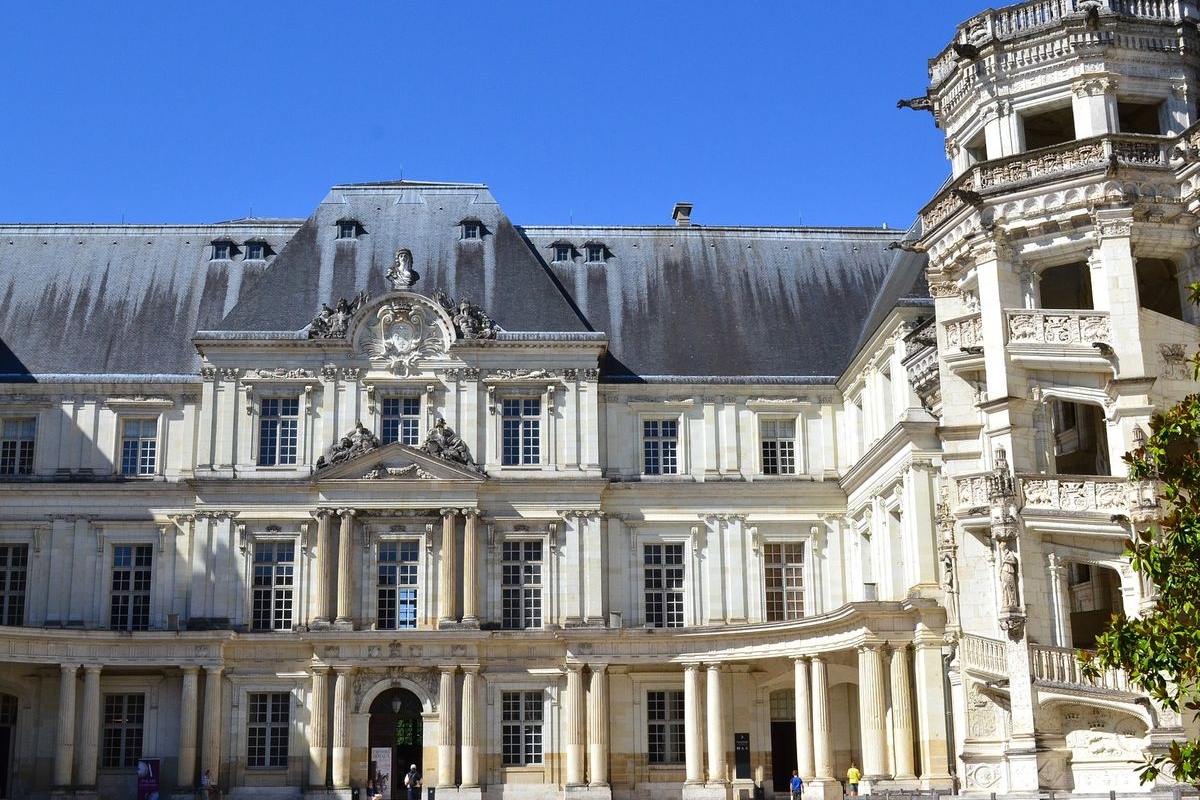
The Royal Château de Blois presents a unique overview of French architecture from the Middle Ages to the 17th century. Each wing of the chateau represents a different architectural style and period.
Historical Deep Dive:
The site of Château de Blois has been occupied since the 6th century. It became a notable seat of power when the Counts of Blois took up residence in the 10th century. The oldest part of the current chateau dates from the 13th century.
Blois played a significant role in French history when Louis XII, born in the chateau, became king in 1498 and made it his principal residence. His successor, Francis I, began the construction of a new wing in the Renaissance style.
The chateau was later home to Henry III, who summoned the Estates-General there in 1576 and 1588. It was also the site of the assassination of the Duke of Guise, ordered by Henry III in 1588.
After falling into disrepair, the chateau was scheduled for demolition in 1788. It was saved by the efforts of locals and later served as a military barracks. Restoration began in 1841 under the direction of architect Felix Duban.
Why it’s a must-visit:
- Four distinct architectural styles in one chateau
- Rich royal history, including being the favorite residence of Louis XII
- Impressive spiral staircase in the Francis I wing
- Museum of Fine Arts housed within the chateau
- Dramatic son et lumière (sound and light) show in the courtyard
Top tip:
Don’t miss the son et lumière show in the evening, which brings the chateau’s history to life through projections on its façades.
Local Tip: Visit during the “Son et Lumière” season (April to September) to experience a spectacular night show projected onto the chateau’s façades, bringing its history to life.
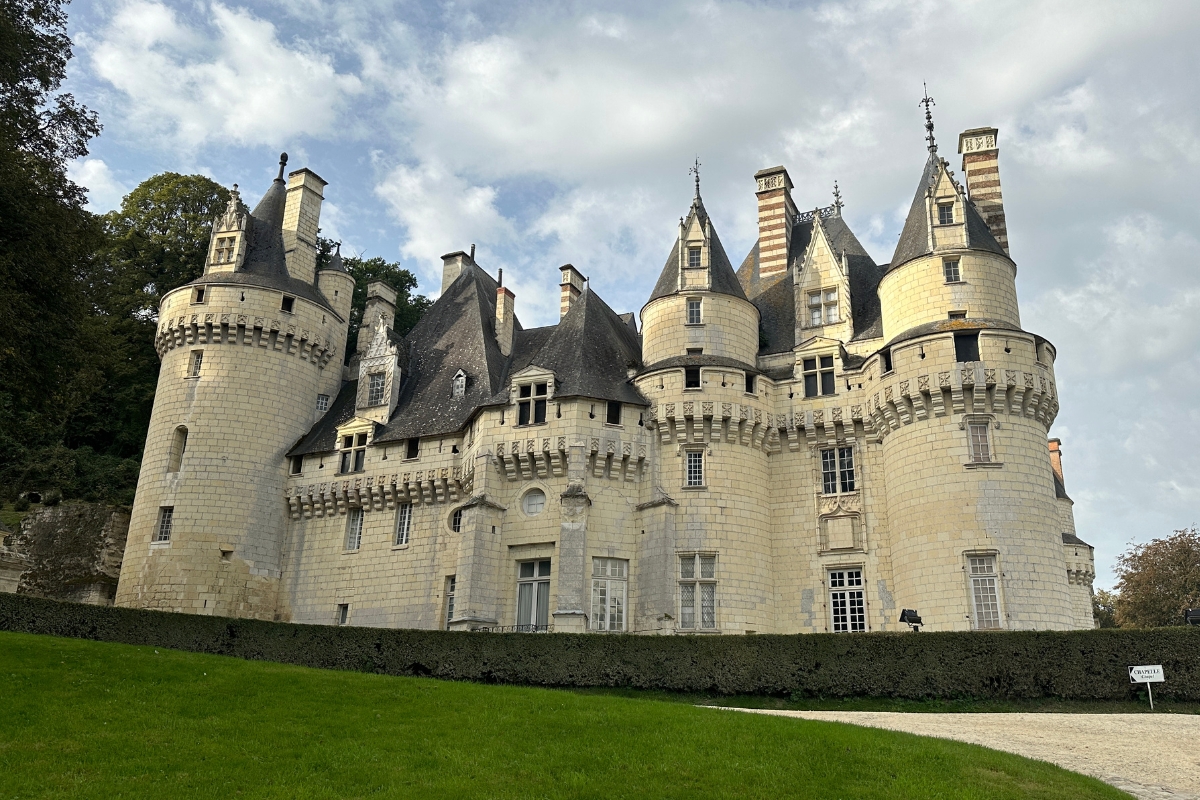
8. Château d'Ussé: The Sleeping Beauty Castle
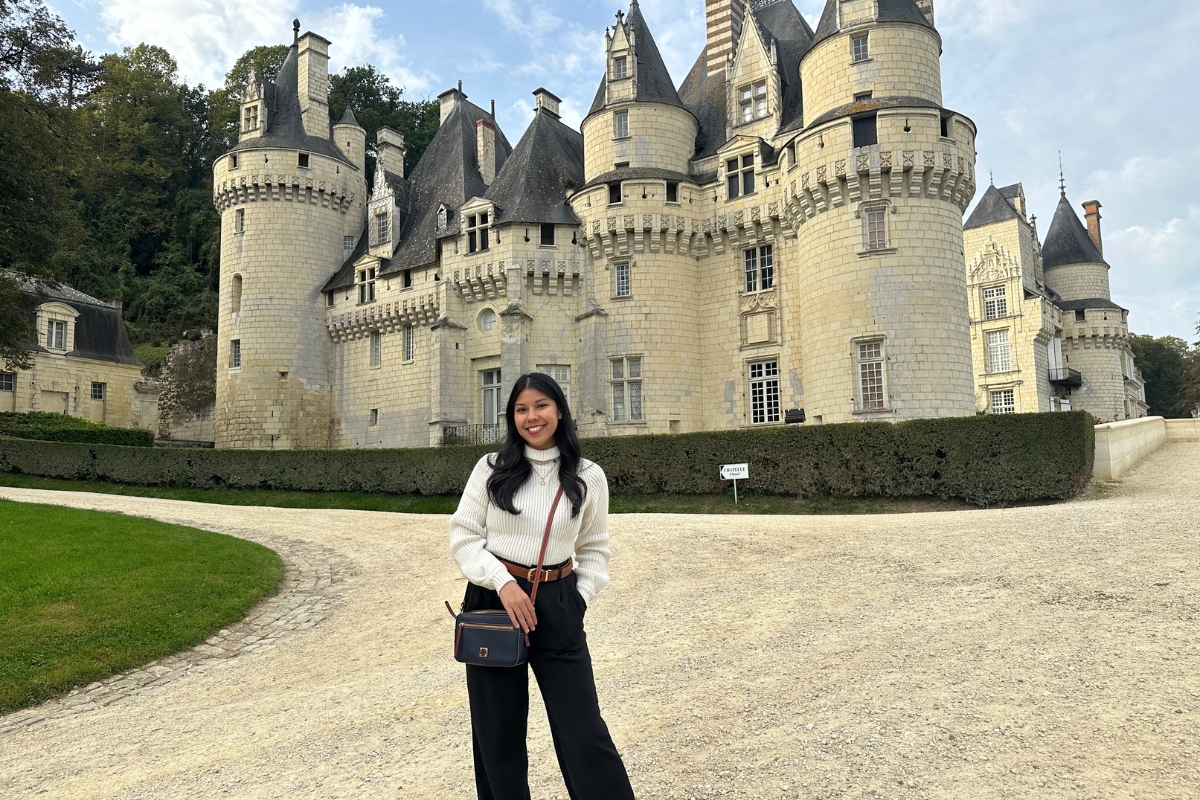
Often called the “Sleeping Beauty Castle,” Château d’Ussé is said to have inspired Charles Perrault when writing his famous fairy tale. Its romantic silhouette with a multitude of pinnacles, chimneys, and turrets indeed looks like it stepped out of a storybook.
Historical Deep Dive:
The site of Château d’Ussé has been fortified since the 11th century, with the current chateau dating largely from the 15th and 16th centuries. It was originally built as a stronghold by the Bueil family, who were the seigneurs of Ussé.
In 1485, the daughter of the last Bueil lord married Jacques d’Espinay, son of a chamberlain to the Duke of Brittany. The d’Espinay family continued the construction and embellishment of Ussé, turning it from a defensive structure into a comfortable residence.
In the 17th century, Louis I de Valentinay further remodeled the chateau, adding the classical façade on the courtyard side. The famous landscape architect André Le Nôtre, known for his work at Versailles, designed the terraced gardens.
The chateau’s fairy-tale appearance reportedly inspired Charles Perrault to write “The Sleeping Beauty” in the late 17th century. Today, scenes from the tale are recreated in the chateau’s towers, delighting visitors of all ages.
Why it’s a must-visit:
- Fairy-tale appearance that inspired “Sleeping Beauty”
- Blend of medieval fortress and Renaissance palace styles
- Beautiful formal gardens designed by Le Nôtre
- Unique Sleeping Beauty exhibition with scenes from the tale
- Stunning views of the Indre Valley
Top tip:
Visit the attics to see the charming Sleeping Beauty scenes set up with wax figures and period costumes.
Local Tip: If you’re visiting in December, don’t miss the chateau’s special Christmas decorations and displays, which transform it into a true winter wonderland.
Accessibility Guide for Loire Valley Chateaux
While many Loire Valley chateaux were built centuries ago, efforts have been made to improve accessibility for visitors with mobility issues. Here’s a quick guide to some of the more accessible chateaux:
- Château de Chambord: Offers wheelchair rentals and has elevators to access different levels. The gardens and ground floor are fully accessible.
- Château de Chenonceau: The ground floor and gardens are wheelchair accessible. They provide a virtual tour of the upper floors for those unable to climb stairs.
- Château de Blois: Has a lift to access different levels and offers adapted guided tours for visitors with disabilities.
- Château de Cheverny: The ground floor and gardens are fully accessible. They provide a virtual tour of the upper floors.
- Château de Villandry: The gardens are mostly accessible, with adapted paths. The ground floor of the chateau can be visited with assistance.
Always contact the chateau directly before your visit to get the most up-to-date accessibility information and to arrange any special assistance you might need.
Seasonal Guide to the Loire Valley
Each season in the Loire Valley offers a unique experience:
Spring (March to May)
- Gardens come to life with blooming flowers
- Milder temperatures perfect for outdoor activities
- Easter events and spring festivals at many chateaux
- Local Tip: Don’t miss the International Garden Festival at Château de Chaumont-sur-Loire, starting in April
Summer (June to August)
- Peak tourist season with the best weather
- Longer daylight hours for extended visits
- Numerous outdoor concerts and events
- Local Tip: Enjoy the “Gardens of Light” night walks at Château de Villandry in July and August
Fall (September to November)
- Beautiful autumn colors in chateau gardens and vineyards
- Harvest season with wine festivals
- Smaller crowds and mild temperatures
- Local Tip: Participate in the grape harvest festivities in Vouvray in October
Winter (December to February)
- Quieter visits with fewer tourists
- Christmas markets and holiday decorations in towns and some chateaux
- Cozy wine tastings by the fireplace
- Local Tip: Experience the magical Christmas decorations at Château de Chenonceau
Planning Your Loire Valley Chateau Tour
Exploring the chateaux of the Loire Valley requires careful planning to make the most of your visit. Here are some tips to help you organize your tour:
- Choose your base: Select a central location like Tours, Blois, or Amboise as your base. These towns offer good accommodation options and are well-positioned for exploring the region.
- Decide on transportation: While public transportation is available, having a car gives you more flexibility to explore at your own pace. Many chateaux are in rural areas not easily accessible by bus or train.
- Plan your route: Group nearby chateaux together to minimize travel time. For example, you could visit Chambord, Cheverny, and Blois in one day.
- Consider guided tours: Many chateaux offer guided tours that provide in-depth historical and architectural information. Audio guides are often available in multiple languages.
- Check opening times: Opening hours can vary by season, and some chateaux close for lunch or on certain days of the week. Always check the official websites for the most up-to-date information.
- Book in advance: During peak season (June to August), popular chateaux can get crowded. Consider booking tickets in advance to avoid long queues.
- Pace yourself: Don’t try to see too many chateaux in one day. Two or three per day is usually a good pace, allowing time to fully appreciate each one.
Beyond the Chateaux: Other Loire Valley Attractions
While the chateaux are undoubtedly the stars of the Loire Valley, the region offers much more for travelers to explore:
Wine Tasting
The Loire Valley is France’s third-largest wine region, producing a diverse range of wines. Take a wine tour to sample local varieties like Sancerre, Vouvray, and Chinon. Many vineyards offer tours and tastings, providing insight into the region’s winemaking traditions.
Must-visit wineries:
- Domaine Huet in Vouvray for exceptional white wines
- Château de Chambord’s own vineyards for unique wine experiences
- Bouvet Ladubay in Saumur for sparkling wines and underground cellar tours
Cycling Tours
The Loire à Vélo cycling route spans over 900 kilometers, offering a unique way to explore the region. Rent a bike and pedal through picturesque villages, vineyards, and along the Loire River, stopping at chateaux along the way.
Top cycling routes:
- Blois to Chambord (14 km one way)
- Tours to Villandry (22 km one way)
- Amboise to Chenonceaux (23 km one way)
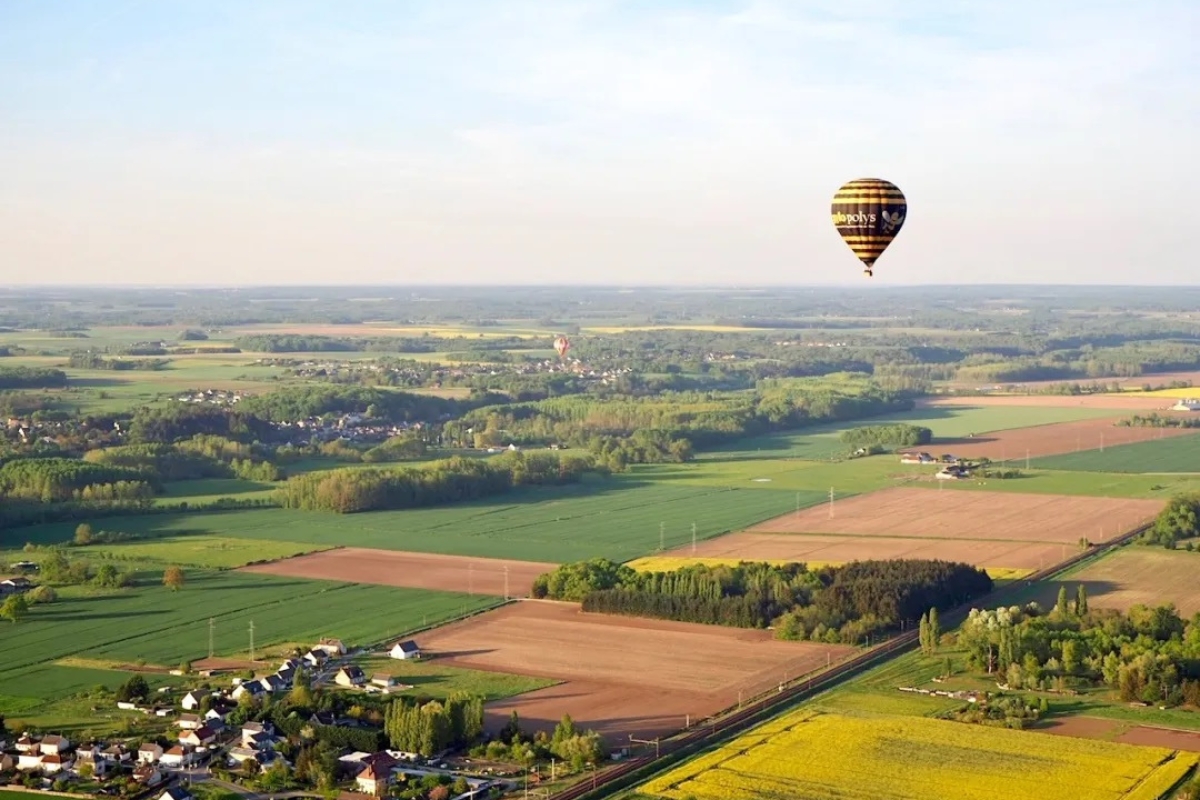
Hot Air Balloon Rides
For a truly unforgettable experience, take a hot air balloon ride over the Loire Valley. Floating above the landscape provides a breathtaking perspective on the chateaux and surrounding countryside.
Recommended balloon operators:
- France Balloons
- Art Montgolfières
- Balloon Revolution
Local Cuisine
Indulge in the region’s gastronomic delights. Try local specialties like rillettes (a type of pâté), goat cheese, and tarte Tatin (an upside-down apple tart). Visit local markets to sample fresh produce and regional products.
Must-try local dishes:
- Rillettes de Tours
- Selles-sur-Cher (goat cheese)
- Fouace (traditional bread)
- Nougat de Tours (almond and fruit tart)
Troglodyte Villages
Explore the unique troglodyte villages carved into the region’s soft limestone cliffs. These cave dwellings offer a fascinating glimpse into a different aspect of Loire Valley history and culture.
Top troglodyte sites:
- Rochemenier Village Troglodytique
- La Cave aux Sculptures in Denezé-sous-Doué
- Troglodyte Valley of Goupillières
Practical Tips for Chateau-Hopping in the Loire Valley
To ensure a smooth and enjoyable chateau-hopping experience, keep these practical tips in mind:
- Wear comfortable shoes: You’ll be doing a lot of walking, both inside the chateaux and in their extensive gardens.
- Bring a camera: Photography is usually allowed inside the chateaux (without flash), so don’t forget your camera to capture the stunning architecture and interiors.
- Consider a multi-castle pass: If you plan to visit several chateaux, look into multi-castle passes that can save you money on entrance fees.
- Pack a picnic: Many chateaux have beautiful grounds perfect for a picnic. Take advantage of this to save time and money on lunch.
- Learn some French: While many sites cater to international visitors, knowing a few basic French phrases can enhance your experience.
- Take your time: Don’t try to cram too many chateaux into one day. Take the time to appreciate each one fully.
- Visit during shoulder season: If possible, plan your trip for April-May or September-October to avoid peak crowds and enjoy milder weather.
- Attend special events: Many chateaux host special events, concerts, and exhibitions, especially during summer. Check their calendars when planning your visit.
- Explore the gardens: The gardens of Loire Valley chateaux are often as impressive as the buildings themselves. Allow time to wander through them.
- Stay overnight in a chateau: For a truly immersive experience, consider staying in one of the many chateaux that have been converted into hotels.
People Also Ask
Q: What is the most picturesque town in the Loire Valley?
A: While beauty is subjective, many consider Amboise to be one of the most picturesque towns in the Loire Valley. Perched above the Loire River, it boasts the stunning Château d’Amboise, charming medieval streets, and a rich history connected to Leonardo da Vinci. Other contenders include Blois, Chinon, and Saumur, each offering unique charm and beautiful riverside settings.
Q: What is the magnificent château in the Loire?
A: While many Loire Valley châteaux are magnificent, Château de Chambord is often considered the most impressive. As the largest château in the region, it boasts 440 rooms, 80 staircases, and 365 fireplaces. Its distinctive French Renaissance architecture, including the famous double-helix staircase, makes it a true architectural marvel and a symbol of the Loire Valley.
Q: What is the most impressive castle in France?
A: While “most impressive” can be subjective, many consider Château de Chambord in the Loire Valley to be France’s most impressive castle. Its sheer size, architectural innovation, and historical significance make it stand out. However, other contenders across France include the Palace of Versailles for its opulence, Mont Saint-Michel for its unique island setting, and Carcassonne for its well-preserved medieval fortifications.
Q: What is the best wine in the Loire Valley?
A: The Loire Valley is known for several excellent wines, and the “best” often depends on personal taste. However, some highly regarded Loire Valley wines include:
1. Sancerre: A crisp, dry white wine made from Sauvignon Blanc grapes.
2. Vouvray: Can be dry, semi-sweet, or sweet, made from Chenin Blanc grapes.
3. Chinon: A red wine made from Cabernet Franc grapes, known for its light to medium body.
4. Muscadet: A dry white wine made from Melon de Bourgogne grapes, perfect with seafood.
For a unique experience, try the sparkling wines of Saumur, made in the traditional method like Champagne.
Q: When is the best time to visit the Loire Valley?
A: The best time to visit is during the shoulder seasons of April-May and September-October. The weather is mild, and there are fewer crowds compared to the peak summer months. Spring offers beautiful garden blooms, while fall provides stunning foliage and harvest activities.
Q: How many days do I need to explore the Loire Valley?
A: While you can see some highlights in 2-3 days, we recommend at least 5-7 days to fully appreciate the region’s chateaux and other attractions without feeling rushed. This allows time to explore multiple castles, enjoy wine tastings, and experience the local culture and cuisine.
Q: Can I visit the Loire Valley as a day trip from Paris?
A: While it’s possible to visit one or two chateaux as a day trip from Paris, we highly recommend staying in the Loire Valley for a more immersive experience. The region’s beauty and attractions deserve more than a rushed day trip can offer.
Q: Which chateau should I visit in Loire if I only have time for one?
A: If you can only visit one chateau, we recommend Château de Chenonceau for its unique architecture spanning the Cher River, beautiful gardens, and rich history. However, the best choice depends on your interests – Chambord for grandeur, Villandry for gardens, or Amboise for royal history and the Leonardo da Vinci connection.
Final Thoughts
The chateaux of the Loire Valley offer a magical journey through French history, art, and architecture. From the grand halls of Chambord to the elegant gardens of Villandry, each chateau presents a unique facet of the region’s rich heritage. By following this guide, you’ll be well-prepared to explore these magnificent monuments and create unforgettable memories in the heart of France.
Whether you’re a history buff, an architecture enthusiast, or simply someone who appreciates beauty and culture, the Loire Valley has something to offer in every season. So pack your bags, charge your camera, and get ready for an enchanting adventure through the “Garden of France.” The chateaux of the Loire Valley await, ready to transport you to a world of elegance, romance, and timeless beauty.
To truly immerse yourself in the world of French chateaux, we’re excited to introduce our Ultimate French Chateau mobile tour guides. These comprehensive digital guides are designed to enhance your chateau visits with:
- In-depth historical information and fascinating stories about each chateau
- Detailed maps and suggested routes to make navigation easy
- High-quality images and virtual tours of areas that might be inaccessible
- Audio narrations bringing the history and art of each chateau to life
- Practical information like opening hours, ticket prices, and nearby attractions
Our Ultimate French Chateau mobile tour guides are like having a knowledgeable historian in your pocket, ready to enrich your experience with insights and stories at every turn. Whether you’re a history enthusiast, an architecture lover, or simply someone who appreciates beauty and culture, these guides will help you get the most out of your chateau visits.
As you plan your own adventures through the French countryside, remember that each chateau has its own unique charm and story to tell. Take your time, soak in the atmosphere, and allow yourself to be transported to a world of elegance, power, and artistic brilliance. With our Ultimate French Chateau mobile tour guides by your side, you’re sure to uncover the secrets and stories that make each of these chateaux truly special.
So, pack your bags, charge your mobile device, and prepare for an unforgettable journey through time and architecture. The chateaux of France await, each one a chapter in the grand story of French history and culture.
Bon voyage!
Related Posts: