

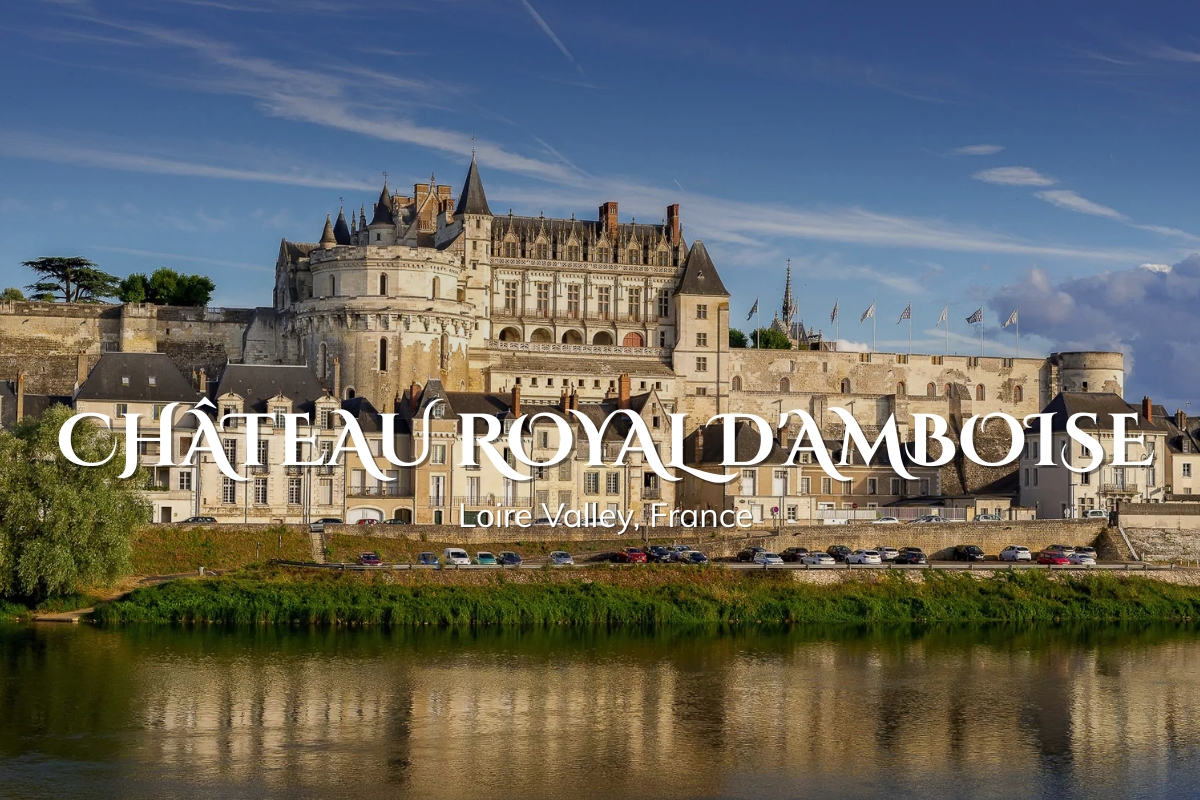

About Château d'Amboise
Château d’Amboise is a historic royal residence perched on a promontory overlooking the Loire River, commanding spectacular views of the valley below. This strategically positioned fortress dates back to Roman times, but it gained prominence during the late 15th century when it became a favorite residence of French kings, particularly Charles VIII and François I.
Charles VIII transformed the medieval fortress into a magnificent Gothic and early Renaissance palace after discovering Italian architecture during his campaigns. He tragically died at Amboise in 1498 after striking his head on a door lintel. His successor, François I, spent much of his childhood at Amboise and later invited Leonardo da Vinci to France, housing him at the nearby Clos Lucé manor. Da Vinci lived his final years here until his death in 1519 and is buried in the château’s chapel of Saint-Hubert.
The château witnessed significant historical events, including the 1560 Amboise Conspiracy, a failed Huguenot plot that led to numerous executions. While only about a fifth of the original structure remains today due to demolitions during the 19th century, the surviving buildings showcase a remarkable transition from Gothic to Renaissance architecture.
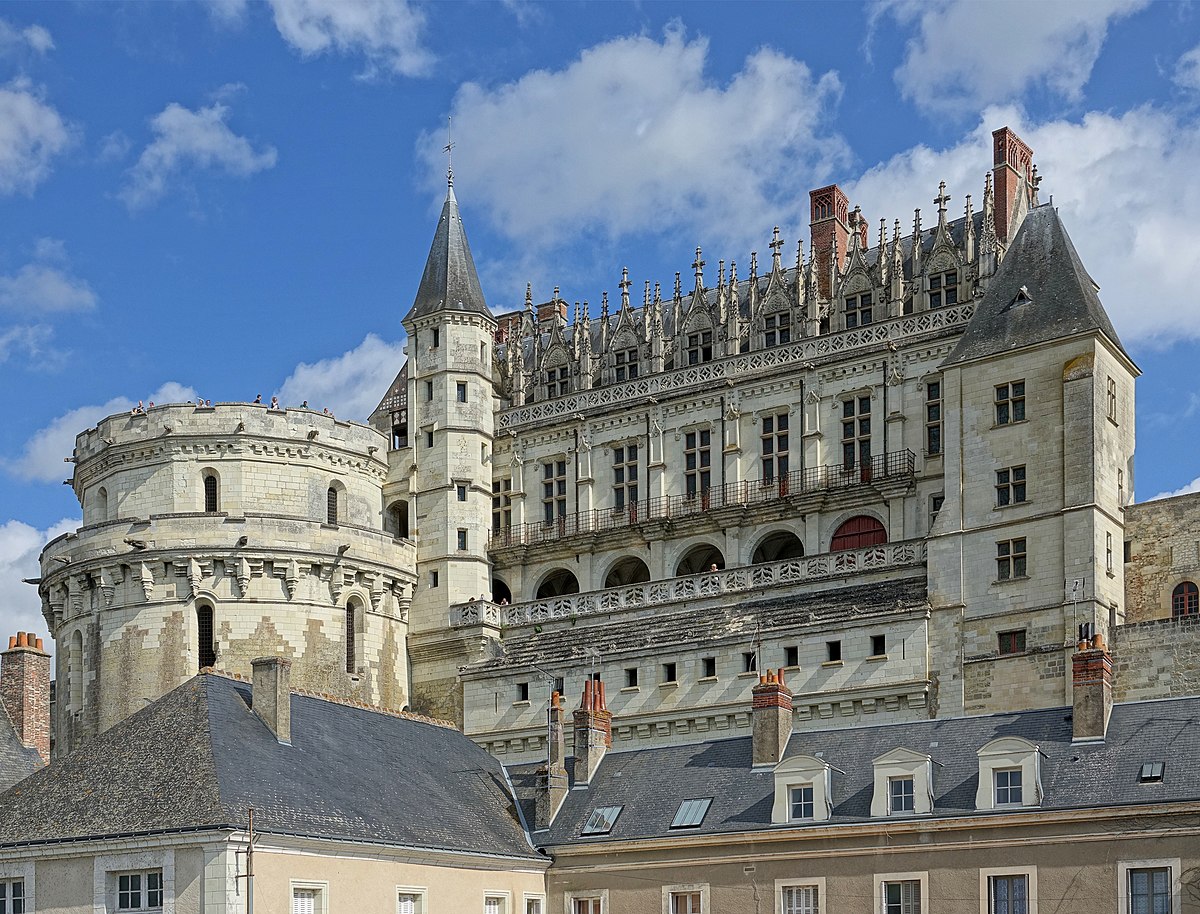
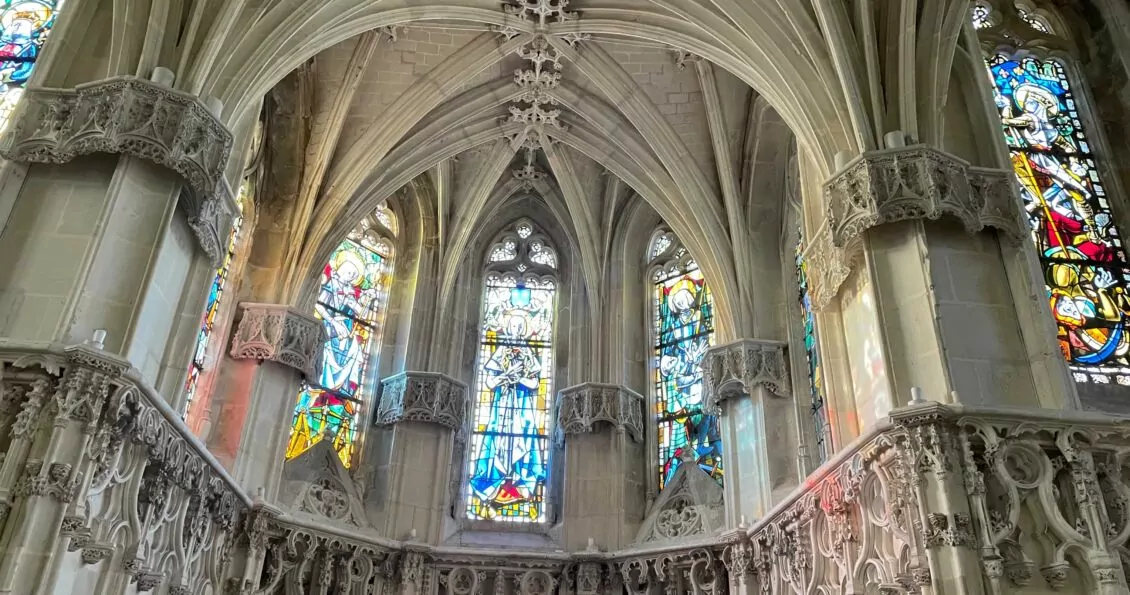
Today, visitors can explore the impressive royal apartments, the chapel of Saint-Hubert, the council chamber, and magnificent terraced gardens offering panoramic views of the Loire Valley. The château also features the horsemen’s tower, with its unique spiral ramp that allowed riders to ascend on horseback.
Did You Know?
- Leonardo da Vinci is buried in the Chapel of Saint-Hubert within the château grounds.
- The château features one of the earliest spiral ramps in Europe, allowing horsemen to ride directly up to the terraces.
- Only one-fifth of the original château remains, as most was demolished after the French Revolution.
Location
Type: Chateau
Status: Public
Region: Loire Valley
Location:Château d’Amboise is located in the heart of Amboise, a charming town in the Indre-et-Loire department, approximately 25 kilometers east of Tours.
Castle Gallery




Historical Timeline
Strategic Fortress
The site of Château d'Amboise was first fortified due to its strategic position on a rocky promontory overlooking the Loire River. Archaeological evidence shows that a Gallic oppidum (fortified settlement) existed here before the medieval castle was built.
Ingelger's Acquisition
Ingelger, who was made Viscount of Orléans, married Adelais of Amboise, bringing the château into his family's possession. This began the long association of Amboise with the Counts of Anjou, as Ingelger would later become the first Count of Anjou.
Fulk Nerra's Reign
Amboise and its castle descended through the family to Fulk Nerra (Fulk the Black), who had to defend it against the ambitions of Odo I, Count of Blois. The castle served as an important eastern frontier fortress for the Angevin holdings.
Historical Documentation
The "Book of the Construction of the Castle of Amboise and the Deeds of Its Lords" was written during this period, documenting the early history of the château and establishing its historical significance in the region.
Royal Confiscation
On September 4, Charles VII of France seized the château after its owner, Louis d'Amboise, was convicted of plotting against Louis XI and condemned to execution in 1431. Though Louis d'Amboise was pardoned, his château was confiscated by the Crown, beginning its history as a royal residence.
Charles VIII's Transformation
King Charles VIII decided to rebuild the château extensively, beginning in 1492 in the French late Gothic Flamboyant style. After 1495, he employed Italian mason-builders Domenico da Cortona and Fra Giocondo, who introduced some of the first Renaissance decorative motifs seen in French architecture.
Italian Influence
Following the Italian War, Charles VIII brought Italian architects and artisans to France to work on the château, transforming it into "the first Italianate palace in France." Among them was Pacello da Mercogliano, who designed the gardens at Amboise and Blois, significantly influencing French landscape design.
Charles VIII's Tragic Death
King Charles VIII died at Château d'Amboise on April 7, 1498, after accidentally hitting his head on a door lintel while on his way to watch a tennis match. His sudden death at age 28 marked the end of the direct Valois line, and he was succeeded by his cousin, Louis XII.
Leonardo da Vinci's Residence
King Francis I, who was raised at Amboise, invited Leonardo da Vinci to France. The Italian genius arrived in December 1515 and lived at the nearby Clos Lucé, connected to the château by an underground passage. Leonardo served as the "first painter, architect, and engineer to the King" until his death on May 2, 1519.
Leonardo's Final Resting Place
Leonardo da Vinci was buried in the Chapel of St. Florentin at Château d'Amboise. Though the original chapel was demolished after the French Revolution, Leonardo's remains were later moved to the Chapel of Saint-Hubert, where visitors can now pay homage to the Renaissance master.
Royal Childhood Home
Henry II and Catherine de' Medici raised their children at the Château d'Amboise, including the future kings Francis II, Charles IX, and Henry III. Mary Stuart, the child Queen of Scotland who was promised in marriage to Francis II, also spent part of her childhood here.
Amboise Conspiracy
During the French Wars of Religion, a Huguenot plot against the House of Guise (who effectively ruled France in the name of young King Francis II) was discovered and brutally suppressed. The resulting executions, which took a month to carry out, led to 1,200 Protestants being hanged from the château walls and balconies, forcing the court to leave due to the smell of corpses.
Peace of Amboise
The abortive Peace of Amboise was signed between Louis I, Prince of Condé (who had been implicated in the conspiracy to abduct the king) and Catherine de' Medici. This "edict of pacification" authorized Protestant services under specific conditions, though neither side was satisfied by this compromise.
Period of Decline
Amboise never returned to royal favor after the 16th century. At the beginning of the 17th century, the château was all but abandoned when the huge property was turned over to Gaston d'Orléans, who largely neglected it.
Further Deterioration
The château continued to deteriorate, with parts of it demolished by the Crown. By the time of the French Revolution (1789-1799), it was in such a state of disrepair that much of it was further destroyed.
Revolutionary Prison
During the French Revolution, the Château Royal d'Amboise was turned into a prison camp. The revolutionary authorities confiscated everything of value, further contributing to the château's decline.
National Monument Status
The château was recognized as a monument historique by the French Ministry of Culture, granting it protected status and acknowledging its historical and architectural significance to France.
Return to the Orléans Family
The château was returned to the heirs of King Louis-Philippe, the former Orléans monarchy. It remains the property of the Fondation Saint-Louis, headed by the Count of Paris, descendant of Louis-Philippe.
Tourist Destination
Today, Château Royal d'Amboise is open to the public and remains a stunning Renaissance palace. Visitors can explore its ornate rooms, the tomb of Leonardo da Vinci in the Saint-Hubert Chapel, and underground passages. In summer, a spectacular show titled "The Prophecy of Amboise" brings to life the sumptuous court of Charles VIII with performers, equestrian stuntmen, and projections across the château's exterior.