


About Chateau de Chambord
Château de Chambord is the largest and most magnificent château in France’s Loire Valley. Built between 1519 and 1547, it was commissioned by King François I as a hunting lodge, though he spent only a few weeks there in total. This spectacular Renaissance masterpiece showcases a remarkable blend of traditional French medieval architecture with Italian Renaissance structures and decorative elements.
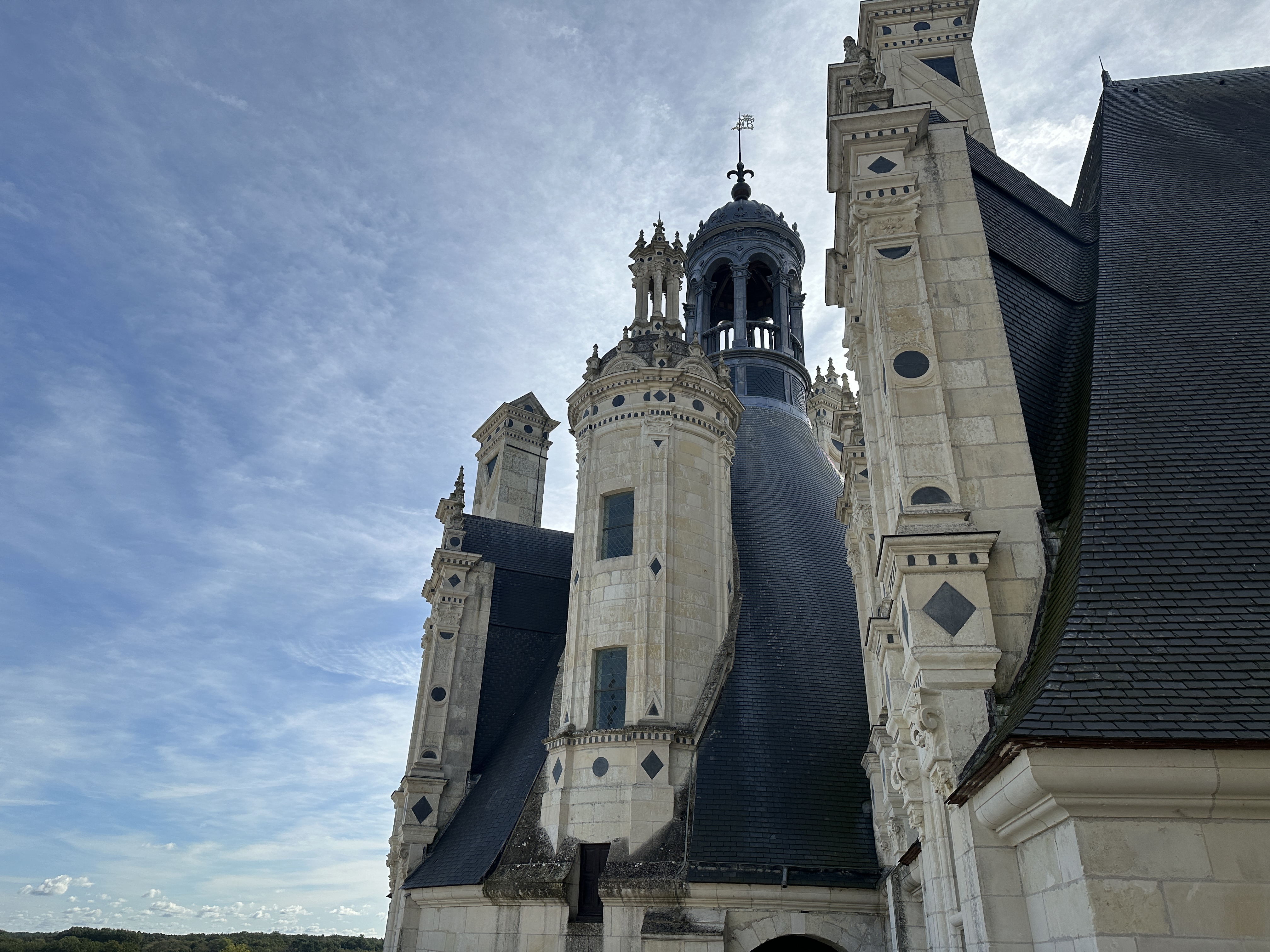
The château’s most distinctive feature is its intricate roofline, which resembles a small city with its elaborate towers, chimneys, and cupolas. At the center of the château lies the famous double-helix staircase, attributed to Leonardo da Vinci, where two spiral staircases ascend three floors without ever meeting, allowing people to see each other through openings but never cross paths.
With 440 rooms, 282 fireplaces, and 84 staircases, Château de Chambord is set within Europe’s largest enclosed forest park. The vast estate covers 5,440 hectares (13,440 acres) and is surrounded by a 32-kilometer wall. The grounds are home to exceptional flora and fauna, including deer and wild boar that have inhabited the area since the time of François I.
Throughout its history, Chambord has hosted numerous French kings and dignitaries. After the French Revolution, it was neglected until 1821 when it was given to the Duke of Bordeaux. In 1930, the French state purchased the estate, and today it is a UNESCO World Heritage Site, attracting nearly a million visitors annually.
Did You Know?
- The double-helix staircase at the center of the château is believed to have been designed by Leonardo da Vinci.
- Chambord has 440 rooms, but only about 60 are open to the public.
- The rooftop terrace offers spectacular views and features a forest of chimneys, turrets, and cupolas arranged like a small city.
Location
Type: Chateau
Status: Public (owned by the French state)
Region: Loire Valley
Location: Château de Chambord is located at Château, 41250 Chambord, in the Loir-et-Cher department of France. The castle sits within Europe’s largest enclosed forest park, approximately 15 kilometers east of Blois and 2 hours from Paris.
Castle Gallery




Historical Timeline
Construction Begins
King Francis I, a passionate hunter and lover of the arts, orders the construction of Château de Chambord as a hunting lodge. The site had been owned by the Counts of Blois since the 10th century before becoming royal property in 1491.
Initial Construction Phase
The château is designed by Italian architect Domenico da Cortona, with possible influence from Leonardo da Vinci, who spent his final years in France. Despite employing 1,800 workers, Francis I only stayed at Chambord for 42 days during his 32-year reign.
Emperor Charles V's Visit
Holy Roman Emperor Charles V, Francis I's great rival, is hosted at Chambord. Despite the château being unfinished, Francis I wanted to impress his powerful guest with the grandeur of French Renaissance architecture.
Louis XIV's Expansions
The Sun King, Louis XIV, extends the château, bringing the total number of rooms to 440. He stays at Chambord several times between 1660 and 1685, hosting magnificent entertainments and hunting parties in the surrounding forest.
Given to Marshal de Saxe
King Louis XV gives Chambord to Maurice de Saxe, Marshal of France, as a reward for his victory at the Battle of Fontenoy. The Marshal lives there until his death in 1750, making it his military headquarters.
French Revolution Period
During the French Revolution, Chambord is ransacked and much of its furniture sold off, though the building itself escapes destruction. It falls into neglect until 1809 when Napoleon gives it to Marshal Louis-Alexandre Berthier as recognition for his services.
National Fundraising Campaign
The entire estate of Chambord is offered through a nationwide fundraising campaign to the Duke of Bordeaux, grandson of King Charles X. Political events force him into exile, preventing him from inhabiting the château.
The White Flag Manifesto
The Duke of Bordeaux, now known as the Count of Chambord, briefly visits the château and writes his famous "White Flag Manifesto," announcing his refusal of the French tricolor flag and thereby renouncing his right to the French throne.
Bourbon-Parma Ownership
Following the Count of Chambord's death, the estate is inherited by his nephews, the princes of Bourbon-Parma, who maintain ownership until 1930 when the château and its park become state property.
World War II Art Repository
During World War II, Chambord serves as a repository for art treasures from French museums, including the Mona Lisa and Venus de Milo, protecting them from Nazi looting and wartime damage.
UNESCO Recognition
Château de Chambord is listed as a UNESCO World Heritage Site as part of the Loire Valley between Sully-sur-Loire and Chalonnes, recognizing its exceptional cultural significance and architectural importance.
Major Tourist Destination
Today, Chambord is one of France's most visited châteaux, welcoming over 1 million visitors annually. Its 5,440-hectare enclosed park (the largest in Europe) and the château's distinctive French Renaissance architecture continue to captivate visitors from around the world.