


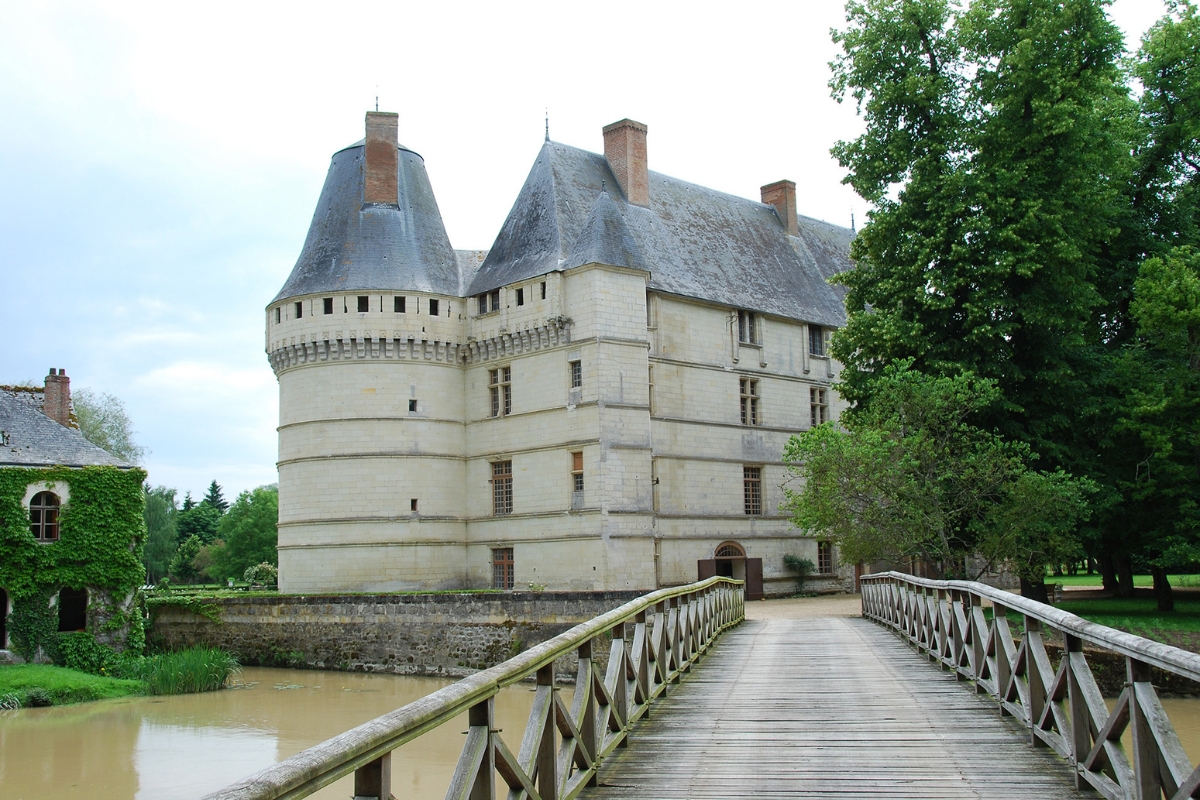
“Through the trees, in the distance I see the tortuous course of the Indre, and an ancient château, flanked by towers…“ So wrote Beaumarchais to his wife in July 1769, describing his first glimpse of Château de l’Islette.
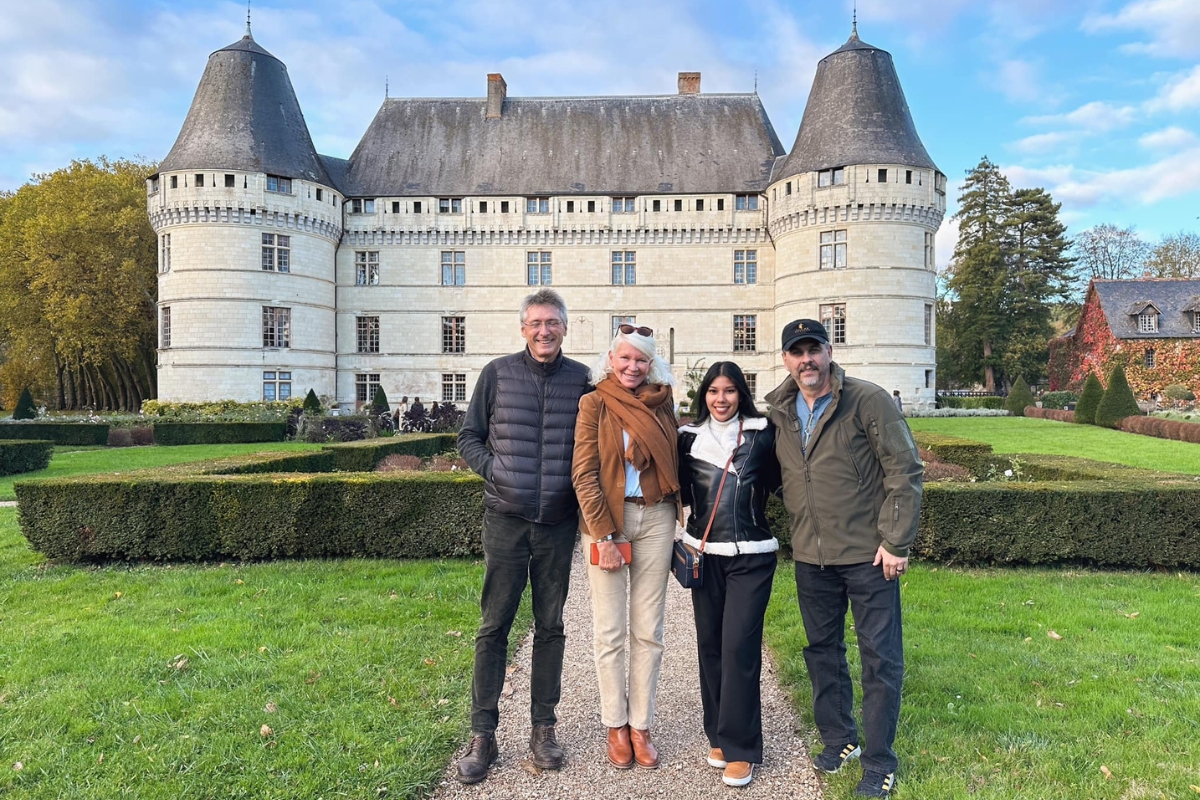
Over two centuries later, on a crisp November afternoon, we approached this same view, granted the extraordinary privilege of a private tour by the château’s current owners.
While its renowned neighbor, Château d’Azay-le-Rideau, draws crowds of tourists year-round, l’Islette offers something increasingly rare in the Loire Valley: an authentic glimpse into both the past and present of a living, breathing French château. The resemblance between the two châteaux is no coincidence – tradition holds they were built by the same team, with l’Islette’s completion dating to 1530.
The Castle: A Testament to Renaissance Elegance
Château de l’Islette stands as a masterpiece of French Renaissance architecture – a long, rectangular three-story building flanked by two imposing towers, its reflection shimmering in the surrounding waters. The château’s original grandeur was even more striking before the early 19th century, when the moat was partially filled, the attic gables reduced, and the towers lowered to create the elegant silhouette we see today.
The main entrance, where a drawbridge once stood, still bears witness to its medieval origins through visible grooves in the stone. Above, a finely sculpted escutcheon displays the Barjot de Roncée family’s coat of arms, supported by two charming Renaissance cherubs. Double rows of moldings separate each story, while mullioned windows, adorned with scrolled lintels, create the harmonious façade typical of the French Renaissance.
A Legacy of Noble Stewardship at Château de l'Islette
The story of Château de l’Islette spans more than seven centuries of French history. From its earliest documented days in 1295 as a dependent fief of Île-Bouchard under Jean Pannetier, Bailiff of Touraine, to its present life as both family home and historical monument, the château has witnessed the sweep of French history. The Maillé family’s three-century stewardship, from 1350 to 1650, left perhaps the most lasting impact – it was René de Maillé who commissioned the castle’s current form, completed around 1530.
The Rarity of Family-Owned Châteaux
Among the Loire Valley’s famed châteaux, l’Islette holds a distinctive position as one of the increasingly rare properties still privately owned and inhabited. While many of France’s great châteaux have become state-owned museums or stand empty, l’Islette continues its centuries-old tradition as a family home. This distinction was particularly evident during our November visit, when the current owners welcomed us not just into a historical monument, but into their home.
Maintaining a historical monument as a private residence presents unique challenges in the 21st century. Unlike state-owned properties that receive government funding, private château owners must balance:
- Historical preservation requirements
- Modern living needs
- Restoration costs
- Public access expectations
The decision to open Château de l’Islette to the public in 2010 represents this delicate balance. It allows the château to generate funds for its maintenance while sharing its historical significance with visitors.
Interior Splendor: From Guard Room to Great Hall
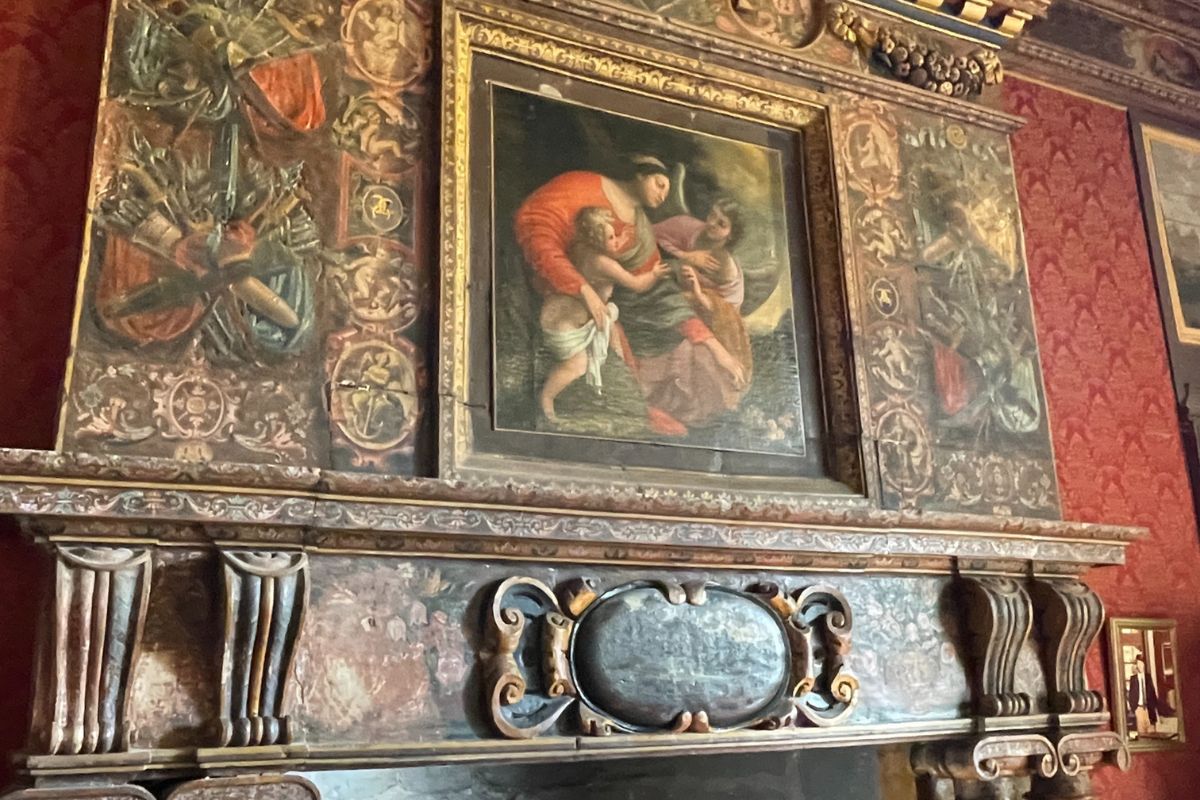
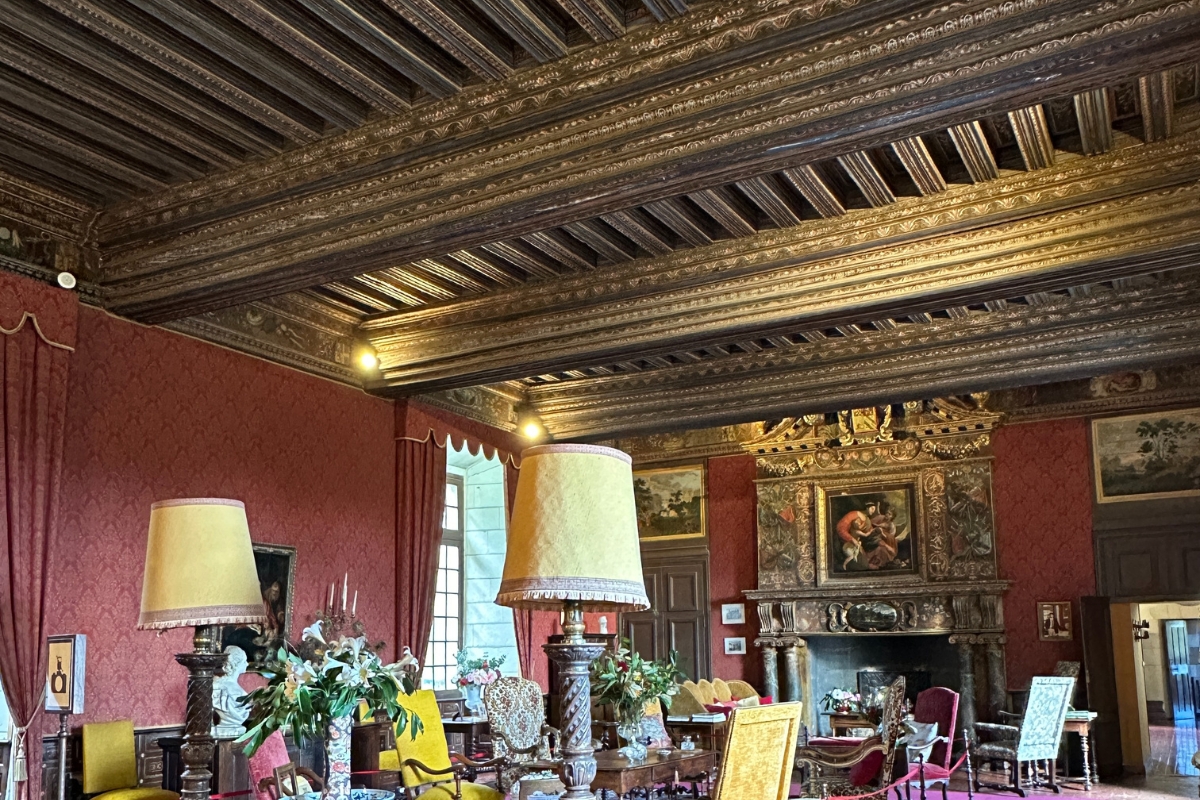
Entering the château today reveals a seamless blend of historic grandeur and lived-in warmth. From the Guard Room, visitors ascend a wide stone spiral staircase to reach “The Noble Floor,” where the Great Hall stands as a testament to 17th-century artistry. This impressive room, spanning 15 meters in length and 9 meters in width, showcases remarkable early 17th-century pictorial decorations that cover the entire ceiling, plinths, and monumental fireplace with elegant bouquets of flowers and bucolic scenes.
Perhaps most intriguing is the ornamental frieze adorning the Great Hall’s walls. Here, the wedding rings of the Maillé and Carman families intertwine in perpetual unity, their significance explained by an inscription near the fireplace that reads: “Here are the wedding rings of the Sires of Carman since François Léon, younger brother of Count Léon, married Béatrix, heiress to the house of Carman, to take the name and the arms of the aforesaid house, and to share with the said seigneur of Léon, his brother, the seigneury hereby established as an earldom.”
In the East Tower’s ground floor, the chapel stands as a spiritual anchor to the château. Its ogive-arched ceiling and recently restored walls feature painted murals, while the vault above sparkles with decorative stars, creating a contemplative space that has served generations of residents.
From Revolution to Artistic Haven
The château’s story took a dramatic turn during the French Revolution. Its owner at the time, Charles Tiercelin d’Apelvoisin, served as a delegate to the Estates-General of 1789, only to meet a tragic end on the scaffold in 1793. This turbulent period ushered in an era of change, and under the First French Empire, l’Islette passed through a succession of different owners throughout the 19th century.
Yet it was in the closing years of that century that l’Islette would play host to one of its most captivating chapters. Around 1890, the château became a refuge for sculptors Auguste Rodin and Camille Claudel, who found inspiration within its walls on several occasions. Their presence added another layer to the château’s rich historical tapestry, bridging its medieval origins with the dawn of modern art.
Preservation of a Living Monument
Château de l’Islette’s significance was officially recognized with its classification as a historical monument on November 15, 1946. However, it was in the 1960s that the château underwent a transformative restoration campaign led by Pierre and Madeleine Michaud, parents of the current owners. Their efforts laid the groundwork for what would become a new chapter in the château’s history.
In 2010, the current owners made the significant decision to open their home to the public, sharing this remarkable piece of French heritage while maintaining its character as a lived-in family residence. Unlike many historical monuments frozen in time, l’Islette continues to evolve as a living space, where centuries of history coexist with contemporary life.
Visiting Château de l'Islette Today
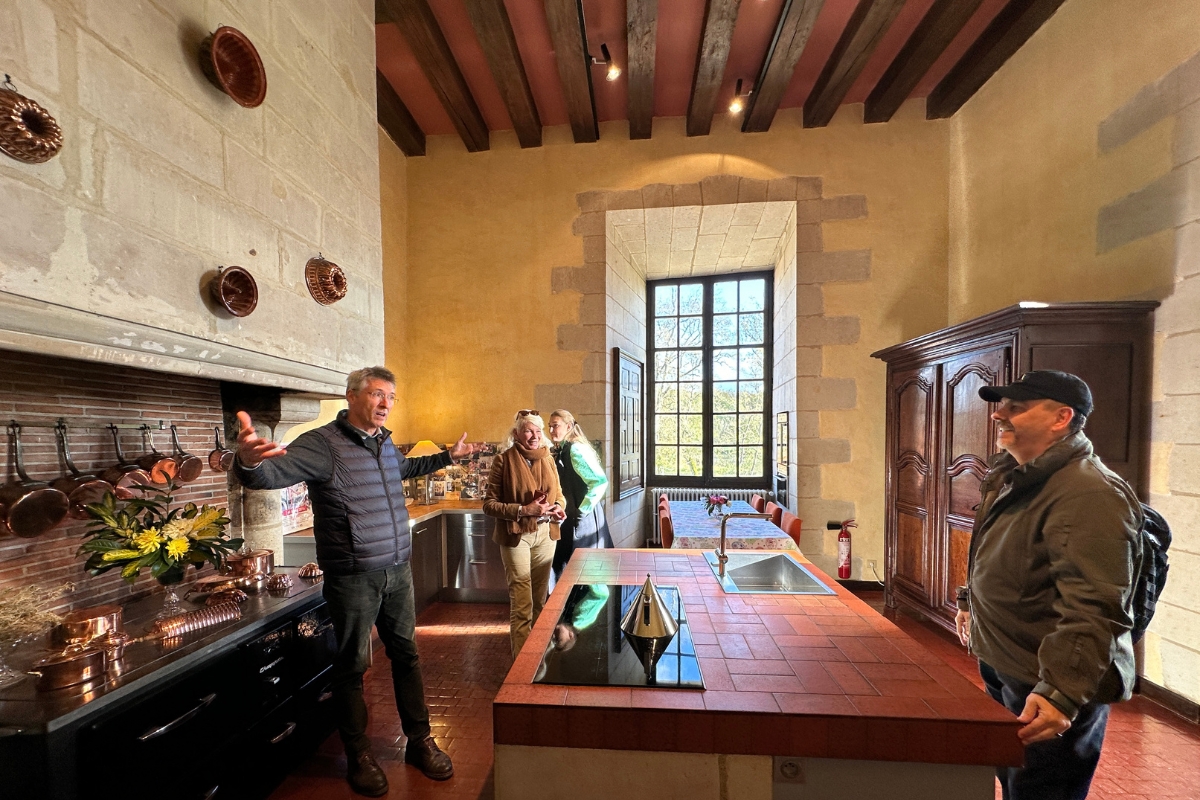
The château welcomes visitors into an authentic slice of Loire Valley life, where each room tells part of its continuing story. Unlike many historic properties, l’Islette’s rooms remain furnished and lived-in, offering guests a unique glimpse into how a historical monument can also serve as a contemporary family home.
Practical Information for Visitors
Visiting l’Islette offers a different experience from the grander, more touristic châteaux of the Loire. Its location near Azay-le-Rideau places it perfectly for those exploring the heart of the Loire Valley. The surrounding landscape, with the Indre River’s “tortuous course” that so enchanted Beaumarchais, continues to captivate visitors today.
Nearby attractions include the famous Château d’Azay-le-Rideau (2 km), Château d’Ussé, Château de Langeais, and Château de Villandry, making l’Islette an ideal addition to a Loire Valley château tour.
Our Thoughts
Our November visit concluded in a way that perfectly embodied l’Islette’s unique character as both historical monument and living home. The owners invited us to join them for tea in their private quarters, where Madam Benedicte Michaud served us a wonderful homemade tarte tatin. This gesture of hospitality, enjoyed near the chateau that has witnessed everything from medieval defense strategies to revolutionary turmoil to artistic inspiration, exemplified what makes l’Islette special – it’s not just a preserved relic of the past, but a place where history continues to be made.
As Beaumarchais caught that first glimpse of l’Islette through the trees in 1769, he couldn’t have known that over 250 years later, this “ancient château, flanked by towers” would continue not just to survive but to thrive as both the Michaud family home and a testament to French heritage. Today’s visitors can experience this living history for themselves, walking the same halls that have welcomed everyone from Renaissance nobles to revolutionary delegates, from celebrated artists to modern-day families.
Visitor Information
Opening Hours
April through September:
Tuesday through Sunday
Morning visits: 10:00 AM – 12:30 PM
Afternoon visits: 2:00 PM – 6:00 PM
Closed Wednesdays
October through March:
Weekends only: 2:00 PM – 5:00 PM
Special holiday openings
Group visits available by appointment
Access
- Location: Route de Langeais – 37190 AZAY-LE-RIDEAU
- By Car: From Paris via A10 motorway
- By Train: TGV to Tours, then local connection to Azay-le-Rideau
- Parking: Free on-site
Photography Guide: Capturing Château de l'Islette's Beauty
Best Times for Photography
Morning Light
- Early morning offers soft light on the château’s eastern façade
- The rising sun illuminates the Renaissance details and cherubs above the entrance
- Morning mist often rises from the Indre River, creating atmospheric shots
Golden Hour
- Late afternoon light bathes the western façade in warm tones
- The setting sun reflects beautifully off the river waters
- Long shadows emphasize the architectural details
Notable Viewpoints
River Perspectives
- The bridge crossing the Indre provides classic views of the château reflecting in the water
- The northwestern corner offers unobstructed views of both towers and their reflections
- East bank of the Indre captures the château framed by trees
Architectural Details
- The main entrance with its Renaissance cherubs and coat of arms details best photographed in morning light
- Mullioned windows and their scrolled lintels stand out in side lighting
- The spiral staircase offers interesting interior architectural shots
Garden Views
- Tree-lined approach provides natural framing opportunities
For more information visit the Château de l’Islette website.
Related Articles:
Interested in exploring more of the Loire Valley? Check out these related articles:
1. The Best Chateaux in the Loire Valley: A Traveler’s Ultimate Guide
2. 10 Hidden French Châteaux of the Loire Valley You Shouldn’t Miss


