


About Chateau de Villandry
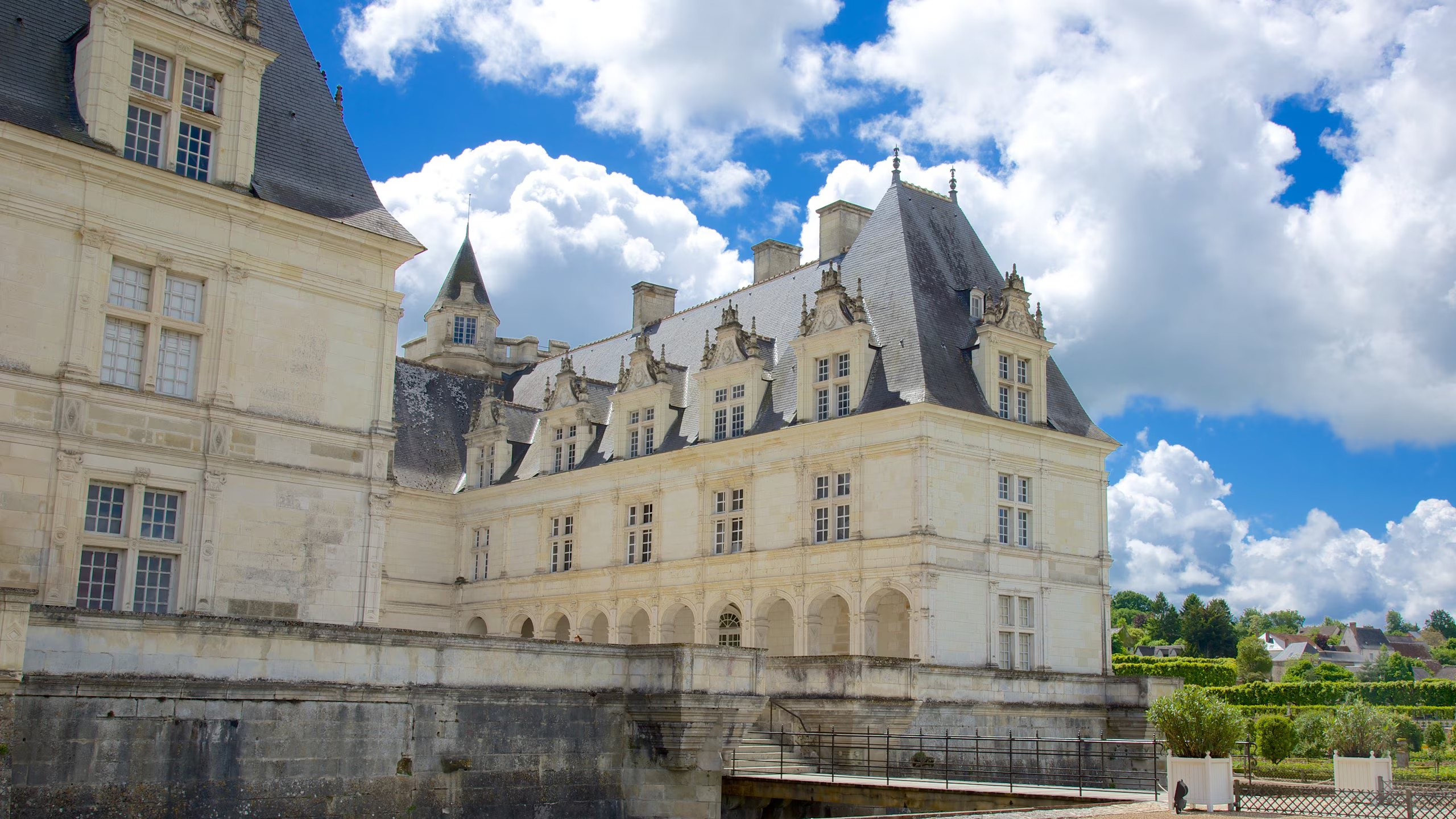
Château de Villandry is the last of the great Renaissance châteaux built on the banks of the Loire River. While its architecture is impressive, Villandry is world-renowned for its extraordinary gardens, considered among the most spectacular in France and the finest example of Renaissance garden design in the world.
The original medieval fortress was acquired in 1532 by Jean Le Breton, Minister of Finance for François I, who demolished most of the existing structure to build the elegant Renaissance château we see today. In 1906, the château was purchased by Dr. Joachim Carvallo and his American wife, Ann Coleman, who devoted their fortune and lives to restoring the property and recreating the magnificent Renaissance gardens.
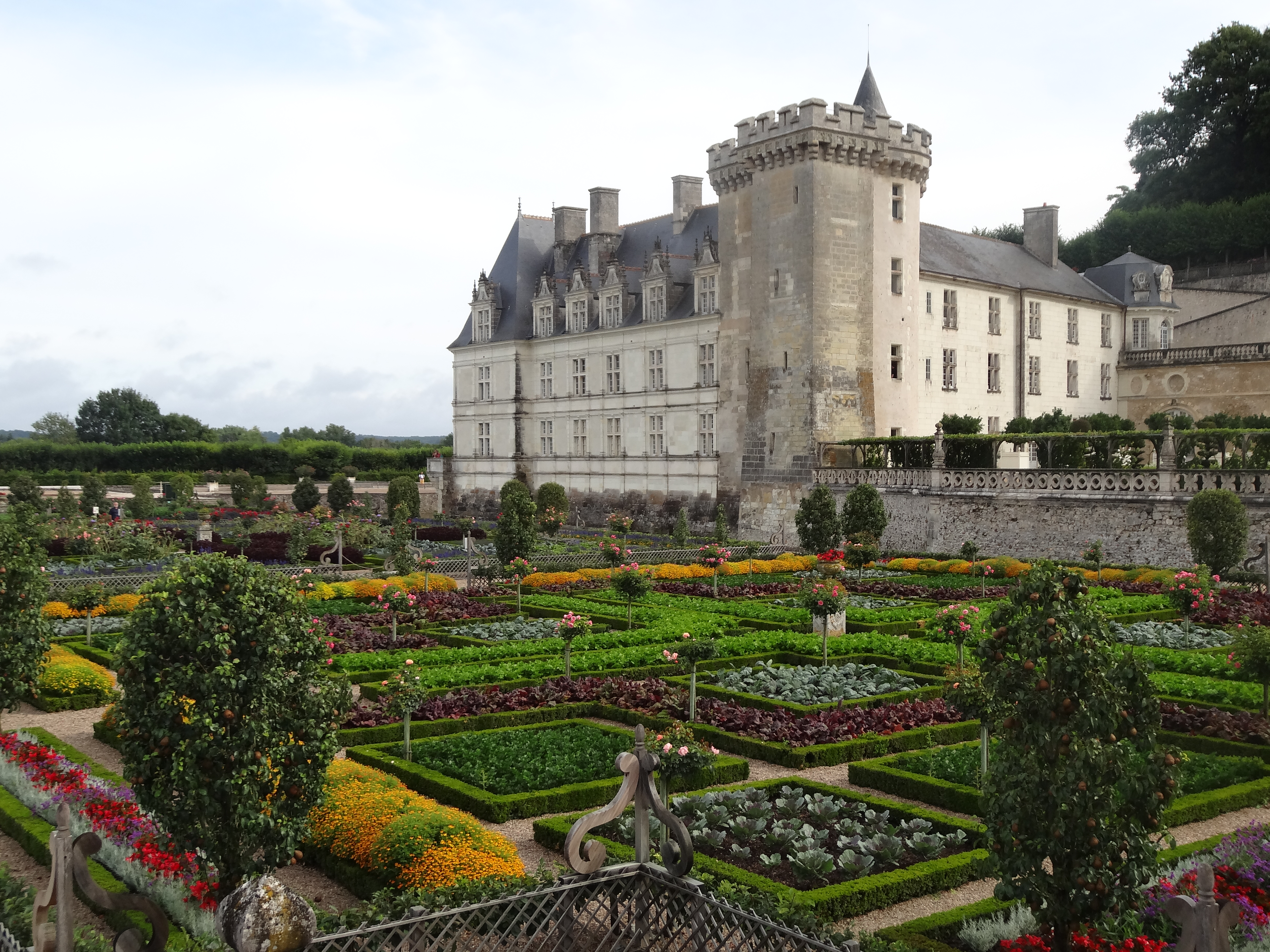
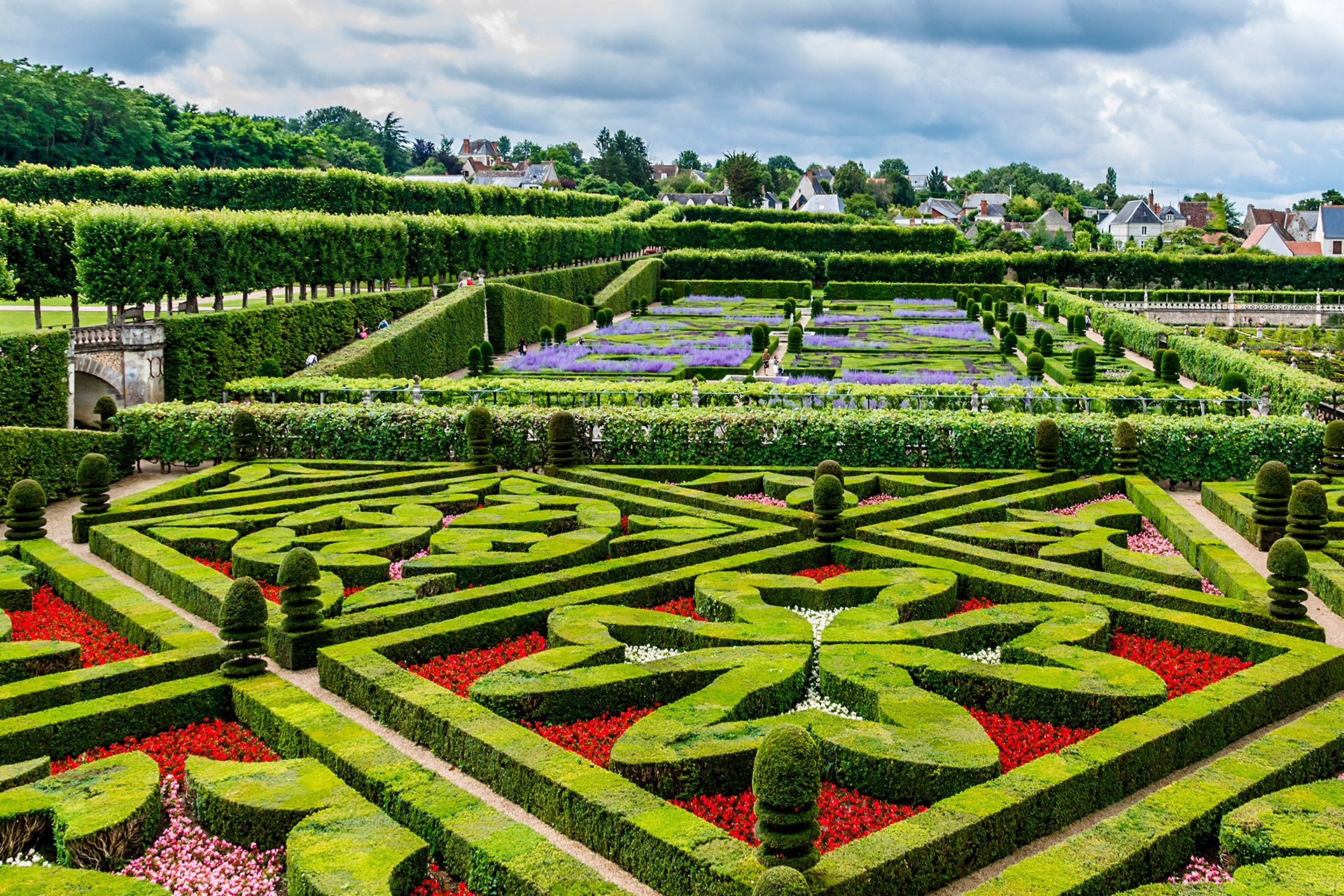
The gardens of Villandry are arranged on three terraces, each with a distinct purpose. The upper terrace features the Water Garden with a Louis XV mirror pool. The second level houses the ornamental Garden of Love, divided into four sections representing different types of love: tender, passionate, fickle, and tragic. Below this is the spectacular Kitchen Garden, consisting of nine identical squares each planted with different vegetables in geometric patterns that change with the seasons, creating a mesmerizing checkerboard of colors.
The château’s interior is elegantly furnished with Spanish-Moorish art, Renaissance pieces, and 18th-century decorative elements, a testament to the Carvallo family’s refined taste. Today, the château remains in the hands of their descendants who continue to maintain and enhance this extraordinary property.
Did You Know?
- The Kitchen Garden uses over 40 different types of vegetables arranged in precise geometric patterns that create a living tapestry.
- The Garden of Love uses boxwood designs and flower colors to symbolize four types of love: tender, passionate, fickle, and tragic.
- Unlike many Loire Valley châteaux, Villandry has remained in private ownership by the same family since 1906.
Location
Type: Chateau
Status: Public
Region: Loire Valley
Location: Château de Villandry is located in the commune of Villandry in the Indre-et-Loire department, approximately 15 kilometers west of Tours.
Castle Gallery



Historical Timeline
Medieval Origins
The story of Château de Villandry began in the 11th century when the region was known as "Colombiers." A medieval fortress was built on the site, occupying a strategic defensive position within France during a period of territorial instability following the unification by Emperor Charlemagne.
Royal Peace Negotiations
The fortress at Colombiers (later Villandry) hosted a historic meeting between King Philip II "Augustus" of France and King Richard I "The Lionheart" of England. The two monarchs met to discuss peace terms, ultimately ending the war between their countries. This event highlights the strategic and political importance of the château in medieval times.
Construction of the Keep
The original medieval keep (tower) was constructed during this period. This fortified tower is the only remaining medieval structure of the original fortress that survives to this day, serving as a reminder of the château's military origins.
Jean Le Breton's Acquisition
Jean Le Breton, King Francis I's Finance Secretary and Controller-General for War, purchased the property on March 4, 1532, for the sum of 35,000 pounds. Seeking to impress the King, he immediately began transforming the dilapidated medieval fortress into an elegant Renaissance château.
Renaissance Transformation
Inspired by his travels in Italy, Jean Le Breton rebuilt the château around the original medieval keep, creating the distinctive U-shaped layout that is recognizable today. The new design featured arcades, mullioned windows edged with carved pilasters, high-roof windows with sculpted gables, and sloping slate roofs—all hallmarks of the French Renaissance style.
Royal Visit
Following Jean Le Breton's death, his widow received King Francis I himself at the residence. This royal visit confirmed the château's status as one of the finest Renaissance residences in the Loire Valley.
Official Renaming
The château and surrounding estate were officially renamed "Villandry," replacing the original name "Colombiers." The name Villandry was chosen as it matched the name of another piece of land owned by Jean Le Breton, consolidating the family's holdings under a single name.
Neoclassical Renovation
The château was purchased by Michel-Ange de Castellane, King Louis XV's ambassador and a renowned tastemaker of his time. While largely preserving the exterior, he focused on modernizing the interior with wood panelling for insulation and neoclassical furnishings. He also redesigned the gardens in the formal French style that was popular at the time.
French Revolution
During the French Revolution, the château was confiscated from the Castellane family, who had fallen on financial difficulties. This began a period of changing ownership and gradual decline for the once-magnificent estate.
Imperial Ownership
Emperor Napoleon Bonaparte acquired the château for his brother, Jérôme Bonaparte. During this period, the gardens were redesigned in the English landscape style, moving away from their formal Renaissance origins. However, following Napoleon's downfall, the château fell into a state of disrepair.
Period of Decline
Throughout much of the 19th century, Château de Villandry changed hands multiple times and gradually deteriorated. The once magnificent gardens were neglected, and parts of the building fell into disrepair as successive owners lacked either the resources or the interest to maintain the historic property properly.
Carvallo's Acquisition
Dr. Joachim Carvallo, a Spanish doctor and scientist, and his American wife Ann Coleman (heiress to the Coleman steel fortune) purchased the château. The couple dedicated their fortune and the rest of their lives to restoring Villandry to its former glory, beginning an ambitious restoration project.
Renaissance Garden Restoration
With the help of 100 builders, Joachim Carvallo restored the Renaissance beauty of the château's façade. More significantly, he undertook extensive historical research to recreate authentic Renaissance gardens, replacing the 19th-century English-style landscape with formal geometric patterns inspired by 16th-century designs.
National Monument Status
In recognition of its historical and architectural significance, Château de Villandry was designated as a Monument Historique (Historic Monument) by the French government, ensuring its protection and preservation for future generations.
UNESCO World Heritage Site
Along with other châteaux of the Loire Valley, Villandry was inscribed on the UNESCO World Heritage List, acknowledging its outstanding universal value as part of the cultural landscape of the Loire Valley.
Sun Garden Creation
Henri Carvallo, great-grandson of Joachim Carvallo and the current owner of the château, designed and opened the "Sun Garden" to the public. This new garden features three distinct chambers—The Children's Chamber, The Sun Chamber, and The Cloud Chamber—each with its own unique features and plantings.
Living Heritage
Today, Château de Villandry remains in the Carvallo family and is one of the most visited châteaux in France, welcoming over 330,000 visitors annually. It is renowned worldwide for its spectacular Renaissance gardens, which include a water garden, ornamental flower gardens, and vegetable gardens laid out in formal patterns with intricate geometric designs created with low box hedges. The château stands as a testament to the vision and dedication of generations of caretakers who have preserved this magnificent piece of French heritage.