

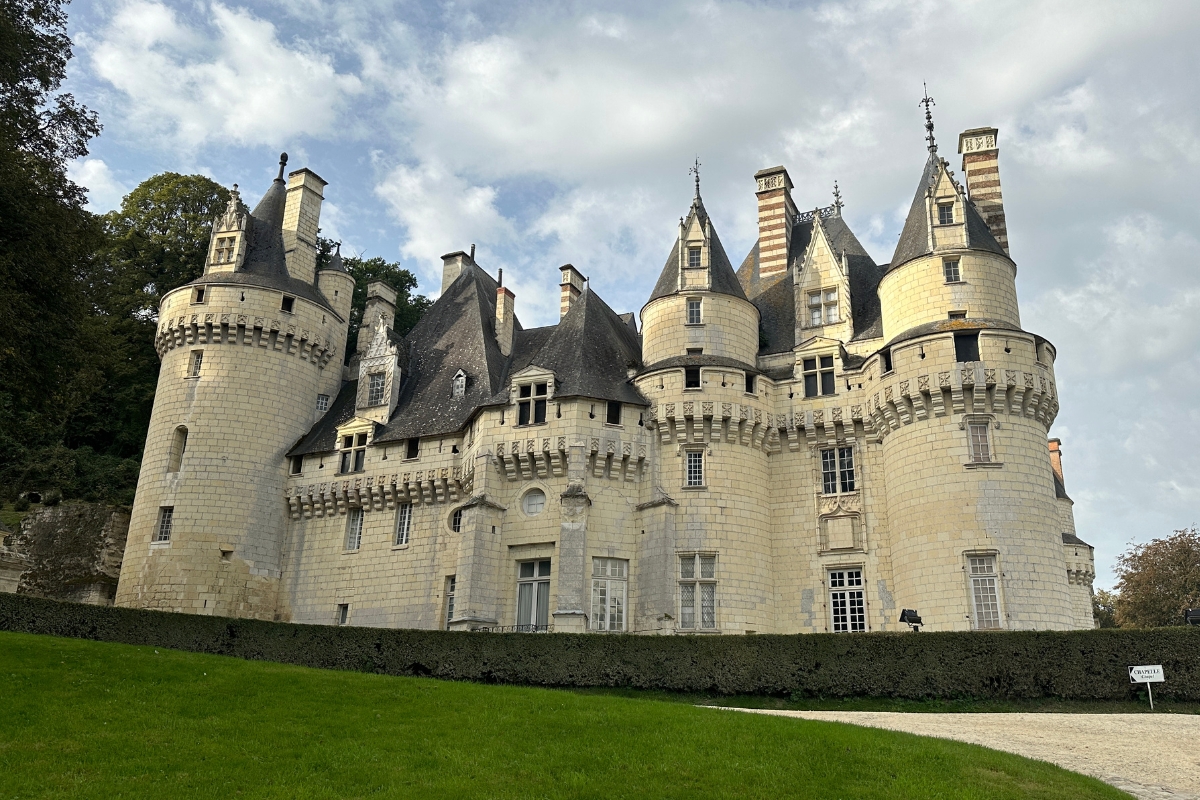
As we approach the towering spires of Château d’Ussé, it’s easy to see why this magnificent castle is often called the best château in Loire Valley. With its fairy tale allure and rich history, Château d’Ussé offers visitors a truly enchanting experience that sets it apart from other castles in the region.
A Fairy Tale Come to Life
As we step through the gates of Château d’Ussé, it’s as if we’ve entered the pages of a storybook. The château’s striking silhouette against the sky immediately evokes images of Disney’s Sleeping Beauty castle, and for good reason. It’s widely believed that Charles Perrault, the author of the classic fairy tale “The Sleeping Beauty in the Wood,” drew inspiration from this very castle when writing his beloved story in the late 17th century.
During his visits to the château, Perrault was reportedly captivated by its dreamy architecture and picturesque setting. The castle’s blend of medieval fortifications and Renaissance elegance, coupled with its location overlooking the Indre River and surrounded by lush forests, provided the perfect backdrop for a fairy tale princess’s enchanted sleep.
The connection to Sleeping Beauty is more than just architectural. Inside the château, we’re treated to a series of tableaux depicting scenes from the fairy tale, bringing the story to life in a way that captivates visitors of all ages. These dioramas, featuring beautifully crafted wax figures in period costumes, allow us to walk through the story, from the cursed princess pricking her finger on the spindle to the heroic prince fighting through thorny brambles to reach his true love.


The Rich History of Château d'Ussé
While its fairy tale connections are enchanting, the real history of Château d’Ussé is equally fascinating. Originally built in the 11th century as a stronghold by the Norman seigneur of Ussé, Gueldin I, the château has undergone numerous transformations over the centuries.
As we explore the castle’s halls, we can see evidence of its evolution:
11th-15th Centuries: The Medieval Fortress
The original structure was a formidable fortress designed to guard the valley between the Indre and Loire rivers. Its strategic location made it an important defensive post during the turbulent Middle Ages.
15th-16th Centuries: Renaissance Transformation
In 1485, the château was acquired by Jacques d’Espinay, chamberlain to King Charles VIII and Louis XII. Under the Espinay family’s ownership, Château d’Ussé began its transformation from a medieval stronghold into an elegant Renaissance residence. They added the iconic round towers that give the château its fairy tale appearance and began work on the lavish interiors.
17th-18th Centuries: The Golden Age
In 1639, Louis Bernin de Valentinay, Comptroller General of the Royal Household, purchased the château. His son, Jean, continued the embellishments, commissioning the famous landscape architect André Le Nôtre to design the terraced gardens. It was during this period that Charles Perrault frequented the château and found inspiration for “Sleeping Beauty.”
19th Century to Present: Preservation and Heritage
In 1807, the château was acquired by the Duke of Duras, and in 1885, it passed to the Count of Blacas through marriage. The Blacas family continues to own and maintain the château today, preserving its rich history while sharing it with the public.
As we walk through the château, we can see the legacy of each of these periods. The great kitchens with their massive fireplaces speak to medieval feasts, while the elegantly appointed state rooms showcase the refinement of the Renaissance and Baroque periods.

Architectural Marvels
What truly makes Château d’Ussé the best château in Loire Valley is its stunning architecture. As we wander through the castle, we’re struck by the harmonious blend of different architectural styles.
The medieval elements of Château d’Ussé are impossible to miss. Imposing stone towers with their conical roofs dominate the skyline, while thick fortress walls speak to the château’s defensive origins. Look closely, and you’ll spot arrow slits and machicolations, remnants of its military past that transport us back to an era of sieges and chivalry.
As we move through the château, Renaissance features seamlessly blend with the medieval structure. Elegant facades adorned with large, symmetrical windows bring light and grace to the once-fortress. Our eyes are drawn upward to ornate chimneys and dormer windows that adorn the roofline, adding a touch of sophistication to the silhouette. In the inner courtyard, graceful arcades create a sense of openness and harmony, a stark contrast to the defensive architecture of earlier centuries.
One of the most striking features of Château d’Ussé is its Gothic chapel, a jewel of 16th-century architecture. As we step inside, we’re awed by the soaring ribbed vaults that seem to touch the heavens. Exquisite stained glass windows paint the interior with vibrant hues, telling stories of faith and nobility. The intricately carved choir stalls showcase the skill of medieval craftsmen, each detail a testament to devotion and artistry.
The interior splendor of Château d’Ussé continues to amaze as we explore further. Each room in the château tells a story of the tastes and lifestyles of its noble inhabitants. In the Guard Room, an impressive collection of arms and armor stands ready, as if waiting for long-gone knights to claim them. The King’s Chamber, prepared for Louis XIV though he never stayed here, speaks volumes about the château’s prestigious connections and the ambitions of its owners.
Perhaps most impressive is the Vault Room, where centuries-old tapestries transport us to another time. The attention to detail is remarkable, from the ornate fireplaces to these beautifully preserved wall hangings. We’re particularly struck by the 17th-century Flemish tapestries, their vivid colors and intricate designs seemingly untouched by time. Each thread tells a story, each scene a window into a world long past but preserved within these walls.

Gardens Fit for Royalty
No visit to Château d’Ussé would be complete without a stroll through its magnificent gardens. Designed by the famous landscape architect André Le Nôtre, who also created the gardens at Versailles, these green spaces are a testament to the château’s royal connections.
Le Nôtre’s design, implemented in the late 17th century, transformed the castle’s surroundings into a masterpiece of French formal garden style. As we walk along the perfectly manicured paths, we’re surrounded by a symphony of natural beauty and human artistry. Vibrant flowerbeds burst with color, arranged in intricate geometric patterns that please the eye and showcase the gardener’s skill. Meticulously trimmed topiaries, shaped into cones, spheres, and other whimsical forms, add a touch of fantasy to the landscape.
Serene water features reflect the château’s towers, including a mirror-like pond and graceful fountains that provide a soothing soundtrack to our walk. Long, straight allées lined with perfectly pruned trees create dramatic perspectives, drawing our gaze towards carefully planned vistas and focal points.
The gardens are laid out on several levels, connected by elegant staircases, each offering a new perspective on the château and its surroundings. From the upper terrace, we’re treated to panoramic views of the Indre valley, a breathtaking landscape that stretches as far as the eye can see. The middle level features intricate parterres and the main water features, a showcase of Le Nôtre’s genius for combining water, greenery, and stone.
As we descend to the lower gardens, we notice a transition to a more natural landscape. Here, the formal designs gradually give way to the wild beauty of the surrounding countryside. This progression from manicured perfection to natural splendor is a masterclass in landscape design, seamlessly blending the human touch with the raw beauty of nature.
Throughout our walk, we’re treated to different vistas of the château, each more breathtaking than the last. The gardens offer stunning views of the surrounding countryside, including the Indre River and the lush forests of Chinon. It’s easy to imagine royalty and nobles of centuries past enjoying these same vistas, perhaps discussing matters of state or engaging in courtly romance beneath the shade of a centuries-old tree.
One particularly charming feature catches our eye: the potager, or kitchen garden. This area has been lovingly restored to showcase the types of vegetables and herbs that would have been grown for the château’s kitchens in centuries past. It’s a delightful glimpse into the practical side of château life, reminding us that even in the midst of such grandeur, the rhythms of daily life continued.
As we conclude our tour of the gardens, we’re left with a sense of awe at the vision and skill required to create such a masterpiece. Le Nôtre’s design, lovingly maintained through the centuries, continues to captivate visitors, offering a green haven that perfectly complements the architectural splendor of Château d’Ussé.

Visiting Château d'Ussé: A Personal Experience
Our visit to Château d’Ussé is nothing short of magical. From the moment we catch our first glimpse of its fairy tale towers to our final steps through the enchanting gardens, we’re transported to a world of wonder and history.
What sets this château apart is not just its beauty or its connection to Sleeping Beauty, but the immersive experience it offers. As we explore, we’re not just observers but participants in the château’s ongoing story. The carefully curated exhibits, including period furniture and costumes, bring the castle’s history to life in a way that’s both educational and entertaining.
Highlights of our visit include:
- The armory, where we marvel at the gleaming suits of armor and imagine the knights who might have worn them
- The king’s chamber, where we can almost hear the whispers of courtly intrigue
- The attics, where the Sleeping Beauty scenes transport us into the realm of fairy tales
The staff at Château d’Ussé are knowledgeable and passionate, eager to share fascinating anecdotes and historical details that bring each room to life. Their stories help us understand not just the grand sweep of history, but the day-to-day lives of the people who called this magnificent place home.
For those seeking one of the best châteaux in Loire Valley, Château d’Ussé offers an unparalleled combination of historical significance, architectural beauty, and fairy tale magic. It’s a place where history and fantasy intertwine, creating an unforgettable experience for visitors of all ages.
FAQs
When is the best time to visit Château d’Ussé?
The château is open year-round, but spring and early summer offer the most beautiful garden views. The gardens are particularly stunning in May and June when the roses are in bloom.
How long should I plan for my visit?
We recommend allocating at least 2-3 hours to fully explore the château and its gardens. History enthusiasts might want to allow even more time to fully appreciate all the details.
Is Château d’Ussé suitable for children?
Absolutely! The Sleeping Beauty exhibits in the attic are particularly popular with younger visitors. The castle’s fairy tale atmosphere, combined with the spacious gardens, make it an excellent destination for families.
Can I take photos inside the château?
Photography is allowed in most areas for personal use, but flash photography and tripods are generally not permitted. Some rooms may have restrictions, so always check with the staff or look for signage.
Are guided tours available?
Yes, guided tours are available and can be booked in advance. These tours offer deeper insights into the château’s history and architecture.
How does Château d’Ussé compare to other Loire Valley châteaux?
While all Loire Valley châteaux have their charms, Château d’Ussé stands out for its fairy tale connections, diverse architecture spanning multiple periods, and its beautifully preserved interiors. Its gardens, designed by Le Nôtre, are also a significant draw.
Is the château accessible for visitors with mobility issues?
Parts of the château and gardens are accessible, but due to its historic nature, some areas may be challenging for visitors with mobility issues. It’s best to contact the château directly for specific accessibility information.
As we conclude our visit to Château d’Ussé, we’re left with a sense of wonder and a deeper appreciation for the rich tapestry of history and legend that makes this the best château in Loire Valley. Whether you’re a history buff, a fairy tale enthusiast, or simply someone who appreciates beauty, Château d’Ussé offers an experience that will stay with you long after you’ve left its magical grounds.
We encourage you to plan your own visit to this extraordinary place. Step into the pages of history and fairy tales, and create your own magical memories at Château d’Ussé, truly the crown jewel of the Loire Valley.
How to Get There
Château d’Ussé is conveniently located in the heart of the Loire Valley, making it accessible by various means of transportation.
By Car: The château is approximately 260 km southwest of Paris. Take the A10 motorway towards Bordeaux, then exit at Tours. Follow signs for Chinon and then Ussé. The drive takes about 3 hours from Paris.
By Train: Take a TGV from Paris Montparnasse station to Tours (about 1 hour). From Tours, you can rent a car or take a regional train to Chinon, followed by a short taxi ride to the château.
By Guided Tour: Many tour companies offer day trips to Loire Valley châteaux from Paris or Tours, often including Château d’Ussé in their itineraries.
Best Times to Visit
While Château d’Ussé is beautiful year-round, certain seasons offer unique experiences:
Spring (April-June): This is perhaps the most magical time to visit. The gardens come alive with blooming flowers, particularly the rose garden in May and June. The weather is mild, perfect for exploring both the château and its grounds.
Summer (July-August): Peak tourist season offers the warmest weather and longest daylight hours. The gardens are in full bloom, and you might catch special summer events or evening tours.
Fall (September-November): As the crowds thin, you can enjoy the château in relative tranquility. The changing colors of the surrounding forest create a stunning backdrop.
Winter (December-March): While the gardens are dormant, the château takes on a mystical quality, especially if there’s a dusting of snow. Christmas decorations in December add a festive touch.
Nearby Attractions
Make the most of your trip to the Loire Valley by combining your visit to Château d’Ussé with these nearby attractions:
- Château de Villandry (30 km): Famous for its spectacular Renaissance gardens.
- Château d’Azay-le-Rideau (20 km): A Renaissance gem built on an island in the Indre River.
- Chinon (15 km): A historic town known for its medieval fortress and excellent wines.
- Fontevraud Abbey (25 km): One of the largest surviving monastic cities from the Middle Ages.
- Tours (50 km): The largest city in the region, known for its preserved old town and Saint-Gatien Cathedral.
Visitor Tips
To make the most of your visit to Château d’Ussé, keep these tips in mind:
- Wear comfortable shoes: The château and gardens involve a fair amount of walking, often on uneven surfaces.
- Bring a camera: Photography is allowed in most areas, and you’ll want to capture the stunning architecture and landscapes.
- Allow plenty of time: Plan for at least 2-3 hours to fully explore the château and gardens.
- Visit early: Arriving when the château opens can help you avoid crowds, especially during peak season.
- Don’t miss the attics: The Sleeping Beauty scenes in the attics are a unique feature of Château d’Ussé.
- Pack a picnic: While there’s a tea room on site, the gardens offer beautiful spots for a picnic lunch.
- Check for events: The château occasionally hosts special events, particularly in summer.
Booking Information
To ensure a smooth visit to Château d’Ussé, consider booking your tickets in advance, especially during peak season.
Official Website: www.chateaudusse.fr Ticket Booking: [Direct link to booking page]
Guided Tours: For a more in-depth experience, book a guided tour. These can be arranged through the château’s official website or through various tour operators specializing in Loire Valley excursions.
Opening Hours:
- February 15 to November 11: 10:00 AM to 6:00 PM
- November 12 to February 14: 10:00 AM to 5:00 PM
- Closed on December 25 and January 1
Note: Last admission is 30 minutes before closing time. Opening hours may vary, so it’s always best to check the official website before your visit.
As you plan your visit to Château d’Ussé, remember that you’re not just visiting a castle – you’re stepping into a fairy tale. We hope this guide helps you make the most of your magical journey to the best château in the Loire Valley!
Related Articles
Interested in exploring more of the Loire Valley? Check out these related articles:
1. The Best Chateaux in the Loire Valley: A Traveler’s Ultimate Guide
2. 10 Hidden French Châteaux of the Loire Valley You Shouldn’t Miss


