

Imagine standing atop the rocky outcrop of Castle Rock, the wind whispering tales of yore in your ear. Below, the bustling medieval city of Edinburgh stretches out, its narrow streets filled with the clamor of merchants, the chatter of townsfolk, and the distant clang of a blacksmith’s hammer. The year is 1540, and Edinburgh Castle stands as an imposing sentinel, its stone walls and towering battlements a symbol of Scotland’s enduring spirit and storied past. Fast forward to today, and this magnificent fortress is once again capturing the public’s imagination, not just through its historical significance, but also as a vibrant icon in pop culture. From films to video games, Edinburgh Castle is being rediscovered by a new generation eager to connect with the past.
A Fortress Through the Ages: The Early History of Edinburgh Castle
Edinburgh Castle’s history is as layered and complex as the ancient rock it sits upon. Archaeological evidence suggests that the site has been occupied since at least the Iron Age, indicating its strategic importance long before the medieval period. The volcanic crag of Castle Rock provided a natural defensive advantage and makes it an ideal location for a stronghold.
The first definitive mention of a royal castle on Castle Rock comes from the early Middle Ages, with King Malcolm III Canmore establishing a royal residence here in the 11th century. This move marked the beginning of the castle’s association with Scottish royalty and its evolution into a central hub of power.
In 1130, King David I of Scotland, Malcolm’s son, significantly expanded the castle, establishing it as a key royal stronghold and administrative center. David I’s reign was marked by the introduction of feudalism to Scotland and a series of religious and social reforms that helped shape the nation’s medieval identity. Under his guidance, the castle’s role transitioned from merely a royal residence to a symbol of royal authority and governance.
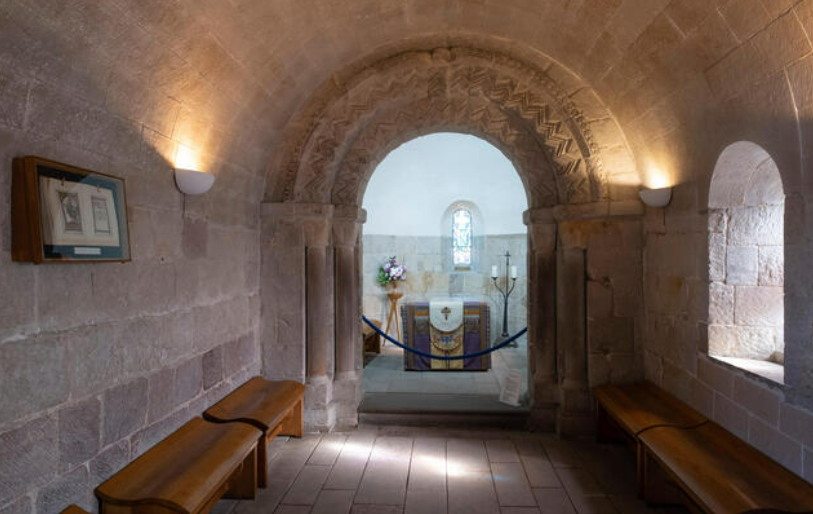
The construction of St. Margaret’s Chapel during David’s reign remains one of the most poignant contributions to the castle. Dedicated to his mother, Queen Margaret, who was later canonized as St. Margaret of Scotland, the chapel stands as the oldest surviving building in Edinburgh. Its simple yet evocative Romanesque architecture offers a window into the spiritual life of the medieval Scots and serves as a reminder of Margaret’s enduring legacy. The chapel’s small, serene interior contrasts sharply with the fortress’s imposing exterior, providing a space for contemplation and reflection amidst the tumult of history.
Throughout the 12th and 13th centuries, Edinburgh Castle continued to grow in importance. It became not only a residence for kings and queens but also a symbol of the burgeoning Scottish state. The castle housed the royal treasury, where the kingdom’s wealth was safeguarded, and it played a crucial role in the administration of justice, with the Great Hall often used for court sessions.
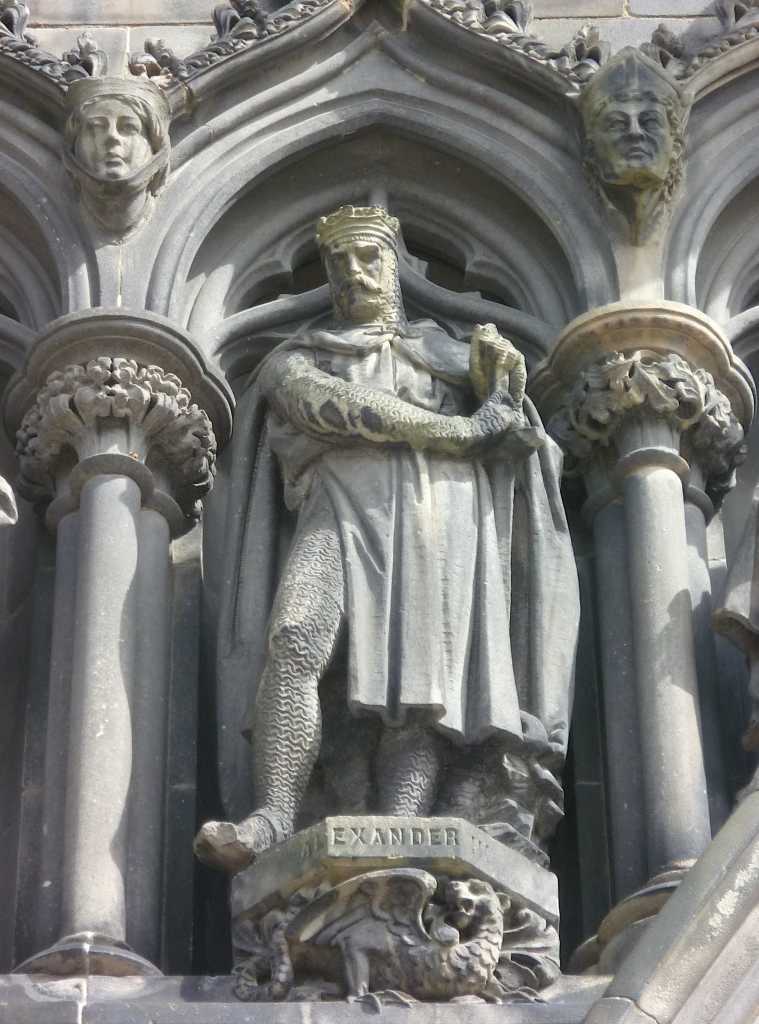
The castle’s early history is also marked by its role in Scotland’s diplomatic and military affairs. It served as a base for operations during various conflicts and was often at the center of negotiations and treaties. For instance, during the reign of Alexander III, the castle saw a period of relative peace and prosperity, which was abruptly ended by his death in 1286. His passing led to a succession crisis and eventually to the Wars of Scottish Independence, during which Edinburgh Castle would once again play a vital role.
Siege and Strife: Edinburgh Castle in the Wars of Independence
The 13th and 14th centuries were a period of intense conflict and political upheaval for Scotland, with Edinburgh Castle at the heart of the struggle for independence. The Wars of Scottish Independence, primarily fought between the Kingdom of Scotland and the Kingdom of England, were a series of military campaigns and political maneuvers that would define Scotland’s fight for sovereignty.
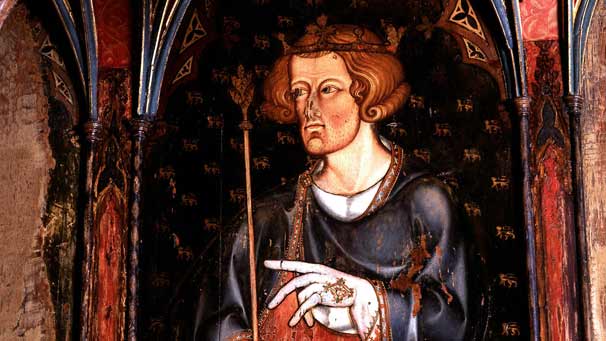
In 1296, Edward I of England, known as “Hammer of the Scots,” captured Edinburgh Castle as part of his campaign to subdue Scotland. Edward’s forces laid siege to the fortress, which was a crucial strategic point given its location and fortifications. The fall of Edinburgh Castle marked the beginning of a period of English occupation, and Edward installed a garrison to maintain control. This occupation was emblematic of the broader English strategy to dominate Scotland by capturing key strongholds.

The Scots, however, were not to be easily subdued. Inspired by leaders like William Wallace and Robert the Bruce, the Scots mounted a determined resistance against English rule. One of the most dramatic episodes in the castle’s history occurred in 1314. Thomas Randolph, Earl of Moray and a trusted lieutenant of Robert the Bruce, orchestrated a daring night raid to recapture the castle from the English. Randolph and his men scaled the sheer cliffs of Castle Rock under cover of darkness, surprising the English garrison and reclaiming the fortress. This bold and audacious maneuver was not only a significant military victory but also a powerful symbol of Scottish resilience and ingenuity.
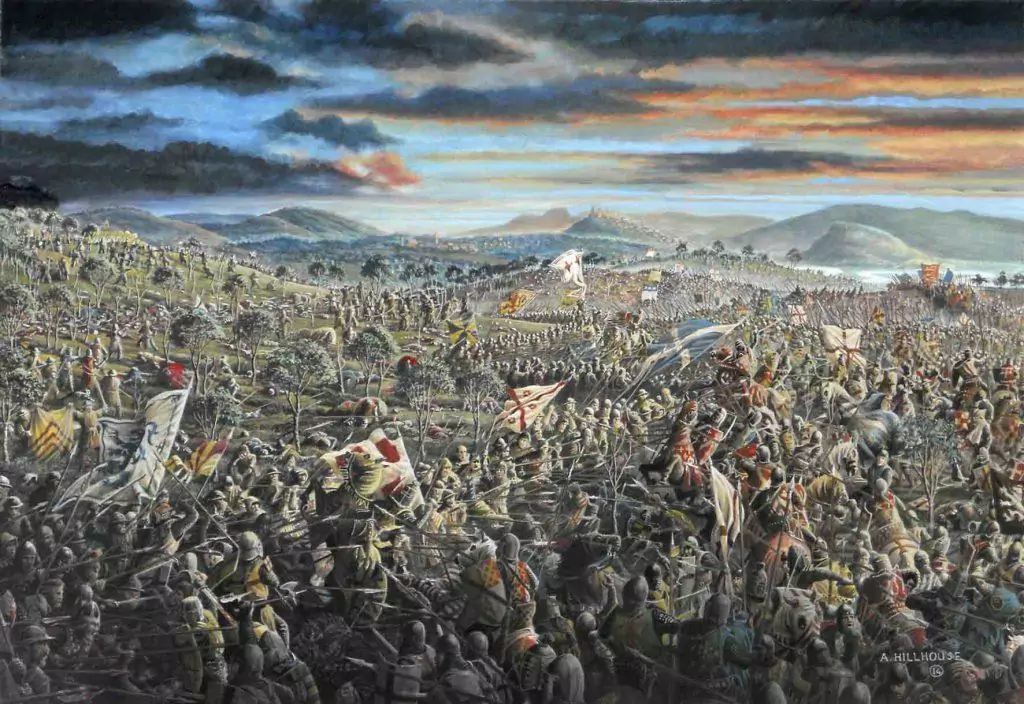
Another poignant story from this period involves the castle’s role in the Battle of Bannockburn in 1314. After securing the castle, Robert the Bruce led his forces to a decisive victory against the English at Bannockburn, solidifying his position as King of Scots and marking a turning point in the war for independence.
The castle changed hands several times during the ensuing decades, reflecting the ebb and flow of the conflict. Each capture and recapture of the fortress was a demonstration of the fierce determination of both sides to control it. The wars were marked by periods of intense fighting, as well as political intrigue and negotiation.

A pivotal moment came in 1328 with the signing of the Treaty of Edinburgh-Northampton. This treaty, ratified by Edward III of England and Robert the Bruce, officially recognized Scotland’s independence and Robert’s right to the throne. As part of the treaty terms, Edinburgh Castle was returned to the Scots, symbolizing a hard-fought victory in their quest for self-determination. The return of the castle marked the end of the first War of Scottish Independence and was a significant milestone in the nation’s history.
The Wars of Independence were not only military conflicts but also battles for national identity and sovereignty. The struggles of this period forged a strong sense of Scottish nationalism and laid the groundwork for future generations. Edinburgh Castle, as a focal point of these wars, embodies the spirit of defiance and the quest for freedom that characterized the era. Its walls bear silent witness to the bloodshed, bravery, and tenacity of those who fought to defend their homeland.
A Royal Residence and Military Garrison: Renaissance to the Enlightenment
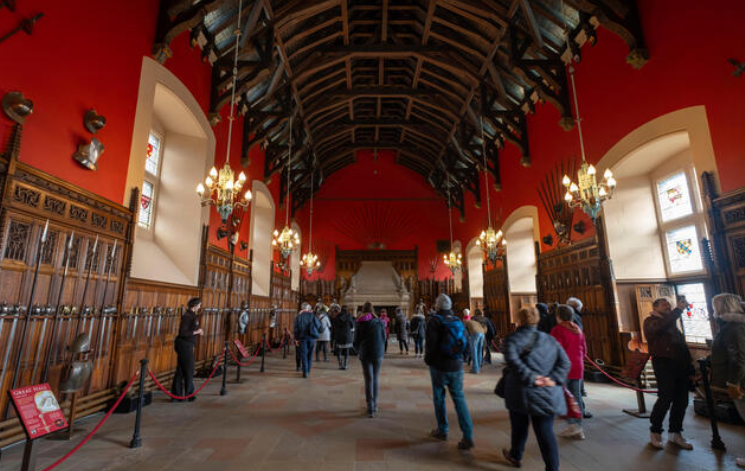
The Renaissance period ushered in a new era for Edinburgh Castle. James IV and his successors transformed the fortress into a magnificent royal palace. The Great Hall, completed in 1511, stands as a testament to this transformation. Its hammerbeam roof and grand fireplace speak to the castle’s role as a center of political and social life.
You might be familiar with the “Black Dinner” of 1440. During this infamous event, the young Earl of Douglas and his brother were invited to dine at the castle, only to be presented with a black bull’s head, a symbol of death, and subsequently executed. This brutal act of treachery was a stark reminder of the ruthless power struggles that defined medieval politics. The “Black Dinner” is said to have inspired George R.R. Martin’s infamous “Red Wedding” in his Game of Thrones series. No spoilers here, you’ll have to watch if you haven’t yet!
You might also know that Mary, Queen of Scots gave birth to James VI in the royal apartments in 1566, a room still preserved today. James would go on to unite the crowns of Scotland and England in 1603, becoming James I of England. This union marked a pivotal moment in British history, with Edinburgh Castle playing a key role in the narrative of these united crowns.
The 16th and 17th centuries also saw the castle’s role shift towards that of a military garrison. The tumultuous events of the English Civil War and the Jacobite Risings reinforced its strategic importance. Notably, the castle withstood a siege in 1745 during the last Jacobite Rising, and there, the castle demonstrated its enduring military significance.
Modern-Day Edinburgh Castle: A Living Monument

Today, Edinburgh Castle is a living monument, drawing millions of visitors from around the world. It houses the Crown Jewels of Scotland and the Stone of Destiny, both symbols of Scotland’s royal heritage. The National War Museum, located within the castle, provides a colorful narrative of Scotland’s military history.
For those planning a visit, the castle offers a range of experiences. From the daily firing of the One O’Clock Gun, a tradition dating back to 1861, to exploring the dark and atmospheric dungeons where prisoners of war were once held, there is something to captivate every visitor.
A lesser-known yet fascinating feature of the castle is Mons Meg, a colossal medieval cannon gifted to James II in 1457. Weighing over six tons and capable of firing a 150kg gunstone for two miles, Mons Meg was a marvel of medieval engineering and a formidable weapon of war.
Traveling to Edinburgh Castle: Tips for the Modern-Day Explorer
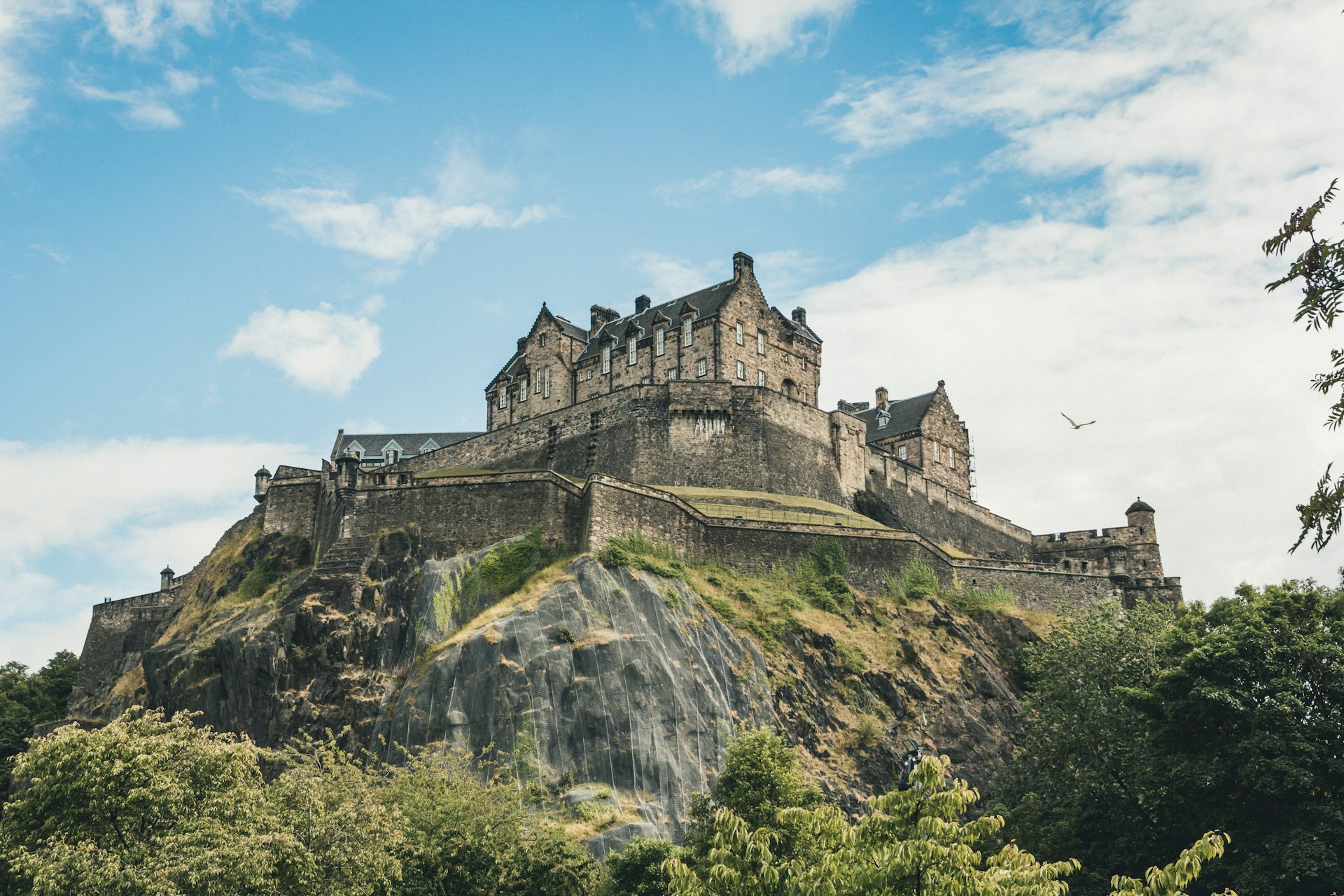
Getting to Edinburgh Castle is relatively straightforward. The castle is located at the top of the Royal Mile, a historic street in the heart of Edinburgh’s Old Town. The city itself is well-connected by train and air, with Edinburgh Waverley Station just a short walk from the castle. For those who prefer a more leisurely approach, a stroll up the Royal Mile offers a delightful journey through history, with shops, cafes, and street performers adding to the vibrant atmosphere.
Once at the castle, it’s worth investing in an audio guide or a guided tour to fully appreciate the depth of its history. Tickets can be booked in advance online, especially during peak tourist seasons. And don’t forget to wear comfortable shoes; the castle’s cobblestone pathways and steep inclines require good footwear!
Final Thoughts: Add Edinburgh Castle to Your Bucket List of Must-See Castles
Edinburgh Castle is not just a historical site; it is a symbol of Scotland’s enduring spirit and rich heritage. Its walls have witnessed some of the most pivotal events in Scottish history, from royal births to bloody sieges. Visiting the castle is like stepping back in time, offering a tangible connection to the past.
What makes Edinburgh Castle truly special is its ability to capture the imagination. Whether you’re a history buff, a fan of medieval architecture, or simply looking for a breathtaking view of the city, the castle has something to offer.
For those eager to delve deeper into the stories behind the stone walls, we invite you to subscribe to our newsletter and tune into our podcast episodes dedicated to the fascinating history of castles. Join us as we uncover the secrets and tales of these magnificent structures, bringing history to life one story at a time.


