

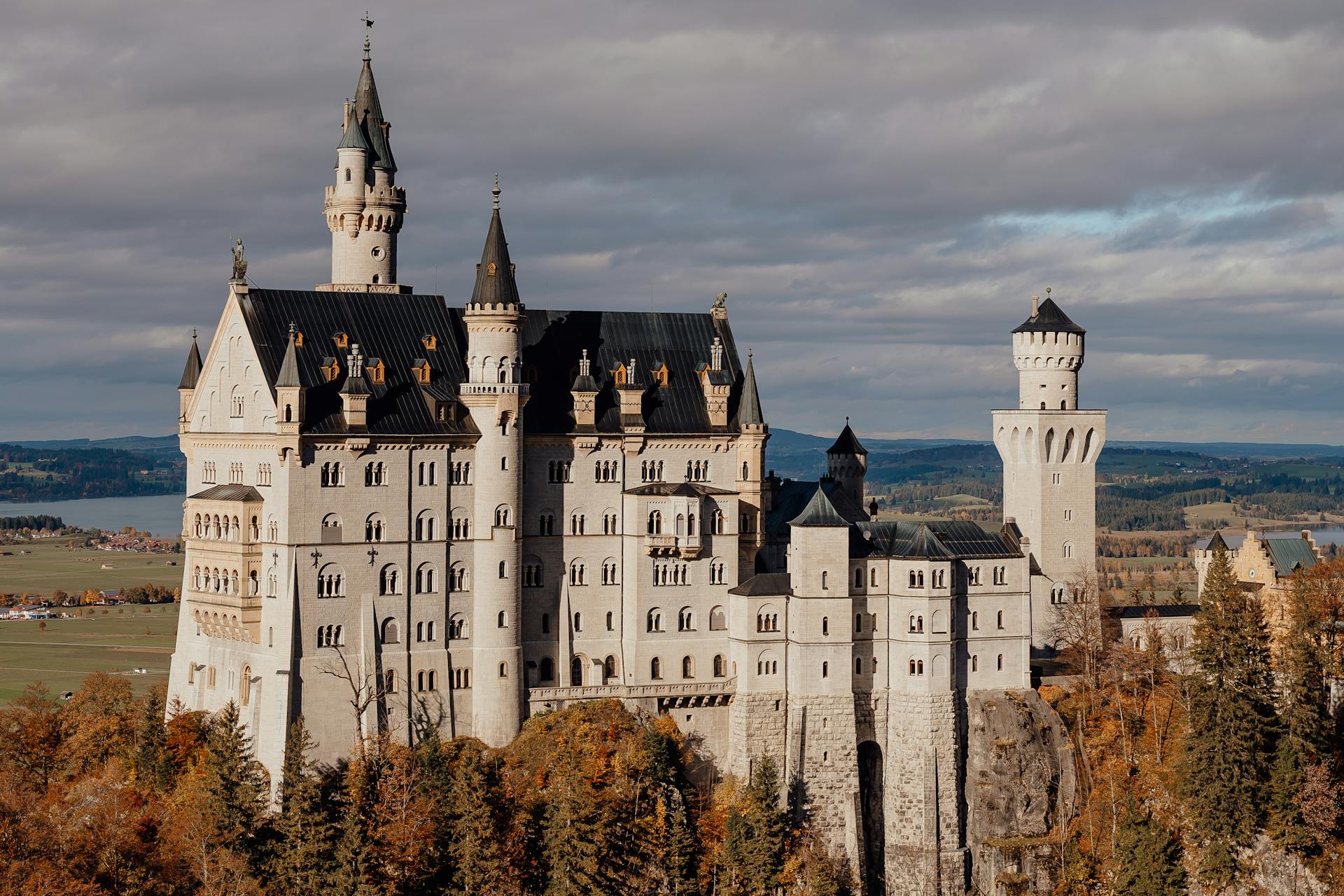
You might already have seen a photo of this majestic castle floating around social media, its stunning silhouette often likened to something straight out of a fairy tale. Sitting atop the verdant hills and snow-capped peaks of Bavaria, Neuschwanstein Castle stands as a timeless sentinel to a bygone era of romance and chivalry. Its turrets and towers, reaching skyward like delicate spires of a dream, are bathed in the golden glow of the setting sun. Below, the Alpsee and Schwansee lakes shimmer like liquid sapphires, reflecting the castle’s ethereal beauty.
This castle’s enchanting allure captures the imaginations of many, from inspiring Disney’s Sleeping Beauty Castle to the countless travel blogs and Instagram posts that show off its grandeur. But there’s more to Neuschwanstein than just its picturesque exterior. Together, let’s look into its rich history, explore some fascinating stories, and uncover the secrets that make this castle truly special. Whether you’ve already visited or are dreaming of a future trip, these tales will bring Neuschwanstein to life in a way that will make your next encounter even more magical.
A Royal Dream: The Birth of Neuschwanstein
Neuschwanstein Castle’s story begins with King Ludwig II of Bavaria, a monarch often referred to as the “Fairytale King.” Ascending the throne in 1864 at the young age of 18, Ludwig was a man of profound artistic sensibilities and a penchant for grand, romantic gestures. He was a patron of the arts, particularly enamored with the operatic works of Richard Wagner, whose compositions stirred his soul and fueled his imagination.
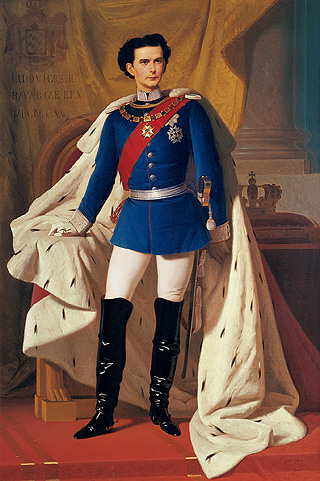
uniform with coronation mantle,
painting by Ferdinand Piloty, 1865
Ludwig envisioned Neuschwanstein as a personal retreat, a fantastical escape from the political pressures and public life that he found increasingly burdensome. He wanted a castle that would embody the chivalric ideals of the Middle Ages, a time he idealized as one of purity, heroism, and romance. His vision for Neuschwanstein was no less grand—a tribute to Wagner’s operas and an embodiment of his own idealized vision of a medieval knight’s castle.
Construction began in 1869, on the site of the ruins of two older castles: Vorderhohenschwangau and Hinterhohenschwangau. Ludwig commissioned architect Eduard Riedel to bring his dream to life, with the initial design drawing heavily from sketches made by the theater set designer Christian Jank. The architectural style was an eclectic mix of Romanesque, Gothic, and Byzantine elements, reflecting Ludwig’s eclectic tastes and his desire to create a fantastical world of his own.
The construction process was as ambitious as Ludwig’s vision. The remote location posed significant logistical challenges, requiring the creation of a sophisticated infrastructure, including access roads and a power station. Materials had to be transported up the steep hill, a feat that required both ingenuity and sheer determination.
The castle’s interiors were designed to reflect Ludwig’s romantic and artistic sensibilities. The Throne Room, inspired by Byzantine basilicas, is a breathtaking space with a magnificent chandelier and mosaics depicting the twelve apostles. This room, however, never housed a throne, as Ludwig’s untimely demise precluded its completion. The Singer’s Hall, one of the largest rooms in the castle, was designed for musical performances, a nod to Ludwig’s admiration for Wagner. The walls are adorned with murals depicting scenes from Wagner’s operas, immersing visitors in a world of myth and legend.
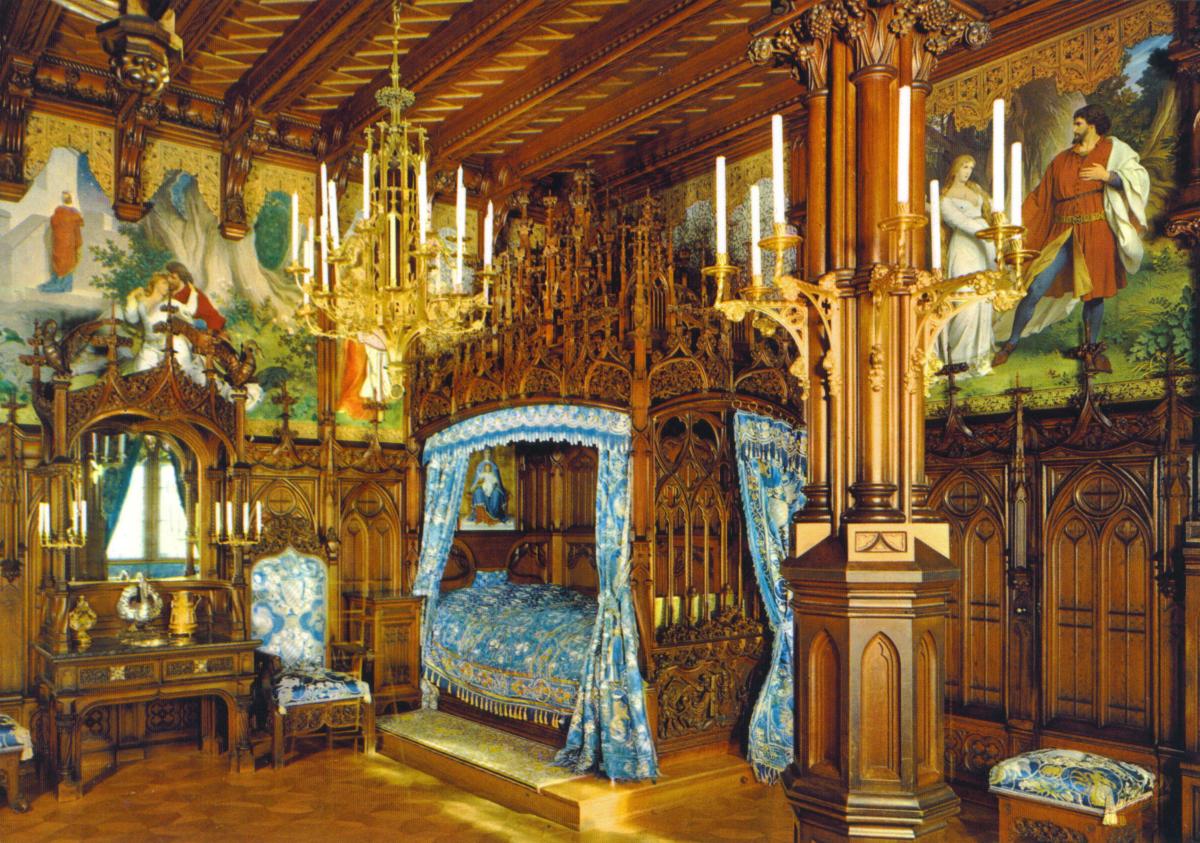
The king’s bedroom is another masterpiece, with its intricately carved woodwork and a stunning bed canopy resembling a Gothic church spire. This room reflects Ludwig’s fascination with medieval romanticism and his desire to create a personal sanctuary that echoed the grandeur and mystery of the past.
But Neuschwanstein was never completed in Ludwig’s lifetime. The king’s ambitious plans were curtailed by political and financial constraints, and his mysterious death in 1886 left the castle unfinished. Yet, even in its incomplete state, Neuschwanstein stood as a testament to Ludwig’s dream, its unfinished halls whispering stories of a visionary king whose imagination knew no bounds.
A Castle of Myths and Legends
Neuschwanstein’s history is as enchanting as its architecture. Designed by the theater set designer Christian Jank, rather than a traditional architect, the castle’s interiors are a mesmerizing blend of styles, from Byzantine to Romanesque and Gothic.
Among the castle’s most captivating spaces is the Singer’s Hall, echoing the grandeur of medieval banquets and Wagnerian opera. Here, the walls are adorned with murals depicting scenes from Wagner’s operas, immersing visitors in a world of myth and legend. The castle’s bedroom, with its intricately carved woodwork and a stunning bed canopy resembling a Gothic church spire, offers a glimpse into Ludwig’s personal taste and his fascination with medieval romanticism.
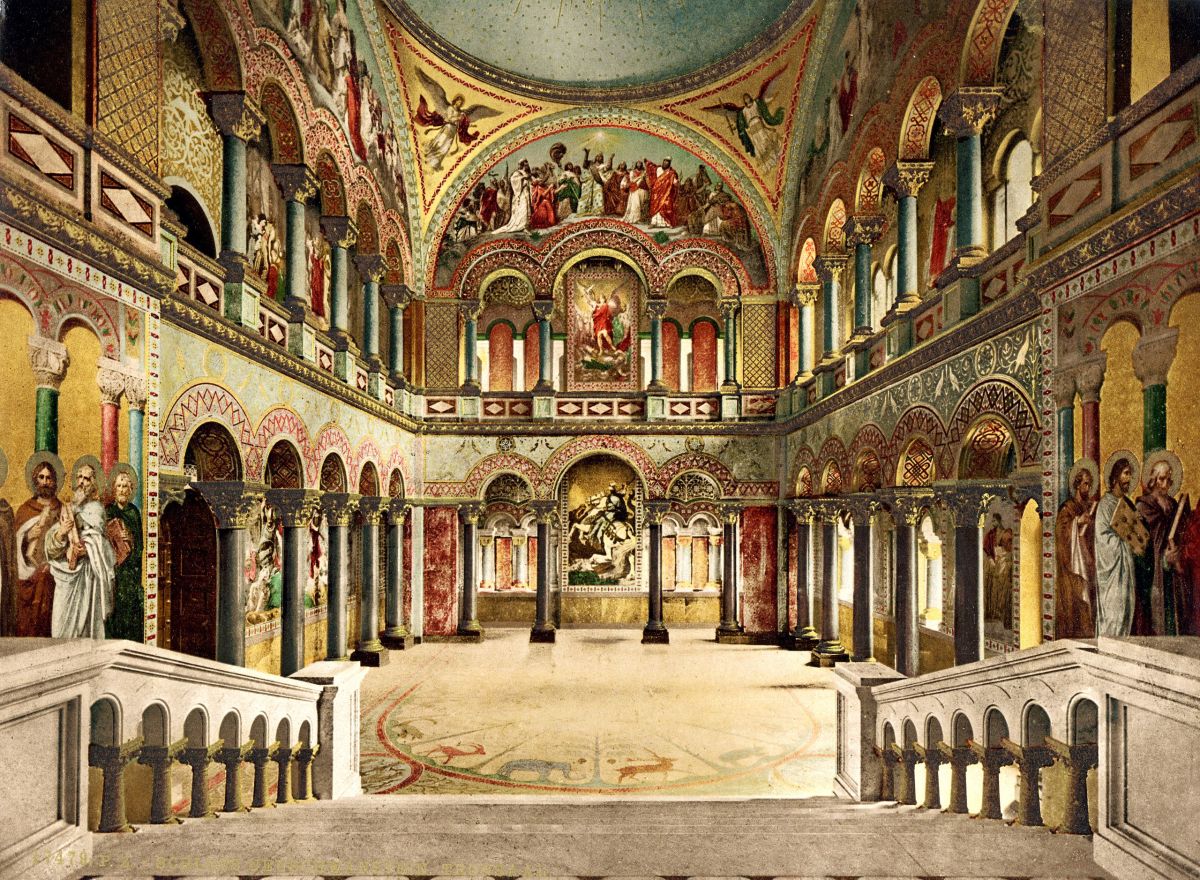
The Throne Room, inspired by Byzantine basilicas, is a breathtaking space with a magnificent chandelier and mosaics depicting the twelve apostles. However, no throne adorns this room, as Ludwig’s untimely demise precluded its completion.
Behind all the impressive architecture, however, is the motivation of a very ambitious king whose death remains a mystery. Found dead in the shallow waters of Lake Starnberg alongside his physician, Dr. Gudden, the exact cause of Ludwig’s demise remains a subject of speculation and intrigue.
Exploring Neuschwanstein Today

Today, Neuschwanstein Castle is one of the most visited castles in Europe, drawing over 1.4 million tourists each year. Its picturesque beauty has made it a symbol of idealized romanticism, and it continues to inspire awe and wonder. Visitors are drawn not only by the castle’s stunning architecture but also by the dramatic history of King Ludwig II and the fairy tale ambiance that permeates the entire region.
Visitors can take guided tours through the castle’s lavishly decorated rooms, where each space tells a unique story about Ludwig’s vision and life. The tour typically begins in the Gateway Building and progresses through several magnificent rooms, including the Throne Room, the Singer’s Hall, the Bedroom, and the Grotto.
Reaching Neuschwanstein Castle is an adventure in itself, with several travel options available. Most visitors start their journey in Munich, which is approximately 120 kilometers (75 miles) away. From Munich, travelers can choose between private car routes or train routes. Once in Hohenschwangau, visitors can choose from several options to reach the castle itself on foot, via shuttle bus, or via a horse-drawn carriage!
Neuschwanstein: A Must-See Castle
What makes Neuschwanstein Castle so special? It’s more than just a beautiful building; it’s a window into the soul of a king who dared to dream beyond the constraints of his time. It’s a place where history, art, and nature converge, creating an experience that transcends the ordinary. Neuschwanstein’s allure lies in its ability to transport visitors into a world of fantasy, to make them feel like they’ve stepped into a storybook.
For those captivated by its magic, there’s more to explore. Our newsletter and podcast offer deeper dives into the stories and histories of castles like Neuschwanstein, bringing you closer to the past and the people who shaped it. Subscribe and join us as we unravel the mysteries, marvel at the architecture, and discover the enduring legacy of these magnificent fortresses.
Neuschwanstein Castle stands as a symbol of the power of dreams and the enduring allure of romanticism. Its turrets and towers, rising like a dream from the Bavarian hills, continue to captivate the hearts of all who visit. Whether you’re a history buff, an architecture enthusiast, or simply a lover of beauty, Neuschwanstein offers an unforgettable journey into a world where fairy tales come true.
So, why not plan a trip and see it for yourself? Let Neuschwanstein’s magic inspire you, and who knows—you might just find a piece of your own dream reflected in its timeless walls.


