


Standing atop the hill, overlooking the Vienne River, we felt the weight of a thousand years of history beneath our feet. The Royal Fortress of Chinon, a majestic sentinel in the Loire Valley, has witnessed the ebb and flow of French history for centuries. As my wife, daughters and I embarked on our exploration of this medieval marvel, we were about to uncover tales of kings and queens, saints and sinners, and the echoes of long-past power struggles that shaped a nation.
From the Plantagenet dynasty to the pivotal meeting between Joan of Arc and the future King Charles VII, Chinon has played host to some of the most defining moments in French history. Join us as we walk through its ancient halls, scale its imposing towers, and unravel the secrets hidden within its weathered stones.
The Rich History of Chinon Fortress
From Roman Times to Medieval Stronghold
The story of Chinon begins long before the impressive fortress we see today. The strategic hilltop location was first fortified by the Romans, who recognized its potential for controlling the Vienne River valley. However, it was during the Middle Ages that Chinon truly came into its own.
“Chinon’s stones have witnessed the rise and fall of empires, the birth of legends, and the turning points of history.”
In the 10th century, the Count of Blois constructed the first medieval castle on the site. But it was under the Plantagenet dynasty in the 12th century that Chinon reached its zenith of power and influence.
Chinon's Role in the Hundred Years' War
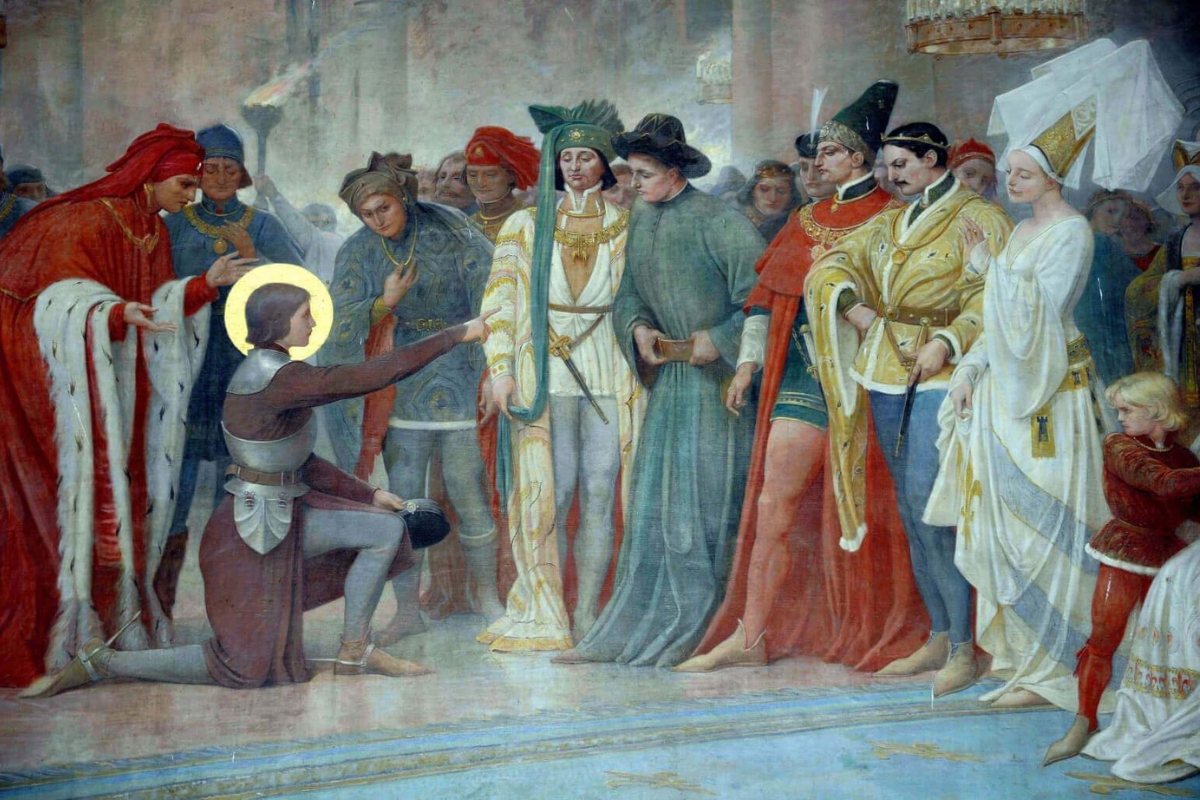
During the protracted conflict between England and France, Chinon served as a critical stronghold. It changed hands several times, reflecting the shifting fortunes of war. In 1429, it was here that a pivotal moment in the war occurred – the meeting between Joan of Arc and the Dauphin, the future Charles VII.
Lesser-Known Fact: The castle has a secret underground passage, known as the “Tour du Moulin,” which was used to bring supplies into the fortress during sieges. This clever architectural feature helped Chinon withstand numerous attacks over the centuries.
Architectural Marvels: A Castle Through the Ages
The Three Distinct Castle Compounds
Chinon is not just one castle, but a complex of three distinct fortifications, each with its own character and history. As we explored, we were struck by how these three areas together formed a formidable and strategically brilliant stronghold.
The eastern section, Fort Saint-Georges, was built by Henry II Plantagenet in the 12th century. This area served as the royal lodgings and administrative center. As we walked through its remains, we could almost picture the grand ceremonies and banquets that once took place in its large hall. Archaeologists have uncovered evidence of a sophisticated hypocaust heating system here, showcasing the advanced comforts enjoyed by royal residents. Though now in ruins, the Saint-Georges chapel once stood in this section, emphasizing the integration of spiritual and secular power that was so characteristic of medieval governance.
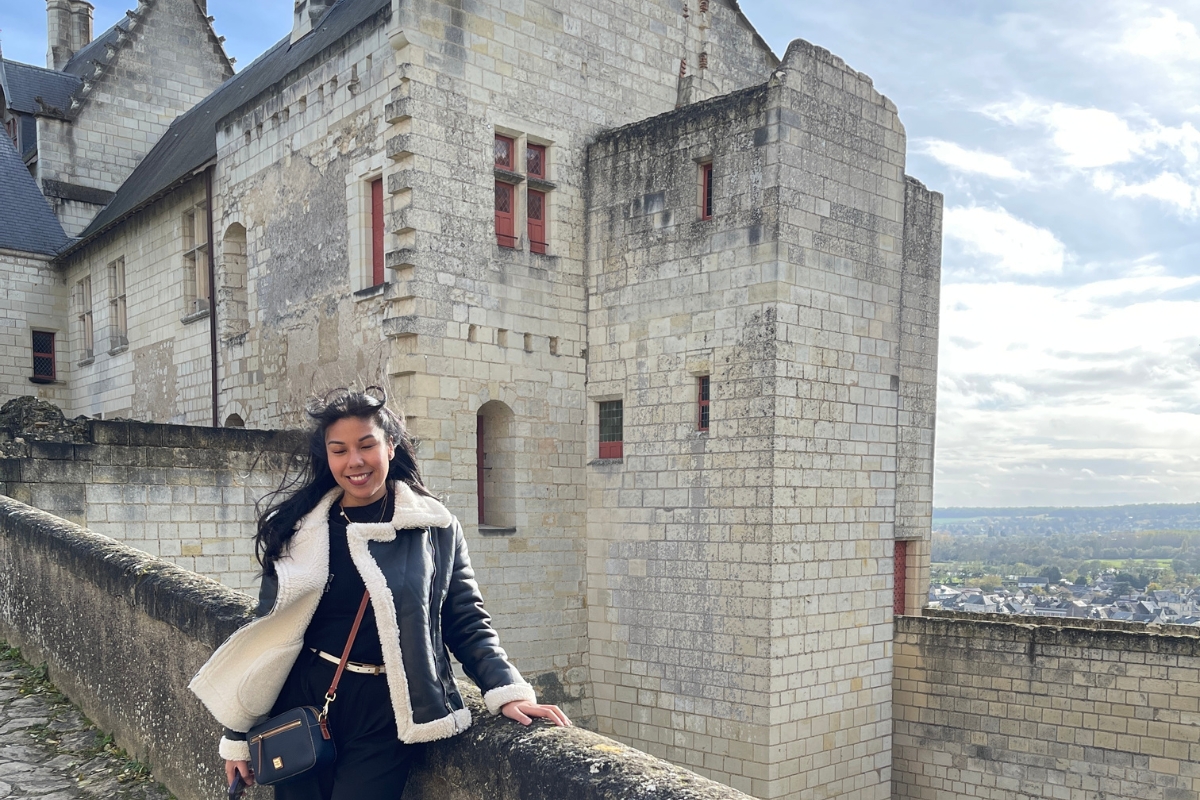
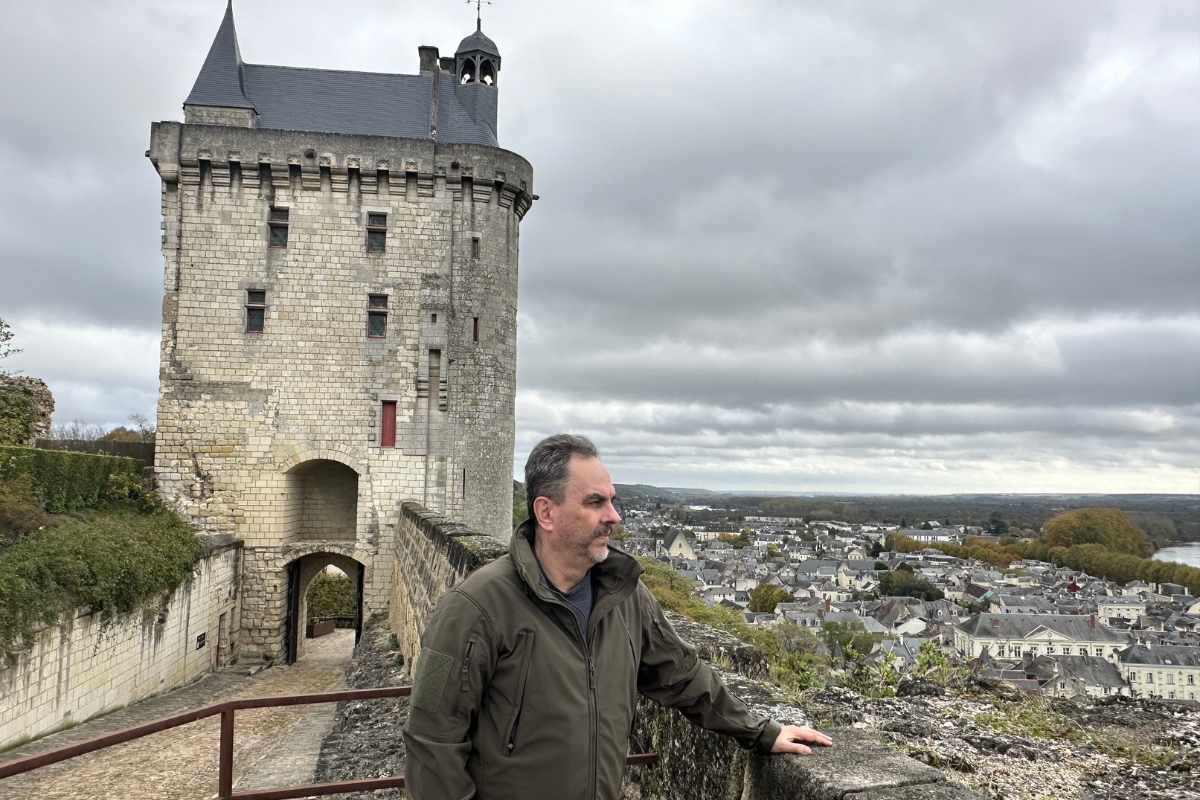
The central and oldest part of the fortress, Château du Milieu, forms the heart of Chinon. Its history stretches back to the 10th century, making it a palimpsest of medieval architecture. We entered through the imposing Tour de l’Horloge (Clock Tower), its 15th-century clock still marking time as it has for centuries. The Grand Logis, or royal lodgings, hosted key historical events, including the famous meeting between Joan of Arc and the future Charles VII in 1429. As we explored the royal chambers, the magnificent fireplaces and window seats offered glimpses into the daily life of medieval royalty.
The western section, Fort du Coudray, is perhaps the most evocative part of Chinon, with its imposing Tour du Coudray taking center stage. Built in the early 13th century, this tower served as both a formidable defense and a prison. We were awed by the inscriptions on its walls, left by imprisoned Knights Templar in 1308. This section features some of the most advanced military architecture of its time, including machicolations for dropping objects on attackers and arrow loops for defense.
As we moved from one compound to another, we were struck by how the fortress seemed to evolve before our eyes. The progression from the oldest structures in the Château du Milieu to the more advanced defenses of Fort du Coudray illustrated the rapid development of medieval military architecture. It was a tangible timeline of how castles transformed from simple strongholds to complex, self-contained communities capable of withstanding long sieges.
The strategic brilliance of Chinon’s layout became clear as we surveyed the entire complex. Each compound could be defended independently, yet they worked together as an integrated whole. This design ensured that even if an enemy breached one section, the others could continue to resist.
Walking through these three distinct yet interconnected areas, we felt the weight of the centuries and the echoes of the countless lives lived within these walls. From royalty to prisoners, from soldiers to servants, Chinon Fortress stood as a testament to the complex tapestry of medieval society and the enduring legacy of French history.
Defensive Innovations of Chinon
The fortress showcases the evolution of medieval military architecture. Look out for:
- The machicolations: Openings in the battlements for dropping objects on attackers.
- Arrow loops: Narrow windows for archers to defend the castle.
- The impressive drawbridge and portcullis system at the main entrance.
“Every stone in Chinon’s walls is a page from the book of medieval military engineering.”
Interesting Anecdote: During restoration work in the 20th century, workers discovered 12th-century graffiti carved by imprisoned Knights Templar in the Tour du Coudray. These carvings provide a rare and personal glimpse into the last days of this once-powerful order.
Royal Connections: From Plantagenets to Joan of Arc
The Plantagenet Legacy at Chinon
Henry II of England, the first Plantagenet king, favored Chinon as his residence. It was here that he died in 1189, after a bitter dispute with his son, Richard the Lionheart.
Lesser-Known Fact: The room where Henry II died is still preserved in the castle. Legend has it that his last words were a curse upon his rebellious sons, though historical accounts vary.
Eleanor of Aquitaine, Henry’s powerful wife, also left her mark on Chinon. She was imprisoned here by her husband for supporting their sons’ rebellion but later held court at the fortress during her son Richard’s reign.
Joan of Arc's Fateful Meeting with Charles VII
In 1429, a young peasant girl named Joan of Arc arrived at Chinon, claiming divine guidance to help the Dauphin (future Charles VII) reclaim his throne. The story goes that she identified Charles despite his attempt to hide among his courtiers.
“Within these walls, a peasant girl’s conviction changed the course of the Hundred Years’ War and French history.”
This meeting, which took place in the Great Hall of the Château du Milieu, marked a turning point in the Hundred Years’ War. Joan’s subsequent military successes revitalized French morale and paved the way for Charles’s coronation.
Our Personal Journey Through Time
Walking in the Footsteps of Kings and Warriors
As we stepped through the imposing gates of Chinon Fortress, the weight of history was palpable. The worn cobblestones beneath our feet, polished smooth by countless footsteps over the centuries, seemed to whisper tales of the past. Each step we took was a step back in time, retracing the paths of kings, queens, knights, and common folk who had walked these very stones.
The ascent to the fortress proper was a journey in itself. As we climbed the steep, winding path, we couldn’t help but imagine the processions of medieval times – armored knights on horseback, ladies in flowing gowns, merchants with their wares. The effort of the climb was rewarded with increasingly breathtaking views of the Loire Valley spreading out before us, a patchwork of vineyards, forests, and the serpentine Vienne River glinting in the sunlight.
“Every stone in Chinon tells a story – you need only to listen.”
Entering the main courtyard, we were struck by the sheer scale of the fortress. The towering walls, weathered by time yet still formidable, made us feel small in comparison. We ran our hands along the rough stone, feeling the grooves and notches – silent witnesses to siege engines and arrow fire from long-ago battles.
In the Royal Quarters, we stepped into a world of faded grandeur. The restored medieval frescoes on the walls were a revelation. Though the colors had dimmed over the centuries, we could still make out scenes of courtly life, religious imagery, and heraldic designs. One particular fresco, depicting a royal hunt, caught our eye with its dynamic composition and hints of once-vibrant hues.
Lesser-Known Fact: Many of Chinon’s frescoes were hidden under layers of plaster for centuries. It wasn’t until the late 20th century that extensive restoration work revealed these medieval treasures, providing new insights into the artistic and cultural life of the fortress.
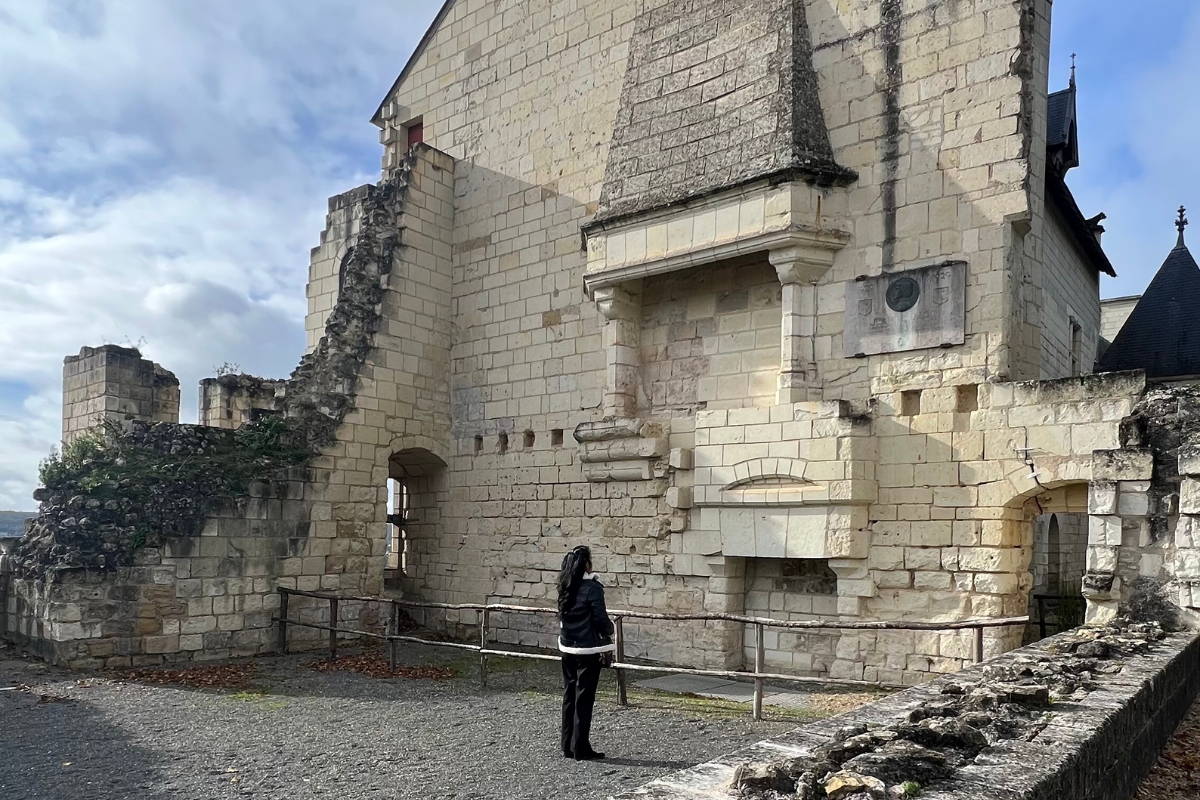
The Great Hall, now in ruins, still struck us with a sense of awe. Standing in the center of this vast space, we closed our eyes and let our imagination run wild. The echoes of our footsteps transformed into the clamor of a medieval court – the heated debates of royal advisors, the proclamations of kings, the nervous shuffling of petitioners awaiting audience.
It was here, in this very hall, that Joan of Arc’s famous meeting with the future Charles VII took place. We tried to picture the scene: the disguised Dauphin among his courtiers, the determined young woman in male attire striding confidently across the room, the mixture of skepticism and hope hanging in the air. The stone walls seemed to resonate with the memory of that pivotal moment in French history.
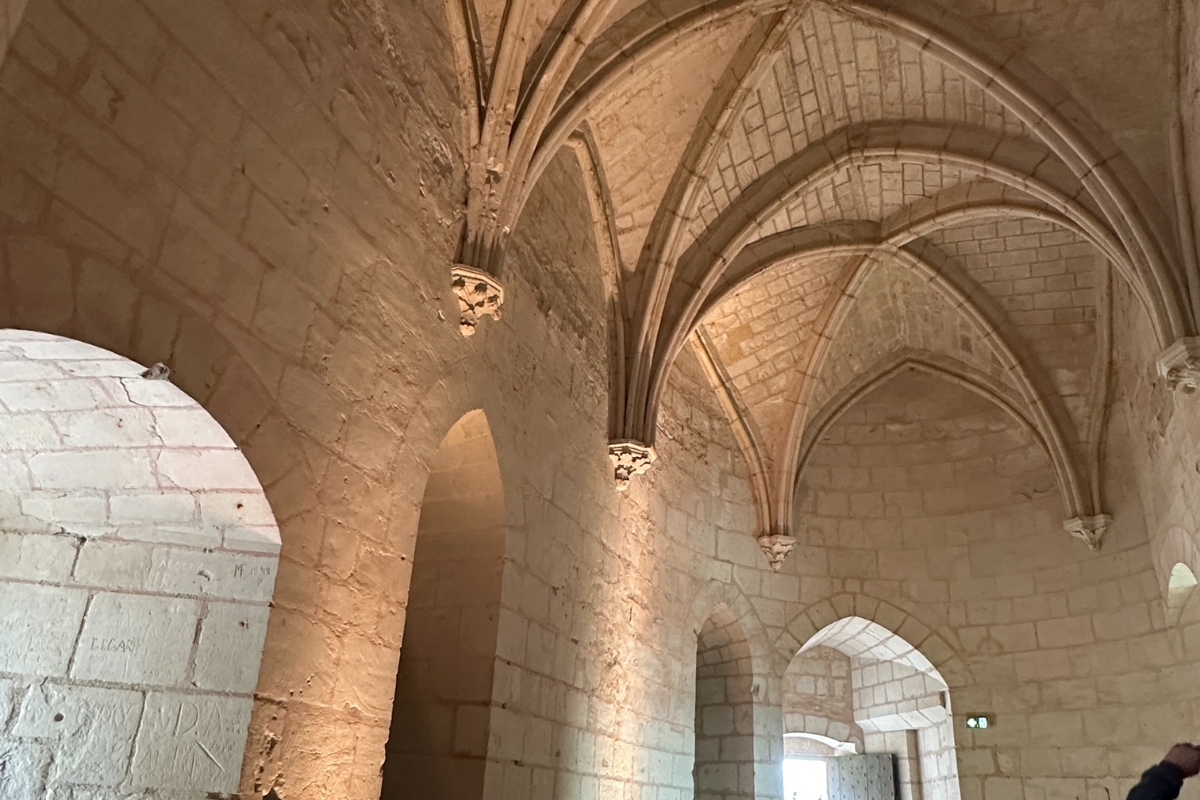
As we explored further, we discovered small details that brought the past to life: a worn carving on a window sill, perhaps etched by a bored guard centuries ago; the uneven steps of a spiral staircase, each dip a testament to the countless feet that had trodden there before us.
In one of the towers, we found arrow loops – narrow windows designed for archers to defend the castle. Peering through one, with the wind whistling past, we gained a new appreciation for the skill and courage of medieval defenders. The view from this vantage point, overlooking the approach to the fortress, gave us a strategic perspective on the castle’s formidable defenses.
“From these walls, you can see through the eyes of kings and feel the resolve of a young Joan of Arc.”
As the day progressed, the changing light brought new dimensions to our experience. The afternoon sun cast long shadows across the courtyards, creating a play of light and shadow that emphasized the fortress’s architectural details. We watched in awe as the golden hour bathed the ancient stones in a warm glow, imagining how many sunsets these walls had witnessed over the centuries.
Our exploration of Chinon was more than just a tour of a historical site; it was a tangible connection to the past. With each step, each touch of the ancient stones, we felt a link to the countless individuals who had lived, loved, fought, and died within these walls. It was a profound reminder of the enduring nature of human history and the power of preserved places like Chinon to transport us across time.
Unforgettable Views and Hidden Treasures
The climb to the top of the Tour de l’Horloge (Clock Tower) left us breathless, both from exertion and awe. As we emerged onto the viewing platform, a panoramic vista unfolded before us. The red-tiled roofs of Chinon town sprawled below, giving way to a patchwork of vineyards that stretched to the horizon. The Vienne River snaked through the landscape, its waters glinting in the sunlight. This bird’s-eye view made it immediately clear why Chinon was such a coveted stronghold – from here, one could see for miles in every direction, making surprise attacks nearly impossible.
“From the top of Tour de l’Horloge, you don’t just see a view – you see through the eyes of history’s great strategists.”
As we took in the breathtaking scenery, our guide pointed out key landmarks: the spire of the Saint-Mexme Collegiate Church piercing the skyline, the ancient Roman bridge spanning the Vienne, and in the distance, the outline of other Loire Valley châteaux. It was a view that had changed little since medieval times, allowing us to see the landscape much as the castle’s historical inhabitants would have.
But it was in the lesser-known corners of the fortress that we found the most intriguing connections to history. Our exploration led us to the imposing Tour du Coudray, a tower with a dark and fascinating past. Here, we learned, was where the last Grand Master of the Knights Templar, Jacques de Molay, and his fellow Templars were imprisoned in 1308.
Historical Anecdote: The Knights Templar, once a powerful military and religious order, fell from grace in the early 14th century. King Philip IV of France, deeply in debt to the order, accused them of heresy and arrested many Templars, including Jacques de Molay. They were brought to Chinon for interrogation by papal agents.
As we entered the tower, the atmosphere changed palpably. The cool, damp air and the thick stone walls seemed to echo with centuries of secrets. Our guide directed our attention to the walls, where, upon close inspection, we could make out faint etchings – graffiti left behind by the imprisoned Templars.
These carvings, only discovered during restoration work in the 20th century, included crosses, names, and other symbols. Running our fingers over these marks, we felt a direct connection to those long-ago prisoners. It was a poignant reminder of the fortress’s role not just as a seat of power, but also as a place of confinement and, at times, suffering.
Lesser-Known Fact: Despite popular belief, the Templars held at Chinon were not all tortured here. Historical records show that Pope Clement V actually absolved these particular Templars of heresy charges during their imprisonment at Chinon. This absolution, recorded in the “Chinon Parchment,” was only rediscovered in the Vatican Secret Archives in 2001, shedding new light on this historical episode.
Leaving the somber atmosphere of the Templar tower, we found ourselves in need of a moment of reflection. As if answering our unspoken wish, we stumbled upon a small, secluded courtyard. This hidden nook, overlooked by most visitors, was a world apart from the grand halls and imposing towers.
Wildflowers pushed through cracks in the ancient paving stones, adding splashes of color to the weathered grey of the surroundings. An old stone bench, worn smooth by centuries of use, invited us to sit and contemplate. As we rested there, surrounded by the gentle buzz of insects and the distant calls of birds, we felt a profound connection to the countless others who had sought solace in this very spot over the centuries.

Echoes of History in Stone and Spirit
As we wandered through the lesser-known corners of Chinon Fortress, the weight of history was palpable. Each weathered stone, each worn step seemed to whisper tales of the past. The very air felt thick with the echoes of momentous events and the spirits of those who had walked these paths before us.
“In Chinon’s quiet corners, history speaks loudest – from Templar prayers to Joan’s prophecies.”
Closing my eyes, I let my imagination transport me through the centuries. The hushed conversations of imprisoned Templars contemplating their fate, the determined voice of Joan of Arc as she prepared to meet the Dauphin, the anguished cries of Henry II in his final moments – all seemed to reverberate through time.
The fortress walls bore silent witness to some of the most pivotal moments in French and English history:
- The defiant declarations of Jacques de Molay, the last Grand Master of the Knights Templar, who was imprisoned here in 1308 before his eventual execution in Paris. The very stones of the Tour du Coudray still bear faint etchings left by these doomed warriors.
- The fervent prayers of Joan of Arc, who in 1429 recognized the disguised Dauphin in Chinon’s great hall, setting in motion events that would change the course of the Hundred Years’ War.
- The political machinations of Eleanor of Aquitaine, who was held prisoner here by her own husband, Henry II, yet later ruled from these very walls.
- The final, bitter words of Henry II himself, who died at Chinon in 1189, betrayed by his own sons.
Lesser-Known Fact: The château at Chinon was also where, in 1156, Henry II and Eleanor of Aquitaine’s son, the future Richard the Lionheart, was born. This birth, within these very walls, would have far-reaching consequences for both English and French history.
As we moved through the fortress, each space seemed to resonate with its own unique history. In one chamber, we could almost hear the scratching of quills as scribes recorded the papal interrogation of the Templars. In another, the echo of armored footsteps seemed to linger, a reminder of the countless soldiers who had defended these walls.
The juxtaposition of grandeur and harshness was striking. The same halls that had hosted royal banquets had also served as prison cells. The towers that offered breathtaking views of the Loire Valley had also been used to spot approaching enemies. Chinon was not just a fortress of stone and mortar, but a crucible of history, where the fates of kings, knights, and nations were decided.
Yet, even in this place so steeped in momentous events and weighty decisions, signs of life and renewal were evident. Wildflowers pushed through cracks in the ancient stonework, and birdsong filled the air. Nature’s gentle reclamation of this historic space seemed to soften the harsh edges of the past, offering a glimpse of beauty amidst the complex tapestry of human triumphs and tragedies that define Chinon’s legacy.
As we reluctantly prepared to leave this section of the fortress, we carried with us a deeper appreciation for the layers of world-changing events that had unfolded within these ancient walls. Chinon stood as a testament to the endurance of human ambition, faith, and resilience. It was a place where the grand sweep of history could be felt in the most intimate way, connecting us to the countless individuals whose lives and actions had shaped the course of nations.
Practical Tips for Visiting Chinon Fortress
Planning Your Visit to Chinon
- Best Time to Visit: Spring (April-June) and early fall (September-October) offer pleasant weather and smaller crowds.
- Getting There: Chinon is accessible by train from Tours (1 hour) or by car from Paris (3 hours).
- Opening Hours: The fortress is open year-round, with extended hours during summer months.
- Ticket Information:
- Adults: €10.50
- Children (7-18): €8.50
- Children under 7: Free
- Guided tours available for an additional fee
Making the Most of Your Fortress Experience
- Allow at least 2-3 hours to fully explore the fortress.
- Don’t miss the multimedia history displays in the restored royal quarters.
- Wear comfortable shoes – there’s a lot of walking and stair-climbing involved.
- Consider timing your visit to catch one of the medieval reenactments held during summer months.
Tip: The nearby town of Chinon is famous for its red wines. Consider ending your day with a wine tasting at one of the local vineyards.
Frequently Asked Questions
- What is the best time of year to visit Chinon Fortress? Spring and early fall offer the best combination of good weather and manageable crowd sizes.
- How long does it take to explore the entire fortress? Allow at least 2-3 hours for a thorough visit, more if you’re taking a guided tour or participating in activities.
- Are there guided tours available in English? Yes, English-language guided tours are available daily during peak season and on weekends during the off-season.
- Is the fortress accessible for people with mobility issues? Parts of the fortress are accessible, with ramps and elevators in some areas. However, due to its historical nature, some sections remain challenging for those with mobility limitations.
- Can you visit the dungeons where Jacques de Molay was held? Yes, the Tour du Coudray, where Jacques de Molay and other Templars were imprisoned, is open to visitors.
Summary
Our exploration of the Royal Fortress of Chinon was more than just a walk through an ancient castle – it was a journey through the heart of French history. From the power struggles of medieval kings to the divine mission of Joan of Arc, Chinon has been a silent witness to events that shaped a nation.
As we left the fortress, watching the setting sun paint its stones in hues of gold, we felt a deep appreciation for the efforts to preserve this remarkable piece of history. Chinon stands not just as a monument to the past, but as a bridge that allows us to connect with the triumphs and tribulations of those who came before us.
Whether you’re a history enthusiast, a lover of medieval architecture, or simply someone who enjoys breathtaking views and captivating stories, the Royal Fortress of Chinon offers an unforgettable experience. We encourage you to walk its ramparts, explore its towers, and let your imagination bring its rich history to life.


