


France, a country steeped in history and romance, is home to countless castles that have stood the test of time. While many of these architectural marvels continue to captivate visitors with their grandeur and beauty, there exists a subset of châteaux that tells a different story – one of abandonment, mystery, and forgotten glory. These abandoned castles, scattered across the French landscape, hold within their crumbling walls tales of intrigue, tragedy, and the inexorable march of time.
The allure of abandoned castles is undeniable. There’s something hauntingly beautiful about a once-majestic structure slowly being reclaimed by nature. These silent sentinels stand as testaments to bygone eras, inviting us to imagine the lives lived, the battles fought, and the secrets held within their weathered stones.
France’s castle-building tradition spans over a millennium, from medieval fortresses designed to withstand sieges to the opulent pleasure palaces of the Renaissance and beyond. Each castle reflects the architectural styles, technological advancements, and social dynamics of its time. The abandoned castles we explore in this post represent various periods of French history, offering a unique perspective on the country’s rich heritage.
These abandoned structures hold significant importance in French heritage. They serve as tangible links to the past, allowing us to trace the evolution of French society, politics, and culture through the centuries. Moreover, they present a pressing challenge for conservationists and historians: how to preserve these important historical sites in the face of decay and limited resources.
In this exploration of France’s most famous abandoned castles, we’ll uncover the hidden stories behind their rise and fall. We’ll delve into the reasons for their abandonment, the legends that have grown around them, and the efforts being made to save them from complete ruin. Join us on this journey through time as we unlock the secrets of these forgotten treasures and discover why they continue to captivate our imaginations.
Why These Castles Were Abandoned
The abandonment of France’s once-grand castles is a complex tale, woven from threads of political upheaval, economic shifts, and changing social dynamics. To understand why these magnificent structures were left to the mercy of time and nature, we must look at the broader historical context and the challenges faced by their owners.
The French Revolution of 1789 marked a turning point for many châteaux. As symbols of aristocratic privilege and excess, numerous castles were seized, looted, or destroyed during this tumultuous period. The revolution not only dispossessed many noble families but also ushered in a new era where the maintenance of such grand estates became financially and politically untenable for many.
The aftermath of the revolution saw a shift in the social and political landscape of France. The power of the nobility waned, and with it, the resources and motivation to maintain these vast properties. Many castles, once centers of local power and culture, lost their purpose and were gradually abandoned as their owners moved to cities or more modest dwellings.
The World Wars of the 20th century dealt another blow to France’s castles. Some were requisitioned for military use, others were damaged in the fighting, and many families found themselves unable to afford the upkeep of their ancestral homes in the post-war economic climate. The wars also accelerated social changes that had been brewing since the industrial revolution, further distancing French society from the feudal system that had given rise to these grand estates.
Economic challenges have been a persistent factor in the abandonment of French castles. The sheer scale of these properties makes them enormously expensive to maintain. Heating, repairs, and general upkeep require substantial financial resources, which became increasingly difficult for many families to provide. As France modernized, the cost of adapting these ancient structures to contemporary standards of comfort and safety often proved prohibitive.
Changes in inheritance laws and tax structures also played a role. In some cases, high inheritance taxes forced heirs to sell or abandon properties they couldn’t afford to maintain. The division of estates among multiple heirs sometimes left castles without a clear owner or without sufficient resources for their upkeep.
Moreover, the shift away from an agrarian economy meant that many castles lost their economic base. Once the center of vast agricultural estates, these properties no longer generated the income necessary for their maintenance as France became more industrialized and urbanized.
The abandonment of these castles also reflects changing values and lifestyles. As French society became more mobile and urban, the idea of being tied to a ancestral estate lost its appeal for many. The prestige of owning a historic château was often outweighed by the practical difficulties and financial burdens it entailed.
Despite these challenges, not all hope is lost for France’s abandoned castles. In recent years, there has been a growing recognition of their historical and cultural value. Preservation efforts, both public and private, have begun to address the plight of these forgotten treasures. From crowdfunding campaigns to adaptive reuse projects, innovative approaches are being employed to breathe new life into these silent witnesses of French history.
As we explore the stories of individual abandoned castles, we’ll see how these broader historical trends played out in specific cases, each with its unique tale of glory, decline, and potential rebirth.
The Most Famous Abandoned Castles and Their Hidden Stories

1. Château de Chambord (Loire Valley)
Château de Chambord, the largest castle in the Loire Valley, stands as a testament to the ambition and extravagance of the French Renaissance. Commissioned by King François I in 1519, this architectural marvel was originally conceived as a hunting lodge but evolved into one of the most recognizable châteaux in the world.
The castle’s history is as impressive as its architecture. While its exact architect remains a mystery, it’s believed that Leonardo da Vinci, who was a guest of François I at the nearby Château d’Amboise, may have influenced its distinctive design. Construction of Chambord spanned nearly three decades, involving some 1,800 workers.
Despite its grandeur, Chambord’s history is marked by long periods of abandonment and disuse. François I spent little time here, visiting only for short hunting trips. After his death, the castle stood empty for nearly a century, slowly falling into disrepair. During the French Revolution, much of its furnishings were sold, and the castle narrowly escaped demolition.
The 19th century saw renewed interest in Chambord. It passed through various hands, including those of the exiled King of Poland, Stanisław Leszczyński. Napoleon gifted it to one of his marshals, and it later became the property of the Duke of Bordeaux. However, these periods of occupation were interspersed with long stretches of abandonment.
During World War II, Chambord served as a repository for artworks evacuated from the Louvre and other museums, protecting priceless treasures from Nazi looting. This brief period of use was followed by another phase of neglect.
Today, Château de Chambord is a UNESCO World Heritage site and one of France’s most visited castles. However, its massive size (440 rooms and 80 staircases) presents ongoing challenges for maintenance and restoration. The castle’s sheer scale, combined with its remote location, makes it a complex and costly property to manage.
Current restoration efforts focus on preserving the castle’s unique architectural features, such as its double-helix staircase and intricate roof skyline. The surrounding park, which covers an area larger than Paris, is also undergoing ecological restoration to recreate the atmosphere of a 16th-century hunting estate.
Chambord’s story is one of resilience. Despite centuries of neglect and the threat of destruction, it has endured as a symbol of French Renaissance architecture and royal ambition. Its periods of abandonment have, paradoxically, helped preserve much of its original structure, sparing it from the extensive modifications that many continuously inhabited castles underwent.
As visitors wander through Chambord’s vast halls and climb its famous staircase, they’re not just exploring a beautifully preserved Renaissance château. They’re walking through a building that has witnessed the ebb and flow of French history, from the height of royal power to the upheavals of revolution and war. The castle’s periods of abandonment are as much a part of its story as its moments of glory, making Chambord a unique window into the complex history of France’s great châteaux.
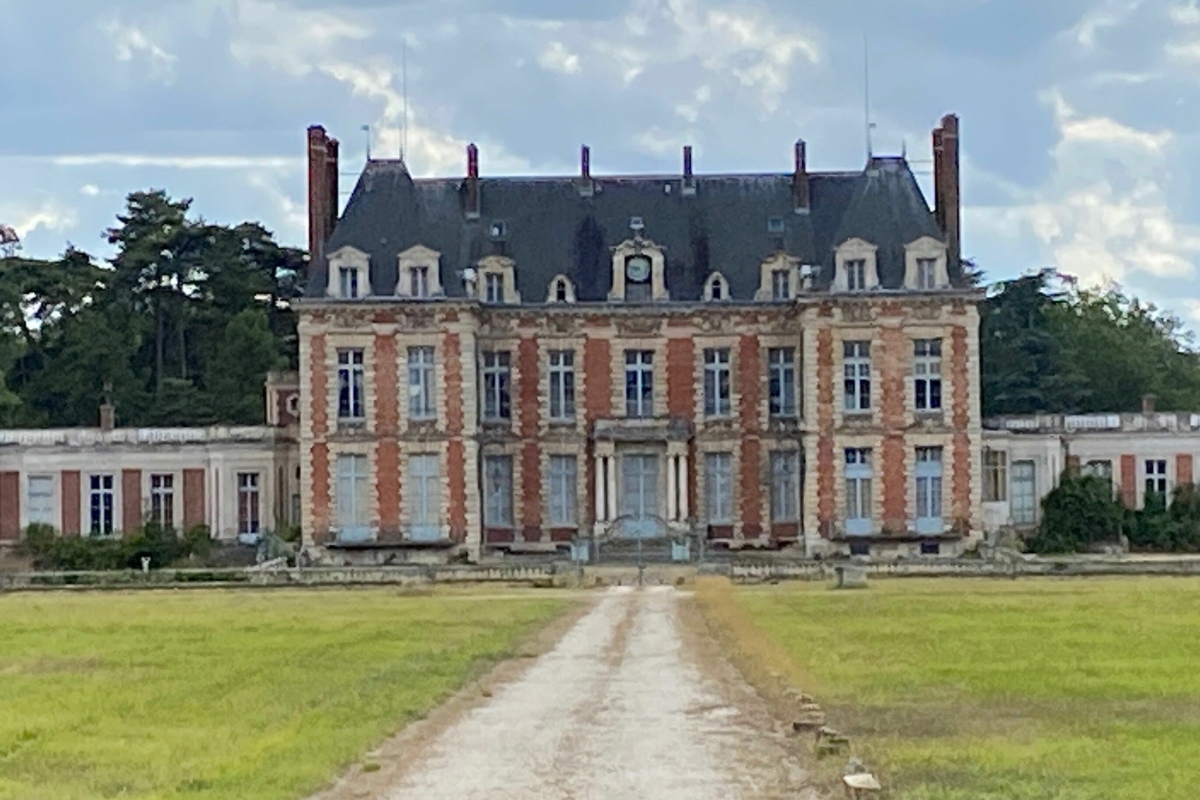
2. Château de Gros-Bois (Cher)
Located in the heart of France’s Cher department, the Château de Gros-Bois stands as a haunting reminder of Renaissance grandeur. This once-magnificent castle, with its impressive architecture and rich history, has fallen into a state of abandonment that belies its former glory.
Built in the 16th century, Château de Gros-Bois exemplifies the transition from medieval fortress to Renaissance palace. Its design features a harmonious blend of defensive elements and ornate decorations, reflecting the changing priorities of the French nobility during this period. The castle’s façade, adorned with intricate stone carvings and large windows, speaks to the artistic flourishing of the Renaissance.
The château played a significant role during the tumultuous years of the French Revolution. Like many aristocratic properties, it became a target for revolutionary fervor. The exact details of its fate during this period are shrouded in mystery, but it’s believed that the castle was seized from its noble owners and partially ransacked. This marked the beginning of its long decline.
In the centuries that followed, Château de Gros-Bois changed hands multiple times, each transfer seeming to push it further into obscurity. The challenges of maintaining such a vast property in the face of changing economic and social conditions proved insurmountable for successive owners. Gradually, the once-bustling halls fell silent, and nature began to reclaim its territory.
One of the most intriguing aspects of Château de Gros-Bois is the legends that have grown around it. Local folklore speaks of hidden treasures and secret passages within the castle walls. Some tales suggest that aristocrats, fleeing the Revolution, concealed their wealth within the château, intending to return when the political climate stabilized. These stories, while unverified, add an air of mystery and adventure to the abandoned structure.
The castle’s current state presents a poignant contrast to its former splendor. Ivy climbs the weathered stones, and trees grow where courtiers once strolled. The grand rooms, once filled with the finest furnishings, now stand empty, their faded grandeur a testament to the passage of time.
Despite its abandonment, Château de Gros-Bois continues to captivate those who stumble upon it. Urban explorers and history enthusiasts are drawn to its crumbling beauty, seeing in its decay a tangible link to France’s complex past. However, this interest also raises pressing concerns about preservation.
The challenges of preserving Château de Gros-Bois are manifold. Its remote location and years of neglect make restoration a daunting and expensive prospect. Yet, there is growing recognition of the castle’s historical and architectural significance. Local heritage groups have begun to advocate for its protection, arguing that it represents an important piece of regional history that should not be lost to time.
As it stands today, Château de Gros-Bois serves as a poignant reminder of the fragility of even the grandest human achievements. Its story is one of rise and fall, of opulence and neglect, mirroring in many ways the broader history of France itself. Whether this once-proud château will find a path to restoration or continue its slow dance with decay remains to be seen, but its silent walls continue to whisper tales of a bygone era to those willing to listen.

3. Château de Gudanes (Ariège)
In the picturesque Ariège region of southwestern France, the Château de Gudanes tells a story of resurrection from abandonment. This 18th-century neoclassical palace, often referred to as the “Sleeping Beauty” of the Pyrénées, has captured the imagination of people worldwide with its tale of rediscovery and ongoing restoration.
Built between 1741 and 1750 for Louis Gaspard de Sales, Marquis de Gudanes, the château was designed by Ange-Jacques Gabriel, the premier architect of King Louis XV. Its elegant façade and grand proportions reflect the height of French architectural refinement, making it a jewel of the Age of Enlightenment.
The château’s history is as tumultuous as it is long. It survived the French Revolution relatively unscathed, unlike many of its contemporaries. However, the following centuries were not as kind. The industrial revolution saw the aristocratic family’s fortunes decline, and by the early 20th century, the château had fallen into disrepair.
The true period of abandonment for Château de Gudanes began in the 1960s. Neglected and forgotten, the once-grand palace was left to the mercy of the elements. Rain seeped through the failing roof, vegetation took root in the crumbling masonry, and the opulent interiors that had hosted the elite of French society became home to pigeons and wildlife.
The château’s fortunes took a dramatic turn in 2013 when it was purchased by an Australian couple, Karina and Craig Waters. Stumbling upon the property online, they were captivated by its faded beauty and embarked on an ambitious restoration project that has since gained international attention.
The process of bringing Château de Gudanes back to life has been both challenging and inspiring. The new owners have taken a thoughtful approach to restoration, aiming to preserve the château’s history rather than erase it. They’ve documented the journey extensively on social media, allowing people from around the world to follow the castle’s rebirth.
This restoration project has faced numerous challenges. The remote location makes accessing materials and skilled labor difficult. The sheer scale of the damage wrought by decades of abandonment means that every step forward is hard-won. From reinforcing crumbling walls to carefully uncovering original 18th-century paintwork, each aspect of the restoration requires patience, expertise, and significant financial investment.
Perhaps most interestingly, the restoration of Château de Gudanes has sparked a broader conversation about the fate of abandoned historical properties. It stands as an example of how passion, vision, and community engagement can breathe new life into forgotten treasures. The project has not only saved a piece of French architectural heritage but has also brought economic benefits to the local area through tourism and employment.
As work continues, Château de Gudanes is slowly awakening from its long slumber. While it may never return to its original 18th-century splendor, its ongoing restoration ensures that future generations will be able to appreciate its beauty and learn from its rich history. The château’s story is far from over; instead, it’s entering a new chapter, one that bridges past and present in a unique and inspiring way.
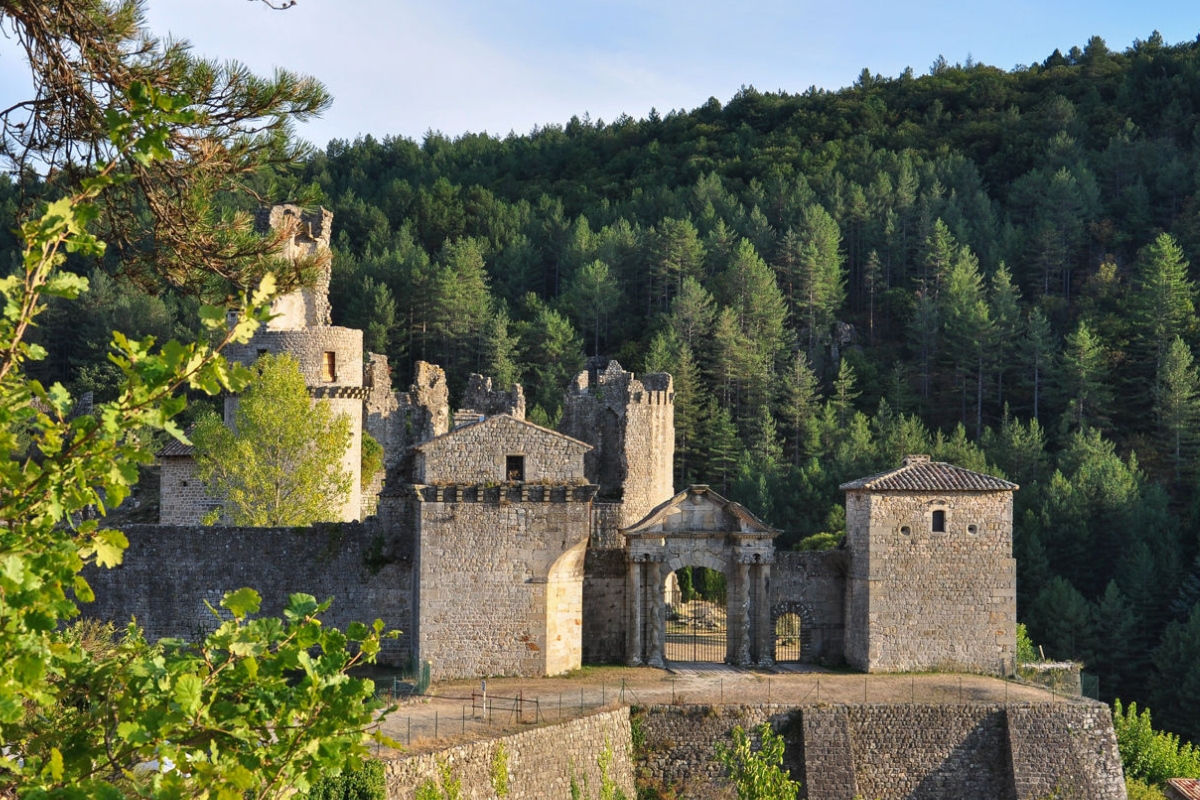
4. Château de Boulogne (Ardèche)
Perched atop a rocky outcrop in the Ardèche region of southern France, the Château de Boulogne stands as a haunting reminder of medieval might. This once-formidable fortress, now a picturesque ruin, has weathered centuries of history, conflict, and neglect to become one of France’s most atmospheric abandoned castles.
The origins of Château de Boulogne date back to the 11th century, when it was constructed as a strategic stronghold overlooking the Chassezac valley. Over the centuries, it was expanded and reinforced, reaching its architectural peak in the 14th century. The castle’s imposing walls and towers were designed to withstand sieges and project the power of its feudal lords over the surrounding countryside.
Like many medieval castles, Boulogne’s military importance waned with the advent of gunpowder and cannon. By the 17th century, it had transitioned from a fortress to a more comfortable residence. However, this transformation was short-lived. The French Revolution marked the beginning of the castle’s decline, as it was seized from its aristocratic owners and left to decay.
The abandonment of Château de Boulogne has given rise to numerous legends and ghost stories, adding an air of mystery to its crumbling walls. Local folklore speaks of a “White Lady” who haunts the castle ruins, said to be the spirit of a noblewoman who met a tragic end within its walls. Another tale tells of hidden treasures concealed somewhere in the castle’s vaults, waiting to be discovered by those brave enough to search.
These stories, while likely apocryphal, speak to the powerful hold that abandoned castles have on our collective imagination. They transform Boulogne from a mere historical relic into a place of romance and adventure, where the past seems to linger just out of reach.
Today, the Château de Boulogne presents a striking silhouette against the Ardèche sky. Its remaining towers and walls, softened by centuries of weathering, blend harmoniously with the rugged landscape. The castle’s state of romantic decay has made it a favorite subject for photographers and artists, who are drawn to its melancholic beauty.
Conservation efforts at Boulogne have been limited, focusing primarily on stabilizing the remaining structures to prevent further collapse. The remote location and challenging terrain have made large-scale restoration efforts impractical. However, this lack of intervention has, in some ways, preserved the castle’s authentic medieval character.
Visitors to Château de Boulogne today find themselves on a journey through time. The castle’s ruins offer tantalizing glimpses of its former grandeur – a carved stone here, a Gothic window there – inviting imagination to fill in the gaps. The panoramic views from the castle’s heights remain as breathtaking as they were centuries ago, offering a perspective that spans both space and time.
As it stands today, Château de Boulogne serves as a poignant reminder of the impermanence of power and the enduring strength of stone. Its abandoned state, far from diminishing its importance, has transformed it into a different kind of monument – one that speaks to the passage of time and the enduring allure of the medieval world. In its quiet dignity, Boulogne continues to guard its secrets, standing sentinel over a landscape that has changed little since the days when knights and nobles walked its halls.
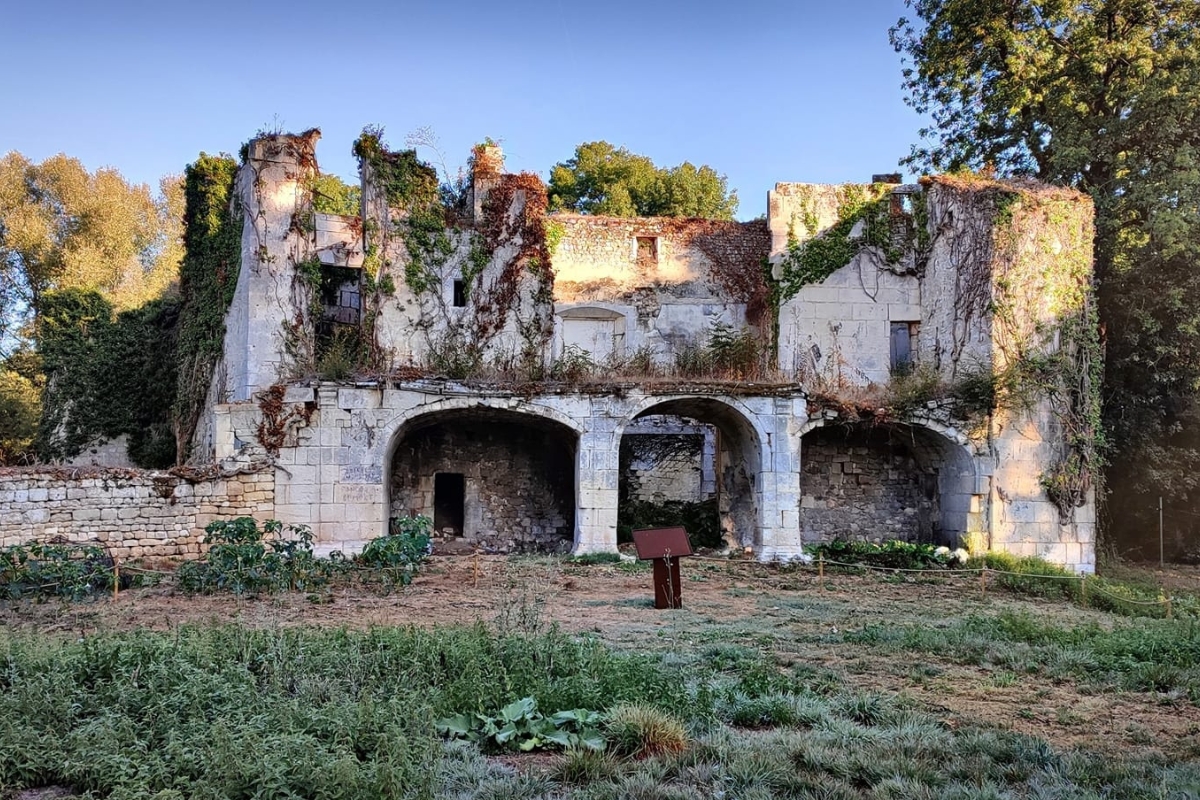
5. Château de Vibrac (Charente)
Nestled along the banks of the Charente River in southwestern France, the Château de Vibrac presents a bittersweet tableau of faded grandeur and tenacious survival. This once-mighty fortress, with its roots in the turbulent Middle Ages, now stands as a hauntingly beautiful ruin, slowly succumbing to the inexorable forces of nature and time.
The history of Château de Vibrac stretches back to the 11th century, when it was established as a strategic stronghold guarding an important river crossing. Over the centuries, it evolved from a purely military installation into a more refined noble residence, reflecting the changing political landscape and the increasing emphasis on comfort and aesthetics in castle design.
During the Hundred Years’ War, Vibrac played a crucial role in the region’s defenses, changing hands several times between English and French forces. This period of conflict left its mark on the castle’s architecture, with successive owners reinforcing and expanding its fortifications. The 16th century saw further modifications, as Renaissance influences began to soften the castle’s martial appearance with more elegant architectural elements.
The reasons for Château de Vibrac’s abandonment are complex, mirroring the broader social and economic changes that swept through France in the post-medieval era. The decline of feudalism, changing patterns of warfare, and the centralizing policies of the French monarchy all contributed to the gradual obsolescence of many provincial castles. By the time of the French Revolution, Vibrac had already lost much of its strategic and social importance.
The 19th and 20th centuries saw periods of occupation alternating with long stretches of neglect. The castle’s remote location and the considerable expense required for its upkeep made it an increasingly impractical proposition for successive owners. Gradually, nature began to reclaim the site, with ivy creeping up the walls and trees taking root in the courtyards.
Today, Château de Vibrac presents a romantic, if melancholic, spectacle. Its remaining towers and walls rise proudly above the surrounding landscape, their weathered stones telling silent tales of bygone glories. The river that once served as the castle’s first line of defense now reflects its crumbling visage, creating a scene of poignant beauty that has captivated artists and photographers.
Recent years have seen growing concern for the fate of Vibrac. Local heritage associations and history enthusiasts have begun to rally around the castle, advocating for its preservation. While full restoration may be financially unfeasible, efforts are underway to stabilize the remaining structures and prevent further degradation.
These initiatives face significant challenges. The castle’s precarious state makes any intervention a delicate and potentially dangerous undertaking. Furthermore, questions of ownership and responsibility have complicated preservation efforts. Despite these obstacles, the growing interest in Vibrac offers hope for its future.
The story of Château de Vibrac is, in many ways, a microcosm of the broader narrative of France’s abandoned castles. It speaks to the changing tides of history, the challenges of preserving our architectural heritage, and the enduring fascination these structures hold for us. As it stands today, caught between ruin and resurrection, Vibrac continues to cast its spell over all who encounter it, a silent witness to the passage of time and the ebb and flow of human affairs.

6. Château de l’Herm (Dordogne)
Deep in the forested heart of the Dordogne region lies Château de l’Herm, a mysterious and evocative ruin that has captured the imagination of writers, historians, and travelers alike. This abandoned castle, with its blend of late medieval and Renaissance architecture, tells a tale of ambition, tragedy, and the inexorable passage of time.
Constructed in the late 15th century by Jean de Calvimont, a powerful nobleman and advisor to King Louis XII, Château de l’Herm was built as both a defensive stronghold and a statement of its owner’s wealth and influence. The castle’s design reflected the transitional period in which it was built, combining the robust fortifications of earlier centuries with the more refined aesthetic of the emerging Renaissance style.
The château’s most famous association is with the renowned French novelist Eugène Le Roy, who used it as the primary setting for his 1899 novel “Jacquou le Croquant.” This tale of peasant revolt against cruel nobility in early 19th-century Périgord brought widespread attention to the then-already abandoned Château de l’Herm, cementing its place in French literary history.
The castle’s abandonment is shrouded in legend and mystery. One persistent tale speaks of a curse placed on the château and its inhabitants, supposedly triggered by the cruel treatment of local peasants by one of the castle’s lords. According to this legend, a series of tragedies befell the owners, eventually leading to the castle’s abandonment.
While the truth behind its abandonment likely lies in more mundane economic and social factors, these legends have contributed to the château’s mystique. The eerie atmosphere of the ruined castle, surrounded by dense forest, has made it a popular subject for ghost stories and tales of the supernatural.
Today, Château de l’Herm stands as a picturesque ruin, its weathered stones and empty windows offering tantalizing glimpses of its former grandeur. The remaining structures, including a round tower and portions of the residential quarters, provide visitors with a sense of the castle’s original layout and architecture.
Despite its abandoned state, l’Herm has not been forgotten. In recent years, there have been efforts to stabilize and partially restore the site. These conservation efforts aim to preserve the château as a “controlled ruin,” maintaining its romantic atmosphere while ensuring its survival for future generations.
The castle’s literary connections have made it a pilgrimage site for fans of Le Roy’s work, while its photogenic decay has attracted artists and photographers from around the world. The surrounding forest, once the hunting grounds of nobility, now provides a lush green backdrop that seems to embrace the old stones, creating a harmonious blend of nature and human history.
Visiting Château de l’Herm today is an exercise in imagination and historical empathy. As one wanders through the silent ruins, it’s easy to envision the bustling life that once filled these halls, the political intrigues that may have unfolded within its walls, and the gradual process of abandonment that led to its current state.
In its decay, Château de l’Herm has found a new kind of immortality. It stands as a poignant reminder of the impermanence of power and the enduring appeal of abandoned places. Whether viewed through the lens of history, literature, or simply as a hauntingly beautiful ruin, l’Herm continues to cast its spell over all who encounter it, inviting reflection on the passage of time and the stories written in stone.
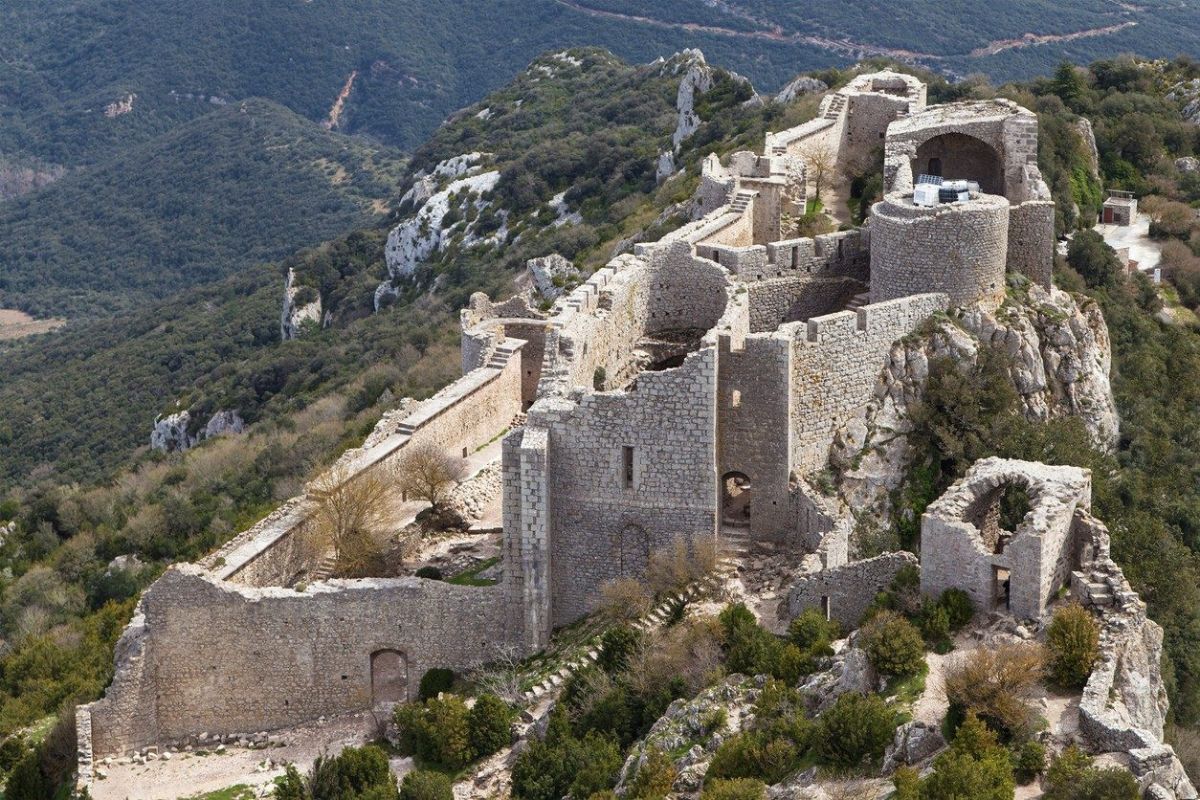
7. Château de Peyrepertuse (Aude)
Perched atop a vertiginous limestone ridge in the rugged Corbières mountains of southern France, Château de Peyrepertuse stands as one of the most dramatic and imposing abandoned castles in the country. This “celestial citadel,” as it’s often called, offers a breathtaking testament to medieval military architecture and the turbulent history of the Languedoc region.
The origins of Peyrepertuse date back to the 11th century, but it was during the 13th century that the castle reached its apex of strategic importance. As one of the so-called “Five Sons of Carcassonne,” a network of fortresses designed to guard the French border with Spain, Peyrepertuse played a crucial role in the defense of the realm.
However, it was during the Albigensian Crusade against the Cathar heretics that Peyrepertuse gained its most notable historical significance. The castle served as a Cathar stronghold, a place of refuge for those fleeing persecution. Its eventual fall to the forces of the French crown marked a turning point in the suppression of the Cathar faith.
The castle’s architecture is a marvel of medieval engineering, seamlessly integrated with its rocky perch. The lower castle, with its thick walls and sturdy towers, dates from the 11th century. The upper castle, known as Sant Jordi, was added in the 13th century and includes a chapel and the dizzying “stairway to heaven,” a steep flight of steps carved into the rock face.
Peyrepertuse’s eventual abandonment came gradually. With the Treaty of the Pyrenees in 1659, which established the modern border between France and Spain, the castle lost its strategic importance. The harsh mountain climate and difficult access hastened its decline, and by the French Revolution, it had been largely abandoned.
Despite its abandoned status, Peyrepertuse never truly faded into obscurity. Its dramatic setting and historical significance have long made it a subject of fascination for historians and travelers alike. In the 20th century, growing interest in medieval history and the Cathar movement brought renewed attention to the site.
Today, Château de Peyrepertuse is both an abandoned castle and a carefully managed historical site. While no one has lived within its walls for centuries, it receives thousands of visitors each year. Conservation efforts have focused on stabilizing the existing structures and making the site safe for tourism, while preserving its authentic medieval character.
The challenges of preserving Peyrepertuse are considerable. Its exposed position makes it vulnerable to erosion and extreme weather. The very features that make it so impressive – its height and isolation – also make maintenance and restoration work difficult and expensive.
Visiting Peyrepertuse today is a journey into the past and an adventure in itself. The steep climb to the castle rewards visitors with panoramic views of the Corbières region and a palpable sense of history. In summer, the site hosts medieval festivals and reenactments, bringing the castle briefly back to life and offering glimpses of its former glory.
As it stands today, silent and majestic on its mountain throne, Château de Peyrepertuse embodies the enduring allure of abandoned castles. It speaks to our fascination with the medieval world, our appreciation for feats of architecture and engineering, and our romantic notions of solitary ruins in wild landscapes. Though long abandoned as a military outpost, Peyrepertuse continues its centuries-old vigil, a stone sentinel watching over the lands it once guarded, inviting modern-day visitors to step back in time and touch the very walls that have witnessed the unfolding of history.
Tips for Visiting Abandoned Castles in France
Exploring abandoned castles can be a thrilling and unique experience, but it requires careful planning and respect for both the sites and local regulations. Here are some essential tips to ensure a safe and enjoyable visit:
Safety Considerations
Safety should be your primary concern when visiting abandoned castles. Many of these structures are in various states of decay, which can pose significant risks.
- Wear sturdy, closed-toe shoes with good traction to navigate uneven surfaces and debris.
- Bring a flashlight or headlamp, as many areas may be dark or dimly lit.
- Never explore alone; always bring a companion and inform someone of your plans.
- Be cautious of unstable floors, walls, and ceilings. Avoid areas that appear structurally unsound.
- Watch out for wildlife that may have made the castle their home, including bats, birds, and insects.
Legal Aspects and Permissions
It’s crucial to respect property rights and local laws when visiting abandoned castles.
- Many abandoned castles are private property. Always seek permission from the owner before entering.
- Some castles may be protected historical sites with specific visitation rules. Research and adhere to these guidelines.
- Never force entry or damage property to gain access. If a site is closed off, respect the barriers.
- Be aware that some local authorities may fine trespassers, so ensure you have proper authorization.
Best Times to Visit
Timing your visit can greatly enhance your experience and help avoid potential issues.
- Spring and fall often offer the best weather conditions for exploring, with mild temperatures and fewer crowds.
- Early mornings can provide beautiful lighting for photography and a serene atmosphere.
- Check local event calendars; some abandoned castles host special tours or events that provide unique access.
Photography Advice
Abandoned castles offer incredible photographic opportunities, but remember to capture memories responsibly.
- Use a wide-angle lens to capture the scale and atmosphere of large interior spaces.
- A tripod can be invaluable for low-light situations often encountered in abandoned structures.
- Respect any photography restrictions that may be in place, especially for castles that are being restored.
- Consider the ethical implications of your photos, particularly if sharing on social media. Avoid geotagging lesser-known sites to prevent overcrowding.
Respecting the Sites and Their History
Preserving these historical treasures for future generations is a responsibility all visitors share.
- Follow the “Leave No Trace” principle: take only photographs, leave only footprints.
- Do not remove any items, no matter how small or seemingly insignificant.
- Avoid touching delicate surfaces, as oils from skin can damage historic materials.
- If you encounter any artifacts, leave them in place and notify local authorities or site managers.
By following these guidelines, you can help ensure that France’s abandoned castles remain accessible and preserved for years to come, allowing future generations to experience the wonder and history these remarkable structures hold.
The Future of France’s Abandoned Castles
The fate of France’s abandoned castles hangs in a delicate balance between preservation and decay. As these architectural treasures continue to capture public imagination, various stakeholders are working to secure their future. The challenges are significant, but so too are the opportunities for innovation and community engagement.
Restoration Projects and Challenges
Restoring abandoned castles is a monumental task, fraught with both financial and logistical challenges.
- Cost is often the most significant barrier. Full restorations can run into millions of euros, far beyond the means of many private owners or local communities.
- Finding skilled craftspeople who can work with traditional methods and materials is increasingly difficult.
- Balancing historical authenticity with modern safety standards and amenities presents ongoing challenges.
- Climate change poses new threats, with more frequent extreme weather events accelerating decay.
Despite these challenges, several successful restoration projects offer hope. The ongoing work at Château de Gudanes, for instance, demonstrates how passion and community support can breathe new life into a seemingly lost cause.
The Role of Tourism in Preservation
Tourism plays a crucial role in the preservation of abandoned castles, providing both financial support and public interest.
- Entrance fees and guided tours can generate income for maintenance and restoration.
- Increased visitor numbers can justify government funding and grants for preservation efforts.
- Tourism can revitalize local economies, creating jobs and encouraging further investment in heritage preservation.
However, balancing tourism with conservation is delicate. Over-tourism can lead to wear and tear on fragile structures, while commercialization risks compromising the authentic atmosphere that makes these sites so compelling.
Community and Government Initiatives
The future of France’s abandoned castles increasingly depends on collaborative efforts between communities, private owners, and government bodies.
- Crowdfunding campaigns have emerged as a novel way to finance restoration projects, allowing people worldwide to contribute to preservation efforts.
- Some regions are developing “adopt a castle” programs, encouraging businesses and individuals to sponsor restoration work.
- The French government has introduced tax incentives for owners who undertake restoration work on historical properties.
- Educational programs are being developed to train a new generation of craftspeople in traditional building techniques.
Looking ahead, the preservation of these castles may require innovative thinking and new models of ownership and management. Some abandoned castles are finding new life as museums, hotels, or cultural centers, adapting to modern needs while preserving their historical essence.
The future of France’s abandoned castles is not yet written. With continued public interest, innovative preservation strategies, and a commitment to honoring the past while adapting to the present, these magnificent structures may yet survive to tell their stories to future generations.
Final Thoughts
Our journey through France’s most famous abandoned castles reveals a landscape rich in history, mystery, and architectural wonder. From the fairy-tale silhouette of Château de Chambord to the wind-swept ramparts of Château de Peyrepertuse, each of these structures tells a unique story of glory, decline, and potential rebirth.
These abandoned castles are more than just picturesque ruins; they are tangible links to France’s complex past. They stand as silent witnesses to the grand ambitions of kings and nobles, the tumult of revolutions, the devastation of wars, and the inexorable march of time. In their abandoned state, they invite us to reflect on the impermanence of power and the enduring legacy of human creativity.
The allure of these forgotten châteaux lies not just in their crumbling beauty but in the stories they hold and the questions they raise. Why were they abandoned? What secrets do their weathered stones keep? What can they tell us about the society that built them and the forces that led to their decline?
As we’ve seen, the challenges facing these castles are significant. The cost of maintenance and restoration, the complexities of ownership, and the threats posed by time and nature all conspire against their survival. Yet, there is hope. Growing public interest, innovative preservation efforts, and a renewed appreciation for historical heritage offer the promise of a future where these magnificent structures can be preserved and appreciated.
The story of France’s abandoned castles is far from over. Each crumbling wall stabilized, each roof retiled, each stone pathway cleared is an act of defiance against the ravages of time. These efforts, whether undertaken by passionate individuals, local communities, or government bodies, ensure that the legacy of these castles endures.
As visitors, we play a crucial role in this ongoing narrative. By exploring these sites responsibly, supporting preservation efforts, and sharing their stories, we contribute to their survival. Each footstep through a silent hall, each photograph captured of a ivy-covered tower, each moment spent imagining the lives lived within these walls keeps the spirit of these castles alive.
In the end, France’s abandoned castles offer us more than just a glimpse into the past. They challenge us to consider our own place in history, our responsibility to our cultural heritage, and the legacy we wish to leave for future generations. As we stand before these magnificent ruins, we are reminded that even in abandonment, there is beauty, and in decay, there is the promise of renewal.
Let us continue to cherish, protect, and learn from these extraordinary monuments. For in the stories of these abandoned castles, we find not just the history of France, but reflections of our own hopes, dreams, and enduring human spirit.
🏰Learn more about renovating historic properties and chateaux


[…] abandoned château in France is more than a deserted castle—it’s a relic of grandeur left to the elements. These historic […]
thank you for this website; the locations and the information after is very helpful.